Research for the documentary Ida Rolf – Mother of Fascia led to archives on both sides of the Atlantic. Some of what turned up there belongs on the public record, so it lives here, free to read and to check.
Each paper record appears as a scan beside a transcription. Pictures kept by her family, and places tied to her life, appear as photographs. Below them follows what a researcher needs to find the original and cite it. The page grows as permissions arrive.
Typed entries appear in typewriter type, printed text in roman. Handwriting shows in italics, and square brackets hold [editorial remarks].
Chapter I · 1896 to 1905
Childhood
Two families stand behind her, and they meet twice: once in her parents’ generation, once in her own marriage. One painting survives from her earliest years. The city’s records follow her father, the contractor Bernard Rolf, along the piers of New York and onto a new bridge over Newtown Creek. The summer she turned nine, a single bolt of lightning took three of her cousins.
1822 to 1979
Two families, one tree
Rolf’s mother came from the Mayer family, and so did the mother of the man she married. The film’s research traced both lines into a single tree, redrawn here.
Reading of the tree
Mayer family. Jakob Friedrich Mayer, born 13 October 1824 in Stuttgart, died 8 February 1902 in Brooklyn, and Fredericka Kienzle, born 18 October 1826 in Heilbronn, died 14 January 1891 in Brooklyn. Their daughters: Mathilda (born 1855), Emilie Sophia (1856), Louise Katharina (1860), Ida (1863), Anna Sophia (1866) and Bertha (1869).
Ida Pauline Mayer, born 26 January 1863 in Brooklyn, died 22 August 1928 in the Bronx, and Bernard Rolf, contractor, of Bernard Rolf & Co., born 3 November 1866, died 21 January 1928 in the Bronx. Their daughter: Ida Pauline Rolf, born 19 May 1896 in the Bronx, died 19 March 1979 in Bryn Mawr, Pennsylvania.
Demmerle family. Johann (Martin) Demmerle, born 16 July 1826 in Imsbach, died in Imsbach, and Christine Schneller, born 8 July 1822 in Münchweiler, died 1901 in Imsbach. Their son: Charles (Karl) Demmerle, born 6 July 1854 on the Langheckerhof near Imsbach, died 14 November 1923 in Brooklyn.
Charles (Karl) Demmerle and Emilie Sophia Mayer, born 2 August 1856 in New York, died 18 June 1918 in Brooklyn. Their sons: Martin, who died in infancy; Frank C., born 11 August 1882; Charles R., born 9 June 1885, both killed on 30 July 1905; and Walter Frederick Demmerle, born 11 November 1893 in Brooklyn, died 16 March 1947 at the Clarkstown Country Club in South Nyack, New York.
Walter Frederick Demmerle and Ida Pauline Rolf, married in May 1921. Their sons: Alan and Richard Demmerle.
- Document
- Family tree of the Mayer, Rolf and Demmerle familiesBuilt from family records collected by her son Richard Demmerle, compiled as a family book in 2005, and from the production’s own research. Corrections welcome.
- Made by
- The research team of Ida Rolf – Mother of Fascia
- Open question
- Bernard Rolf’s birthplaceThe family book names Hanover in Germany; other family records name New Orleans, and the census of 1900 gives Louisiana
- Open question
- Emilie Sophia Mayer’s birthdayThe family book gives 2 August 1856; her monument at Woodlawn reads February 1856, the day 6 or 8
- Rights
- Belongs to the productionPlease credit the documentary when you cite it
The Mayers came from Württemberg, Jakob Friedrich from Stuttgart and Fredericka from Heilbronn; the Demmerles from Imsbach in the Rhine district of the Kingdom of Bavaria. Both families found their way to New York, where six Mayer daughters came into the world between 1855 and 1869.
The tree shows how closely the two families stood. Walter’s mother, Emilie Sophia, and Ida’s mother, Ida, grew up as sisters, so the couple who married in 1921 shared a pair of grandparents. Ida Pauline carried both her mother’s names: Ida Pauline, daughter of Ida Pauline, as her mother’s death notice shows.
One summer afternoon struck both branches at once. On 30 July 1905 lightning hit the crowded beach at Coney Island and killed Walter’s brothers Frank and Charles together with their cousin Robert Wasch, son of Bertha Mayer. Walter, eleven, became an only child that afternoon. Ida, nine, lost three cousins in a single storm. The newspaper report and the family’s monument close this chapter.
For years her father left only the faintest trace on the tree. Bernard Rolf ran his own contracting firm in New York, Bernard Rolf & Co. The family book dates his birth to 3 November 1866, and his headstone agrees; for the place the book names Hanover, while other family records remember New Orleans. The census taker of 1900 wrote Louisiana. The city’s records show him at work on its piers and on a bridge over Newtown Creek, two entries below. He died in January 1928, seven months before his wife.
Cite asFamily tree of the Mayer, Rolf and Demmerle families, compiled by the research team of Ida Rolf – Mother of Fascia.
Undated
Portrait of Ida as a child
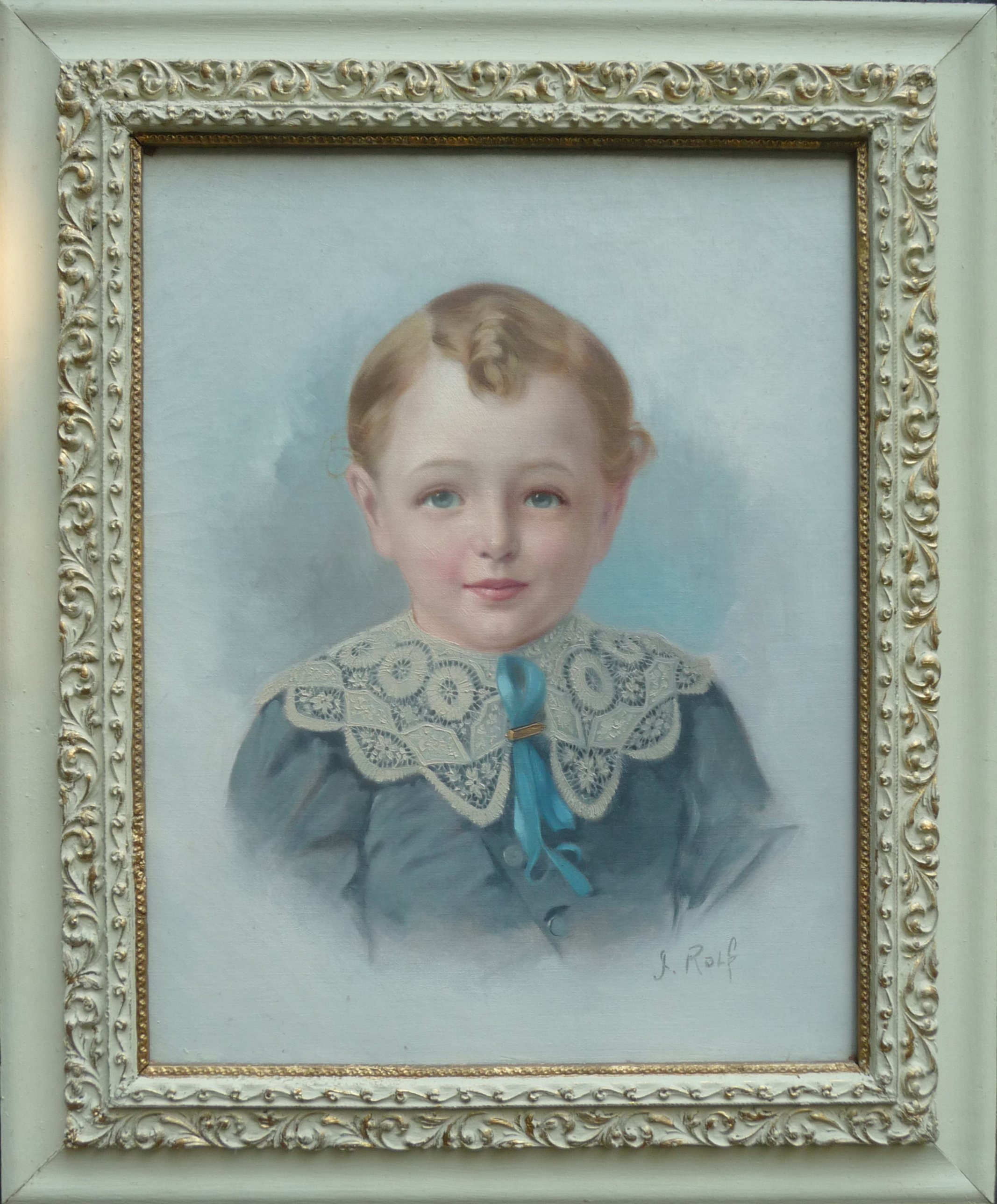
Signature
[lower right, in paint] I. Rolf
[The capital I reaches below the line in the manner of the period, so it can also read as J.]
- Object
- Portrait of a small child, painted on canvas, in a carved white and gilt frame
- Sitter
- Ida P. Rolf as a small childAs her family hands it down
- Painter
- Not yet identifiedSigned “I. Rolf” or “J. Rolf”; the signature points to someone in the Rolf family, not to Ida herself
- Date
- UndatedThe lace collar and ribbon follow children’s dress of around 1900, her early childhood. The painting itself may come from later years.
- Held by
- The family of Ida P. Rolf
- Rights
- Status unclear until the painter has a nameShown here with the permission of her grandson Jean-Pierre Demmerle. Please ask before reusing it.
A small child looks straight out of the canvas, a curl combed high above the forehead. Across the shoulders spreads a lace collar, where a gold bar pin holds a blue ribbon. Her family knows the sitter as Ida. Who held the brush, the signature tells only by half: it names a Rolf.
The front gives no year. Before the yearbooks and registers below, it offers the earliest face of her on this page.
Cite asPortrait of Ida P. Rolf as a child, painting on canvas, undated, signed lower right “I. Rolf”, painter unidentified. Family of Ida P. Rolf; photograph courtesy of Jean-Pierre Demmerle.
1900 to 1903
Her father’s bridge
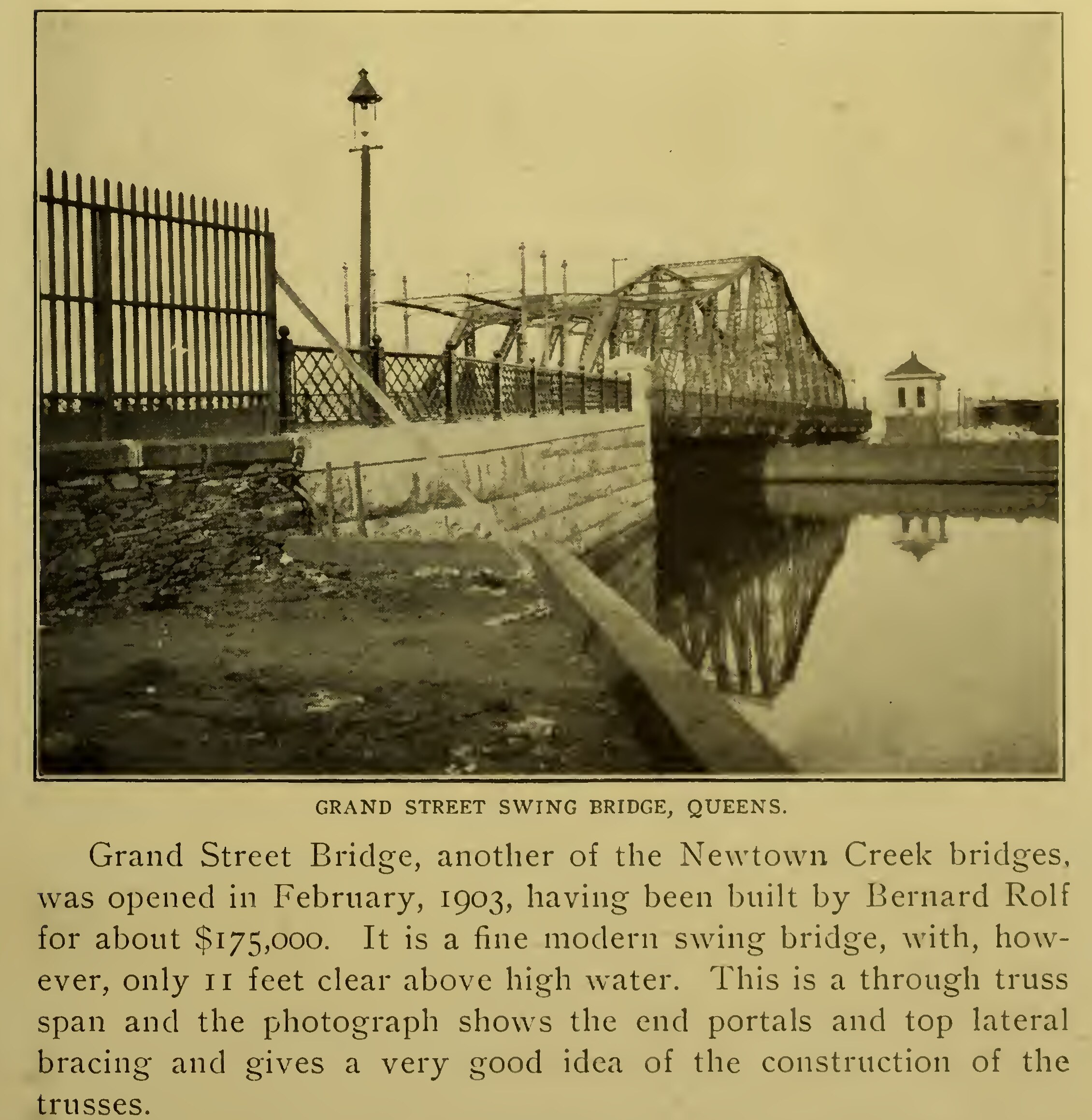
Transcription
[running head:] NEW YORK CITY BRIDGES.
[under the photograph:]
GRAND STREET SWING BRIDGE, QUEENS.
Grand Street Bridge, another of the Newtown Creek bridges, was opened in February, 1903, having been built by Bernard Rolf for about $175,000. It is a fine modern swing bridge, with, however, only 11 feet clear above high water. This is a through truss span and the photograph shows the end portals and top lateral bracing and gives a very good idea of the construction of the trusses.
- Document
- Survey of the city’s bridges in The Engineering MagazineRunning head “New York City Bridges”; page 65 moves from the Gowanus Canal to Newtown Creek
- Published
- New York, volume 38, October 1909 to March 1910, page 65At that page the article most likely sits in the October 1909 issue
- Bridge
- Grand Street Bridge over Newtown Creek, between Brooklyn and QueensA steel through-truss swing span on a masonry pier, the third bridge on the site
- Contract
- Bernard Rolf, July 1900Two bids came in. Work began in August 1900, planned for fifteen months
- Plan
- Department of Bridges, approved by the Secretary of War on 24 July 1899Printed in the Brooklyn Daily Eagle, 23 December 1899; on Wikimedia Commons
- Opened
- For traffic on 26 December 1902Department of Bridges, report in The City Record, 4 March 1903. The magazine’s February 1903 most likely marks the city’s formal acceptance
- Earlier work
- Piers for the Department of Docks, 1897 to 1902The City Record, among others 15 September 1900 and 30 August 1902
- Census
- Twelfth Census of the United States, 1 June 1900Bronx Borough, ward 24, enumeration district 1034, sheet 15A, lines 48 to 50, Oakland Place: Bernard Rolf, head, contractor, born November 1867 in Louisiana; Ida, wife, born January 1864 in New York; Ida, daughter, born May 1896 in New York. National Archives microfilm T623; image on FamilySearch, indexed under Manhattan
- Digital copy
- Internet Archive, scan of the bound volumeThe volume also sits on Google Books
- Rights
- Public domain in the United States: published in 1909
- Her account
- “Any construction providing its feet were in the water”Ida Rolf, audio recording made for Robert Toporek in her last years, formerly on YouTube; the passage also in Ida Rolf – Mother of Fascia, 00:12:14 to 00:12:37. Her words on college come from an interview of 26 November 1977. Quoted from transcripts, with the leave Robert Toporek gave the film. Should he or his family object, the page removes the passages
Newtown Creek divides Brooklyn from Queens, and around 1900 tugs and barges crowded it from the East River inland. Near its head Grand Street crosses the water on a swing span of steel. The man who built that span carried the name of Ida’s father.
Before the bridge came the piers. From 1897 the city’s official journal, The City Record, lists Bernard Rolf again and again among the contractors of the Department of Docks. He repaved the pier at the foot of West Thirty-fifth Street and, in 1900, delivered some three thousand piles. Pier 31 on the East River, west of Pike Slip, rose under his crews with a freight shed on top. In 1902 he repaired the pier at South Fifth Street in Brooklyn and worked his way along the Hudson waterfront, from Charles Street up to West Forty-eighth.
The city drew the bridge before anyone built it. In April 1899 the Secretary of War ordered the narrow span of 1891 replaced, since the larger vessels on the creek could barely make the turn through its draw. The Department of Bridges answered with a swing span on a centre pier, its western channel 91 feet wide, and the Brooklyn Daily Eagle printed the plan on 23 December 1899.
In July 1900 the Department of Bridges handed him a larger task. Only two firms had bid for a new swing bridge at Grand Street, and the work went to Rolf. It began in August and should have lasted fifteen months. Strikes and late deliveries stretched it past two years; the department blamed the contractor, and in November 1902 the city placed its consulting engineer, C. C. Martin, in full charge.
The bridge opened for traffic on 26 December 1902, the day after Christmas. Ida had turned six that May. On the opening day the Brooklyn Daily Times had hard words for the builder, a page the film shows. Seven years later The Engineering Magazine printed the finished span, its trusses mirrored in the still creek, and named its builder plainly: Bernard Rolf, for about $175,000.
The bridge still stands. After more than 120 years it carries Grand Street and Grand Avenue between the two boroughs, and the city’s Department of Transportation now prepares a replacement, judging that the old span has reached the end of its useful life.
Did the builder and her father share more than a name? Ida herself answers. Late in life she remembered her father in plain words.
“My father was a highly intelligent person. A so-called self-made man […] My father was a contractor in New York City, and as he would say, he was willing to take on any construction providing its feet were in the water. That is, he built, he dealt with structures like bulkheads, piers, docks. In fact I remember my thrill when I looked out on the water at one time and saw a tremendous big scow with the entire top shed of a pier on it, which was labeled [with his firm’s name], and this pier was being removed from a site somewhere up on the so-called North River, or Hudson as we would call it today, down to Staten Island. And this was being done by my father.”
[The name on the scow still waits for a careful listen: the film’s subtitles hear “Bernhard, Rolf and Company”, a transcript of the whole recording “the Rolf Construction Company”.]
A shed of that kind turns up in the city’s minutes. In 1900 and 1901 Bernard Rolf built Pier 31 on the East River and the freight shed on top of it, and his firm’s name, Bernard Rolf & Co., stands in the family book as it stands in the Real Estate Record of 1906, among the bidders for dredging at a Brooklyn terminal. Her father worked with his feet in the water, just as she said, and so did the builder of the Grand Street Bridge. The Times obituary of 1979 calls him a construction contractor in the Bronx.
The census closes the question. On 1 June 1900, seven weeks before the bridge contract, the census taker for the Bronx came to Oakland Place and wrote down a household of three: Bernard Rolf, contractor, born in Louisiana; his wife Ida; their daughter Ida, four years old, born in May 1896. The builder of the bridge and her father turn out one and the same man.
She remembered more. Her father kept an office at 39 Cortlandt Street, high above the Hudson, and took her up there as a small child. From its windows she watched warships come home from the war with Spain, and in the autumn of 1909 the replica of Henry Hudson’s Half Moon sailing upriver for the Hudson–Fulton Celebration, the same season The Engineering Magazine printed his bridge. Two years earlier the Panic of 1907 had broken his stride. By her account he went bankrupt for about a quarter of a million dollars, “money spelled with a capital M”, and spent the years that followed repaying every cent. He never again took on anything so large. Her years at Barnard came hard for the family, and her father found the money anyway.
In November 1977, at eighty-one, she told the Structural Integration practitioner Sydney Claire Vilen how it went. Money ran short, and he offered his daughter a choice.
“My father sweated to get me through college. It happened at a point in his life when money was not easy, and he said I could do one of two things. I could either have a social life or I could go to college and have an intellectual one, but he would not stand for my having both. And if I was going to go to college, that’s where I put my attention. And that’s where I did put my attention. No, I had no particular problems with my father. He would be a very proud man today.”
When the city let the contract, Brooklyn and Queens had belonged to one city for only two and a half years. Until 1898 the creek marked the edge of the City of Brooklyn, with the town of Newtown, in Queens County, on the far bank. Her father joined two shores that had only just begun to share a name.
The daughter went on to build bridges of another kind, between shores that seemed never meant to meet. From the laboratories of Columbia and the Rockefeller Institute she crossed to the yoga of Pierre Bernard and later to Subud, never letting go of the scientist’s rigour, and in her hands body and soul stopped standing on opposite banks. In the early 1950s she sat in the seminars of the Institute of General Semantics, the school of Alfred Korzybski, who warned that the word never equals the thing it names. Her own work came at that gap from the other side. It learned to read what a body says before its owner finds a word.
Cite as“New York City Bridges,” The Engineering Magazine (New York), vol. 38, October 1909 to March 1910, p. 65.
Department of Docks and Ferries, minutes, The City Record, 15 September 1900 and 30 August 1902; Department of Bridges, report, The City Record, 4 March 1903.
“New Grand Street Bridge,” Brooklyn Daily Eagle, 23 December 1899.
Twelfth Census of the United States, 1900, New York, Bronx Borough, enumeration district 1034, sheet 15A, lines 48 to 50.
Ida P. Rolf, audio recording for Robert Toporek, late 1970s, about 3:06 to 11:50 and 22:51 to 25:44.
Ida P. Rolf, interview by Sydney Claire Vilen, 26 November 1977, typed transcript, Rolf Institute historical files.
Lightning at the Parkway Baths
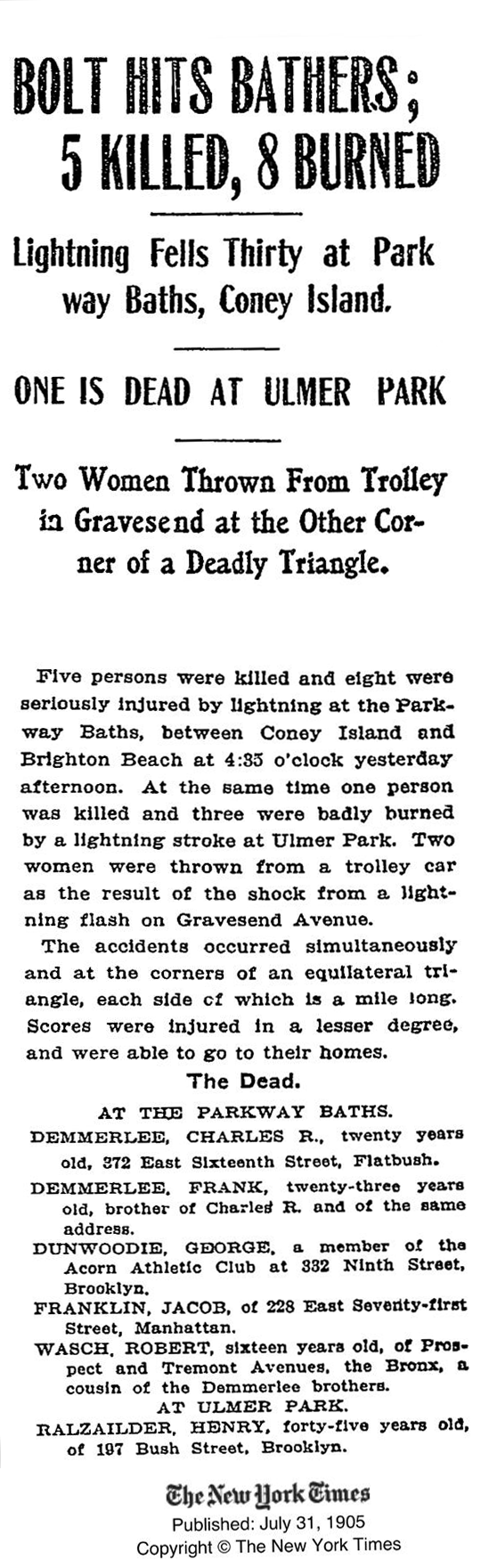
Transcription
BOLT HITS BATHERS; 5 KILLED, 8 BURNED
Lightning Fells Thirty at Parkway Baths, Coney Island.
ONE IS DEAD AT ULMER PARK
Two Women Thrown From Trolley in Gravesend at the Other Corner of a Deadly Triangle.
Five persons were killed and eight were seriously injured by lightning at the Parkway Baths, between Coney Island and Brighton Beach at 4:35 o’clock yesterday afternoon. At the same time one person was killed and three were badly burned by a lightning stroke at Ulmer Park. Two women were thrown from a trolley car as the result of the shock from a lightning flash on Gravesend Avenue.
The accidents occurred simultaneously and at the corners of an equilateral triangle, each side cf [sic] which is a mile long. Scores were injured in a lesser degree, and were able to go to their homes.
The Dead.
AT THE PARKWAY BATHS.
DEMMERLEE, CHARLES R., twenty years old, 372 East Sixteenth Street, Flatbush.
DEMMERLEE, FRANK, twenty-three years old, brother of Charles R. and of the same address.
DUNWOODIE, GEORGE, a member of the Acorn Athletic Club at 332 Ninth Street, Brooklyn.
FRANKLIN, JACOB, of 228 East Seventy-first Street, Manhattan.
WASCH, ROBERT, sixteen years old, of Prospect and Tremont Avenues, the Bronx, a cousin of the Demmerlee brothers.
AT ULMER PARK.
RALZAILDER, HENRY, forty-five years old, of 197 Bush Street, Brooklyn.
[the clipping ends here; the report runs on with the injured and a long account, in part below]
- Document
- News report in The New York TimesThe clipping shows its opening and the list of the dead
- Date
- Monday, 31 July 1905The lightning struck on Sunday, 30 July, at 4:35 in the afternoon
- Place
- Parkway Baths, between Coney Island and Brighton Beach, Brooklyn
- Reference
- The New York Times, 31 July 1905, page 1The report fills most of a column and runs on into the next
- Digital copy
- ProQuest Historical Newspapers: The New York TimesThe clipping shown comes from the Times’s own online archive
- Rights
- Public domain in the United States: published before 1931The masthead and the copyright line at the foot come from the Times’s online archive, not from the 1905 page
- Commons
- The New York Times, 31 July 1905, page 1: Bolt Hits BathersCut where the 1905 print ends, without the archive’s masthead and copyright line
From the rest of the report, in part
[after the list of the injured:]
A flagpole rears its ninety feet at this point. A hundred persons were either standing under the edge of the walk near the pole or had nearly reached it when a flash of flame struck the pole, ran down its length, and hurled all those near it to the ground. They fell outward on either side as though cast down by a giant’s strength.
Flag Sent to Half-Mast.
The flash was accompanied by a deafening, splintering crash. The flagpole was shattered, the big flag was torn to ribbons and dropped to half-mast, where it hung for an hour and a half.
Some thirty persons fell on the sand at the flash, and half of them regained their feet in a few minutes. Some stirred feebly, but five, all young men, lay motionless in their bathing suits. They were all dead, and their bodies had been blackened by the flame.
[…]
Considerable time elapsed before any of the dead were identified. At length two women pushed through the crowd, and, singling out Manager Brasher, the elder of the two said:
“I’m looking for my boys. Are any of those injured badly hurt?”
“Madam, five are dead,” replied Brasher. […]
“I will go and look at the bodies,” said the woman, who said she was Mrs. Amelia Demmerlee of 372 East Sixteenth Street, Flatbush.
Lost Two Sons and Nephew.
Brasher led her into the little room where the five bodies were stretched out on the floor. The woman took one look at them, and fell forward, crying:
“Oh, my boys! The dear boys to whose future I had looked forward with so much pride!”
Her two sons lay there, and beside them was the body of her nephew, Robert Wasch, big, strong, athletic young men the three of them.
Mrs. Demmerlee said that she and her sister, together with the three young men, had driven to the beach in a double-seated carriage.
“And oh,” she added, “I warned them not to go into the water when the storm came up. I feared even then that some evil was about to befall.”
[…]
By some singular freak the lightning bolt unloosed the halyards so that the instant the tragedy occurred the flag dropped to half mast, and its tattered shreds whipped about in the wind and rain.
Hundreds of the bathers after viewing the shattered flagstaff returned to the water again and swam about until dark.
A summer Sunday on the Brooklyn shore, and a storm out of a darkening sky. At 4:35 lightning struck a ninety-foot flagpole beside the boardwalk of the Parkway Baths, where bathers had run for shelter. Among the five dead the Times listed two brothers from Flatbush, Charles R. and Frank, and their cousin Robert Wasch from the Bronx. The torn flag slid down to half-mast on its own and hung there for an hour and a half.
The paper spells the family name Demmerlee and calls the mother Amelia. Frank it makes twenty-three, twelve days too soon; his monument, in the next entry, counts twenty-two years and eleven months. Robert, the son of Bertha Mayer, lived by Prospect and Tremont Avenues, in the same part of the Bronx as Oakland Place, where the Phi Beta Kappa card of 1916 finds Ida.
Emilie had come to the shore with them. She and her sister, she told the reporter, had driven out with the three young men in a double-seated carriage, and when the storm came up she had warned them to stay out of the water. The report leaves the sister unnamed; Robert’s mother, Bertha, would fit. Later the two women followed the undertaker’s wagon to the morgue in their carriage.
Walter stayed behind. Family memory, as one of his grandsons heard it from his father and wrote it down in 2014, keeps the eleven-year-old at home that day, waiting for an aunt who came to help him with his mathematics. The same memory keeps his parents at home too, until news came from the beach. On that point the Times, quoting Emilie herself, tells it otherwise.
By evening Walter had become an only child. Sixteen years later he married his cousin Ida.
Cite as“Bolt Hits Bathers; 5 Killed, 8 Burned,” The New York Times, 31 July 1905, p. 1.
Raised after 30 July 1905
Three faces in bronze
At Woodlawn Cemetery in the Bronx one stone keeps the three young men together. Frank and Charles’s parents rest beside it. About a hundred feet away, facing this group, Ida and Walter lie under a headstone of their own, in a second lot in Emilie’s name, where Ida’s parents lie too.
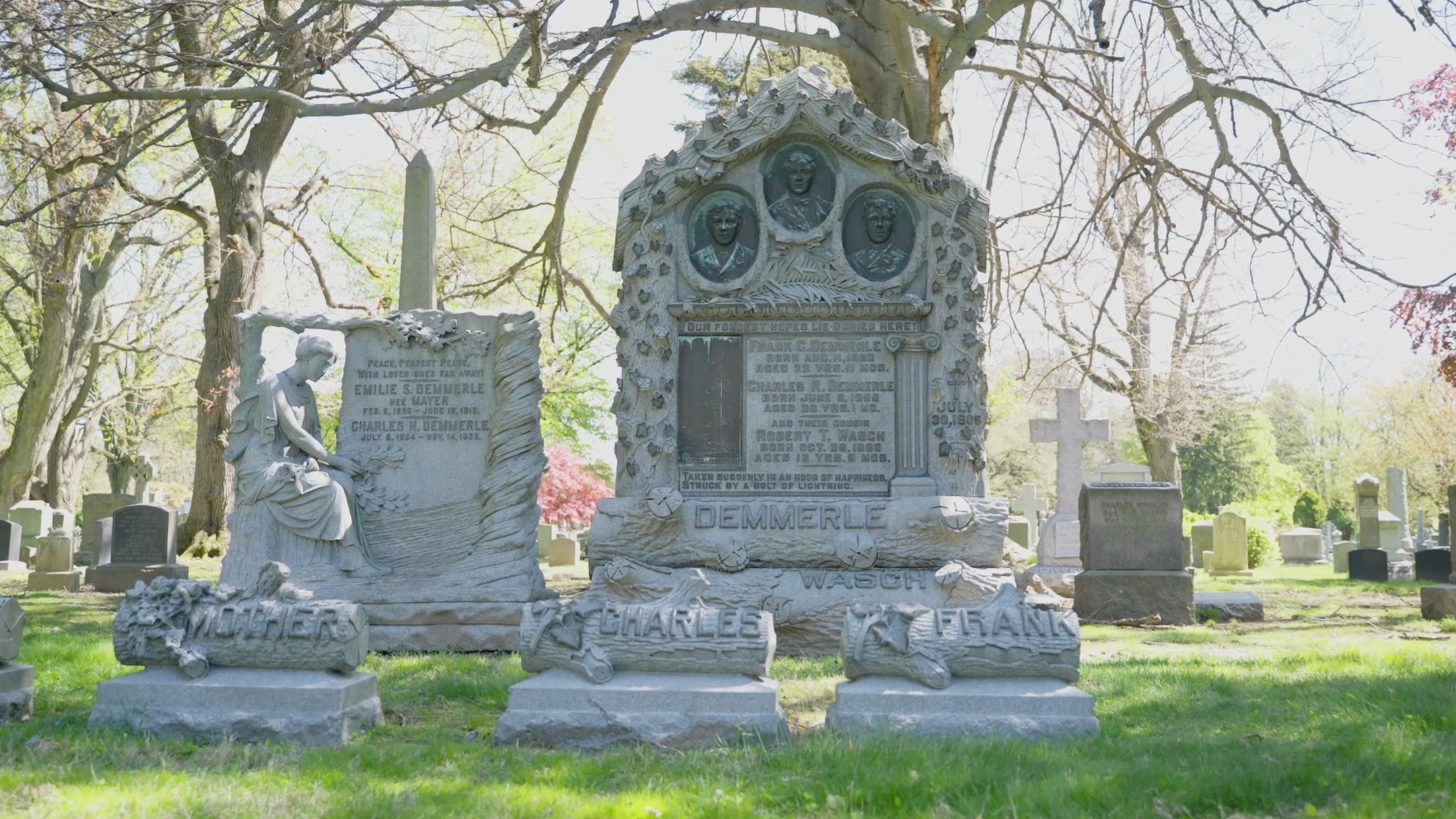
Inscriptions
[memorial to the three young men, on a band above the names:]
OUR FONDEST HOPES LIE BURIED HERE!
FRANK C. DEMMERLE
BORN AUG. 11, 1882
AGED 22 YRS. 11 MOS.
CHARLES R. DEMMERLE
BORN JUNE 9, 1885
AGED 20 YRS. 1 MO.
AND THEIR COUSIN
ROBERT T. WASCH
BORN OCT. 20, 1888
AGED 16 YRS. 9 MOS.
TAKEN SUDDENLY IN AN HOUR OF HAPPINESS,
STRUCK BY A BOLT OF LIGHTNING.
[right of the panel, below a carved cross:] JULY 30, 1905
[on the carved logs of the base:] DEMMERLE and below it WASCH
[monument to the parents, at left:]
PEACE, PERFECT PEACE,
WITH LOVED ONES FAR AWAY!
EMILIE S. DEMMERLE
NÉE MAYER
FEB. 6, 1856 – JUNE 18, 1918.
CHARLES H. DEMMERLE
JULY 6, 1854 – NOV. 14, 1923.
[footstones carved as logs:] MOTHER · CHARLES · FRANK
[Some figures blur in the photograph between 0, 6, 8 and 9. Where they do, the reading follows the family book; the 6 in Emilie’s birthday could also read 8.]
- Object
- Memorial to Frank C. and Charles R. Demmerle and their cousin Robert T. Wasch, with the monument to Emilie S. and Charles H. Demmerle beside itGranite, with medallions and a plate in bronze. Three footstones carved as logs stand in front.
- Place
- Woodlawn Cemetery, Bronx, New YorkLot number still to note. About 100 feet from lot 10831 (section 113, Holly plot), the lot of Ida’s parents and of Ida and Walter; the two groups face each other (Aleš Urbanczik, on site in 2024)
- Date
- The memorial after 30 July 1905; the parents’ monument after Emilie’s death in 1918No date or sculptor’s signature shows in the photograph
- Rights
- The inscriptions record names and dates, which copyright does not coverPhotograph by Aleš Urbanczik and Grzegorz Oleksa, 2024. Free to use, provided the credit names both and links to motheroffascia.com: “Photo: Aleš Urbanczik and Grzegorz Oleksa, motheroffascia.com”. On Wikimedia Commons under the CC BY-SA 4.0 licence.
- Commons
- Woodlawn-cemetery-demmerle-wasch-monument-full.jpgThe photograph under CC BY-SA 4.0, with its description
As far as the photograph allows a reading, the stones match the family book on the three young men, and they correct the newspaper’s ages: twenty-two, twenty and sixteen. The parents’ stone, though, sets two questions for the family tree. It gives Emilie’s birth as February 1856, where the family book, as read for the tree, gives 2 August. And it calls her husband Charles H. Demmerle, a middle initial no family record has explained so far. The tree keeps the book’s readings until a birth or death certificate settles them.
Three bronze medallions crown the memorial, one young face in each, above a palm frond tied with a ribbon. Carved ivy climbs both edges. Below, the stone turns into sawn logs, the rustic sign of lives cut short that grave carvers of the time loved, and the logs carry both family names.
Beside the names hangs a bronze plate, weathered almost smooth. The Times places the dead at the foot of a ninety-foot flagpole by the boardwalk, and an account of 2013 reads that very scene in the plate. In this photograph a single upright stroke still shows.
On the left, a woman in flowing robes sits under a broken branch with leaves in her lap. The two lines above her come from Edward Bickersteth’s hymn “Peace, Perfect Peace” of 1875, where they end in a question mark. Here the stone answers with an exclamation.
Cite asMemorial to Frank C. Demmerle, Charles R. Demmerle and Robert T. Wasch, with the monument to Emilie S. and Charles H. Demmerle, Woodlawn Cemetery, Bronx, New York. Photograph by Aleš Urbanczik and Grzegorz Oleksa, 2024, motheroffascia.com.
Chapter II · 1908 to 1917
Barnard College
First came a high school in the Bronx with a college’s tower. Then Barnard, where she studied chemistry and graduated in 1916. A summer regatta, the city’s newspapers, the yearbooks and the honour society kept track of her, and so did the student weekly, whose business side she ran and whose pages carried her letter on how the college taught.
About 1908 to 1912
A high school dressed as a college
She grew up in the Bronx and went to school there. Late in life, speaking into a tape recorder, she named the high school that came before Barnard, and she still knew its street.
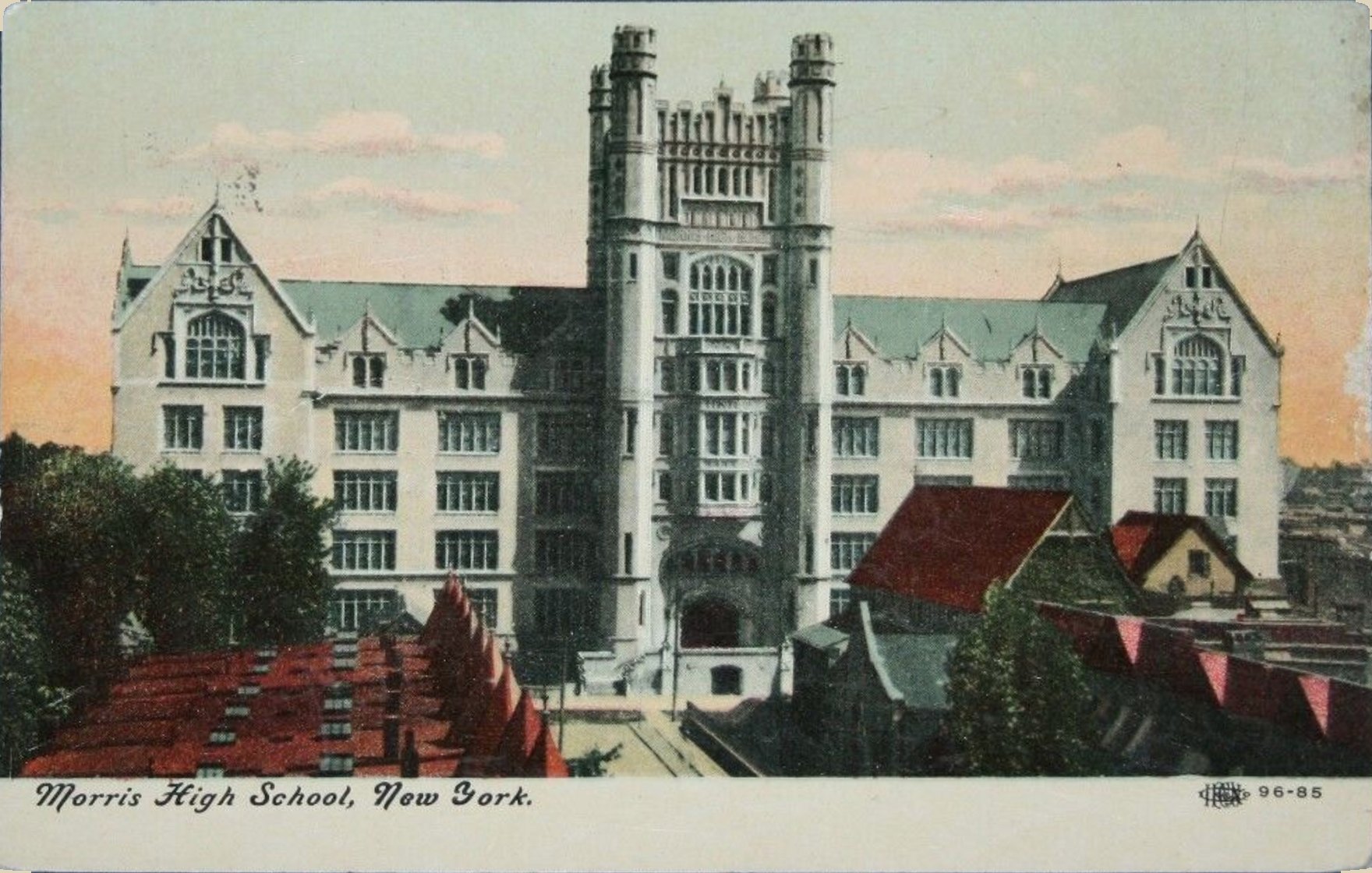
“I was born in a single family, middle class house in the upper Bronx. And my education was in public schools in the Bronx, in public schools in Morris High School, which was at 166th Street. […] And so I went to Barnard College, living at home in the Bronx and commuting from my home to college over the four years that I was in Barnard.”
- Object
- Picture postcard in colour, printed caption “Morris High School, New York.”Front only so far. The back, with any postmark, message or printer’s line, still waits for a scan
- Publisher
- Illustrated Postal Card Co., 118 Chambers Street, New YorkIts monogram, IPC&N Co., and the number 96-85 at lower right. The firm numbered its views by city, 96 for New York
- Date
- Between about 1905 and 1914The years the firm published its views; nothing on the front gives a year. The building in the picture opened in 1904
- Building
- Morris High School, Boston Road at East 166th Street, the BronxDesigned by C. B. J. Snyder for the Board of Education. A city landmark since 1982, as the Morris High School Historic District
- Held by
- Research files of Ida Rolf – Mother of FasciaBought by Aleš Urbanczik on eBay
- Rights
- Public domain in the United States: published before 1931
- Her account
- “Morris High School, which was at 166th Street”Ida Rolf, audio recording made for Robert Toporek in her last years, formerly on YouTube, about three minutes in. Quoted from a transcript, with the leave Robert Toporek gave the film. Should he or his family object, the page removes the passages
- In print
- “… and was graduated from the Morris High School”The vita printed with her dissertation in 1922, Columbia University Libraries’ copy
Her own dissertation puts the school in print. The short vita printed with it in 1922 reads: “She attended the public schools in that city, and was graduated from the Morris High School.” She entered Barnard in the autumn of 1912 with the class of 1916, so her years at Morris would have run from about 1908 to 1912. The month she finished still waits for a newspaper’s list of graduates.
The school had opened in 1897 as the Mixed High School, for boys and girls together. In 1904 it moved into the building on the card, which C. B. J. Snyder, architect to the city’s Board of Education, had drawn in the Gothic that American colleges loved at the time. Turrets crown the tower over the entrance on Boston Road, and steep gables close each wing. A girl from the Bronx climbed those steps each morning into something very like a university, four years before she reached a real one.
The card comes from the Illustrated Postal Card Co. of New York, whose monogram sits beside the number 96-85 at lower right. The firm gave each city a number of its own, 96 for New York, and sold its views from about 1905 to 1914, so the picture shows the school much as she knew it. Its colour came at the printer’s, laid over a black-and-white photograph: a pink evening sky, and red on the roofs of the small houses in front.
School ran in the family. In the same recording she spoke of her mother, Ida Mayer Rolf.
“My mother had been a schoolteacher before her marriage, and apparently a pretty successful school teacher, especially in dealing with turbulent youngsters who were always sent to her for correction and calming down. I don’t know that any of this ever spilled over on me, but I’ve heard many stories of this sort. […] My mother, a woman of her generation, saw nothing really for a girl to be doing other than teaching.”
A cousin steered her toward chemistry instead, and the laboratory claimed her first. Teaching found her a generation later, in classes of grown pupils like the one at Cedar Rapids in 1954, and stayed with her into old age. Her mother had guessed the calling right and the subject wrong.
Cite as“Morris High School, New York.” Picture postcard, Illustrated Postal Card Co., New York, no. 96-85, about 1905 to 1914. Research files of Ida Rolf – Mother of Fascia.
Ida Pauline Rolf, Three Contributions to the Chemistry of the Unsaturated Phosphatides (Baltimore: Waverly Press, [1922]), Vita.
Ida P. Rolf, audio recording for Robert Toporek, late 1970s, about 3:06 to 11:50.
“Votes for Women”, by canoe
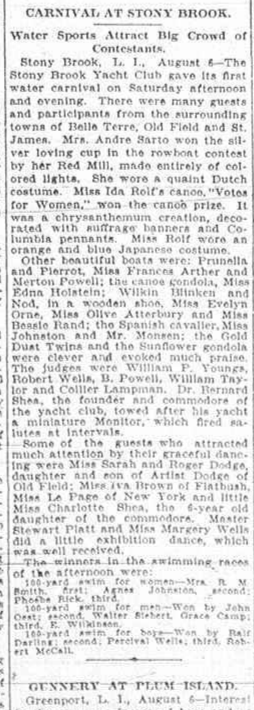
Transcription, in part
CARNIVAL AT STONY BROOK.
Water Sports Attract Big Crowd of Contestants.
Stony Brook, L. I., August 6—The Stony Brook Yacht Club gave its first water carnival on Saturday afternoon and evening. There were many guests and participants from the surrounding towns of Belle Terre, Old Field and St. James. Mrs. Andre Sarto won the silver loving cup in the rowboat contest by her Red Mill, made entirely of colored lights. She wore a quaint Dutch costume. Miss Ida Rolf’s canoe, “Votes for Women,” won the canoe prize. It was a chrysanthemum creation, decorated with suffrage banners and Columbia pennants. Miss Rolf wore an orange and blue Japanese costume.
[the other boats, the judges, the dancing and the swimming races follow]
- Document
- Report in The Brooklyn Daily Eagle, page “From Queens Borough and All Long Island”
- Date
- Thursday, 6 August 1914The carnival took place on Saturday, 1 August 1914
- Reference
- Page 5
- Digital copy
- Old Fulton NY Post CardsThe paper also sits on Brooklyn Newsstand, Brooklyn Public Library
- Rights
- Public domain in the United States: published before 1931
Eighteen years old, with two years at Barnard behind her, Ida Rolf paddled into the Stony Brook Yacht Club’s first water carnival in a canoe dressed in chrysanthemums and named “Votes for Women”. Suffrage banners and Columbia pennants hung from it, and she wore an orange and blue Japanese costume. The canoe won its class.
The summer of 1914 belonged to the suffrage campaign in New York; the state’s men voted on women’s suffrage in November 1915. A Barnard student made her point on the water, with flowers. Stony Brook stayed in the family’s life for decades: the town’s column in the Port Jefferson Echo carried her secret wedding in 1921.
Cite as“Carnival at Stony Brook,” The Brooklyn Daily Eagle, 6 August 1914, p. 5.
Barnard yearbook portrait
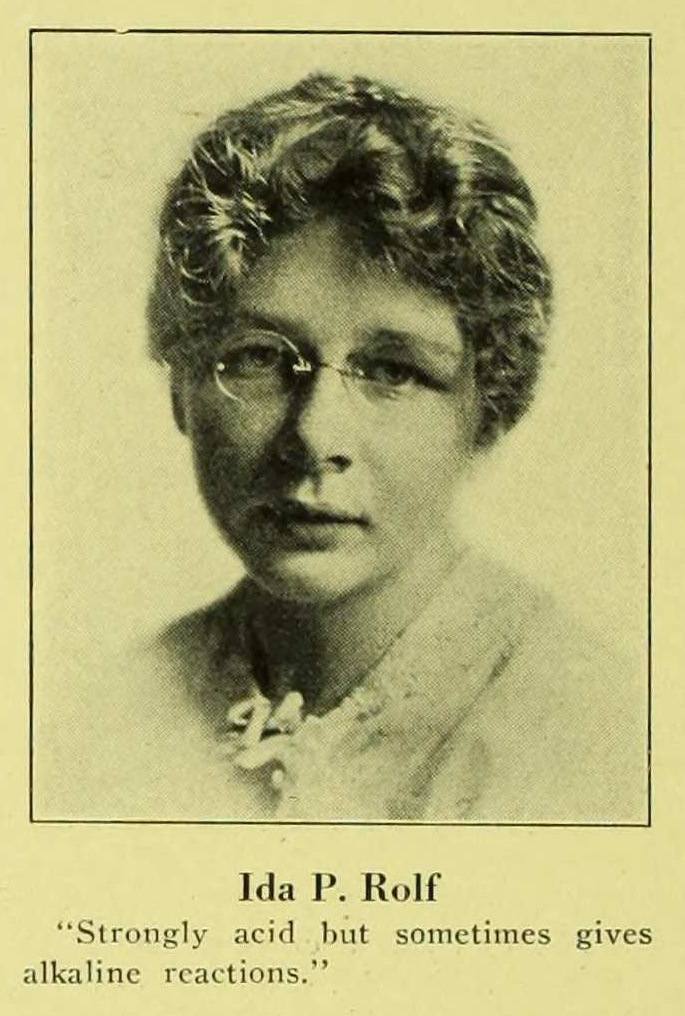
Transcription
Ida P. Rolf
“Strongly acid but sometimes gives alkaline reactions.”
- Document
- Class portrait with caption, in Mortarboard 1916, the Barnard College yearbook
- Date
- 1915Compiled by the class of 1916 in its junior year, following the dating Barnard Archives gives the series
- Held by
- Barnard Archives and Special Collections, New York
- Reference
- BC12-01 (Mortarboard), volume 1916, printed page 170Page 180 of the digitized volume
- Rights
- Public domain in the United States: published before 1931
The page shows six members of the class of 1916, with Rolf at top right. Each portrait carries a quotation or a joke. Hers comes from the chemistry laboratory.
Cite asBarnard College class of 1916, Mortarboard 1916 (New York, 1915), p. 170. Barnard Archives and Special Collections, BC12-01.
Numbers in chemistry
The speaker never came. A junior from the chemistry laboratory took the hour instead.
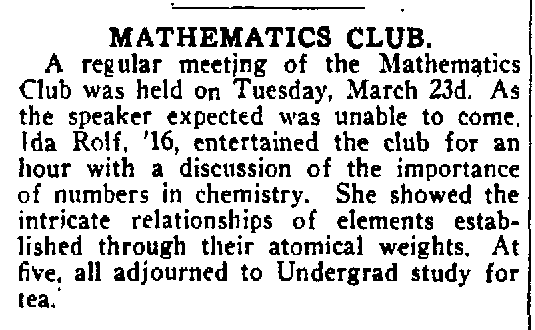
Transcription
MATHEMATICS CLUB.
A regular meeting of the Mathematics Club was held on Tuesday, March 23d. As the speaker expected was unable to come, Ida Rolf, ’16, entertained the club for an hour with a discussion of the importance of numbers in chemistry. She showed the intricate relationships of elements established through their atomical weights. At five, all adjourned to Undergrad study for tea.
- Document
- Report in the Barnard Bulletin, the college’s weekly student newspaper
- Date
- Meeting on Tuesday, 23 March 1915Reported in the issue of Monday, 29 March 1915
- Held by
- Barnard Archives and Special Collections, New York
- Reference
- BC12-03 (Barnard Bulletin), vol. XIX, printed page 4The issue number’s last figure blurs in the scan
- Digital copy
- Barnard Digital CollectionsPointed out by Barnard Archives in November 2026
- Rights
- Public domain in the United States: published before 1931
Rolf, eighteen and in her third year, filled the gap with a talk on why numbers matter in chemistry, and on how the atomic weights of the elements tie them to one another. The question had fresh life that spring. Henry Moseley’s X-ray measurements of 1913 and 1914 had just shown that an element’s place in the periodic table follows its atomic number, not its weight, and a few months later he fell at Gallipoli. The report leaves no clue whether her hour touched on him.
The same year her class yearbook gave her a chemist’s joke for a caption. Barnard College’s own web portrait of her quotes this report. Given no notice, she held a room for an hour, and the record catches her teaching for the first time.
Cite as“Mathematics Club,” Barnard Bulletin 19 (29 March 1915): 4. Barnard Archives and Special Collections, BC12-03.
Undigested facts
In her last spring at Barnard she and a classmate took the college’s teaching to task in print. The student weekly gave their letter most of a page.
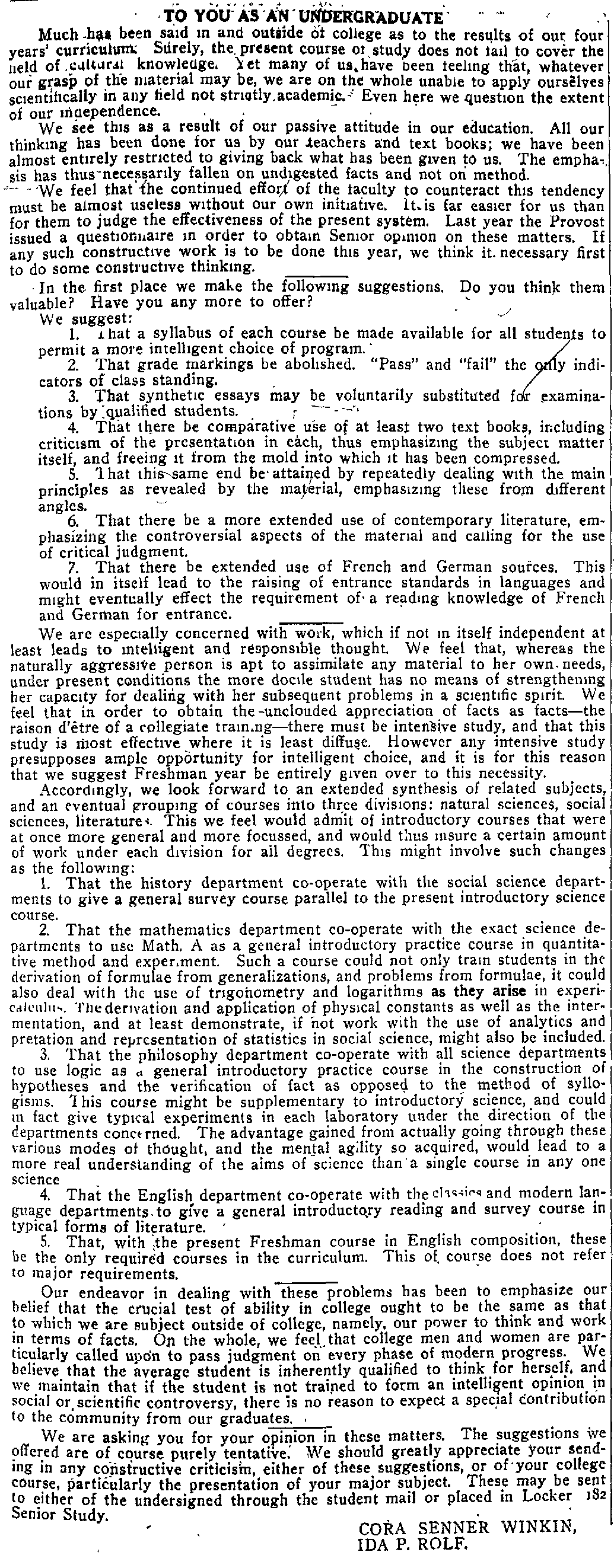
Transcription, in part
TO YOU AS AN UNDERGRADUATE
Much has been said in and outside of college as to the results of our four years’ curriculum. Surely, the present course of study does not fail to cover the field of cultural knowledge. Yet many of us have been feeling that, whatever our grasp of the material may be, we are on the whole unable to apply ourselves scientifically in any field not strictly academic. Even here we question the extent of our independence.
We see this as a result of our passive attitude in our education. All our thinking has been done for us by our teachers and text books; we have been almost entirely restricted to giving back what has been given to us. The emphasis has thus necessarily fallen on undigested facts and not on method.
[seven proposals follow, among them:]
2. That grade markings be abolished. “Pass” and “fail” the only indicators of class standing.
4. That there be comparative use of at least two text books, including criticism of the presentation in each, thus emphasizing the subject matter itself, and freeing it from the mould into which it has been compressed.
[then a first year of general courses, among them:]
3. That the philosophy department co-operate with all science departments to use logic as a general introductory practice course in the construction of hypotheses and the verification of fact as opposed to the method of syllogisms.
Our endeavor in dealing with these problems has been to emphasize our belief that the crucial test of ability in college ought to be the same as that to which we are subject outside of college, namely, our power to think and work in terms of facts.
[a call for replies, “through the student mail or placed in Locker 182 Senior Study”, then:]
CORA SENNER WINKIN,
IDA P. ROLF.
- Document
- Open letter, “To You as an Undergraduate”, in the Barnard Bulletin, the college’s weekly student newspaperA circular letter to the seniors, sent out “through the medium of the Bulletin”, as the editorial on page 2 puts it
- Signed
- Cora Senner Winkin, ’16, and Ida P. Rolf, ’16Winkin sat among the paper’s three managing editors, Rolf ran its business side. Nothing shows which of them wrote which line
- Date
- Monday, 6 March 1916
- Held by
- Barnard Archives and Special Collections, New York
- Reference
- BC12-03 (Barnard Bulletin), vol. XX, no. 19, printed pages 2 and 5Followed up in no. 20 (13 March 1916), page 2, and no. 26 (1 May 1916), page 2
- Digital copy
- Barnard Digital CollectionsThe issues of 1915–16, among them every one that names her on the masthead. Barnard Archives sent the issues of February to June 1916 as PDFs in November 2026
- Rights
- Public domain in the United States: published before 1931
Nineteen years old and three months from her degree, Rolf put her name to a charge against the way Barnard taught. Students, the letter says, had learned to hand back what teachers and textbooks handed them, and few could put their knowledge to work “scientifically in any field not strictly academic”. Its cure reads like a laboratory’s. Publish each course’s syllabus in advance, so a student can choose with her eyes open. Grade only pass or fail. Set two textbooks against each other in every course, and teach logic in the first year as the building of hypotheses and the testing of fact.
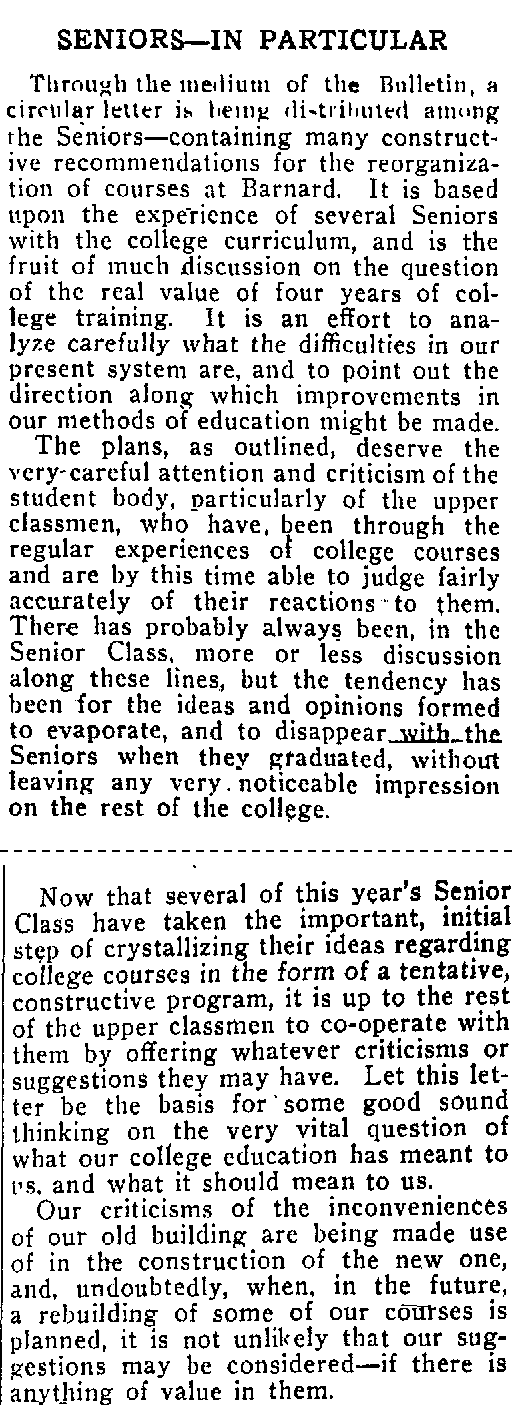
The paper backed them in the same issue. Its editorial called the letter “the fruit of much discussion on the question of the real value of four years of college training” and asked the upper classes to answer. A week later it reported that the letter had gone to the Dean, the Provost and several members of the faculty, who helped revise it. Every senior would sit for an interview before the end of term.
What followed, in part
[13 March 1916, page 2:]
FOLLOWING UP THE LETTER
Since the publication of the letter in last week’s “Bulletin,” which suggested changes in the curriculum, the plan to formulate the tentative approval and disapproval of the student body has taken definite form. […] This letter has already been submitted to the Dean, the Provost and several members of the faculty, and has been modified by their assistance. […] The general aim of this undertaking is to make the college curriculum more integrally related to the needs of the undergraduates. It is not directed toward vocational training […]
[1 May 1916, page 2, the outgoing chairman of Student Council to the Undergraduate Association:]
To my mind such a plan as that begun by Cora Senner Winken [sic] and Ida Rolf is a healthy and hopeful sign of what may be accomplished in the future. By such sane and thoughtful treatment of the subject and by the cordial co-operation which the Faculty have shown, I hope we may develop a very helpful plan next year.
CAROL R. LORENZ.
No earlier text with her name under it has come to light. Winkin signed first, and no one can now tell the two voices apart. Yet the measure the letter sets for a college fits the chemist she became, and the teacher later still: “our power to think and work in terms of facts.”
Cite asCora Senner Winkin and Ida P. Rolf, “To You as an Undergraduate,” Barnard Bulletin 20, no. 19 (6 March 1916): 5. Barnard Archives and Special Collections, BC12-03.
“Seniors—In Particular,” Barnard Bulletin 20, no. 19 (6 March 1916): 2.
“Following Up the Letter,” Barnard Bulletin 20, no. 20 (13 March 1916): 2.
Carol R. Lorenz, “To the Undergraduate Association,” Barnard Bulletin 20, no. 26 (1 May 1916): 2.
Alternate for the fellowship
Each spring the Barnard faculty chose one senior for its graduate fellowship. In 1916 two New York papers reported the choice and the name of the runner-up, and the college’s own weekly added a line about her.
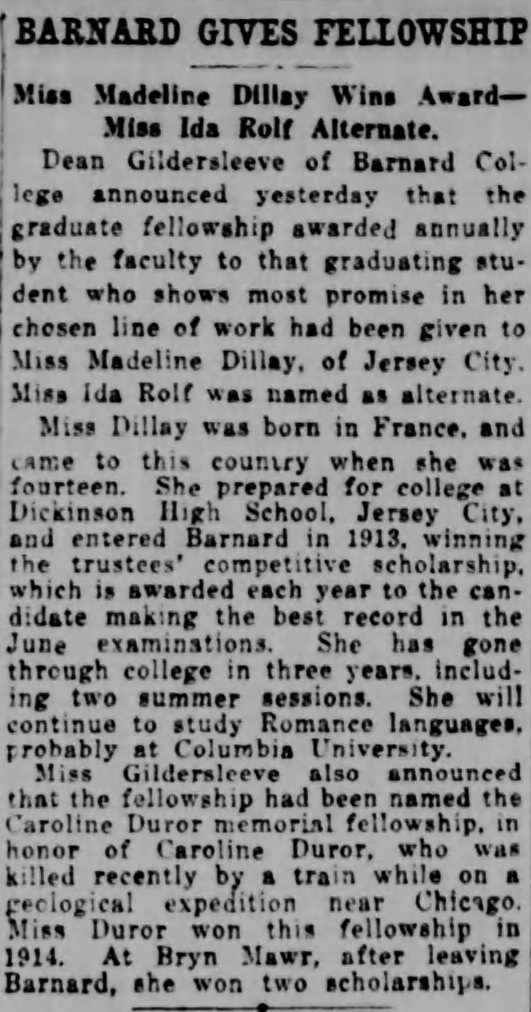
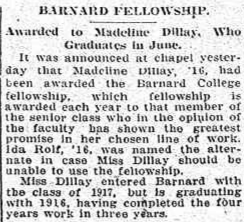
Transcription, in part
[The Brooklyn Daily Eagle:]
BARNARD FELLOWSHIP.
Awarded to Madeline Dillay, Who Graduates in June.
It was announced at chapel yesterday that Madeline Dillay, ’16, had been awarded the Barnard College fellowship, which fellowship is awarded each year to that member of the senior class who in the opinion of the faculty has shown the greatest promise in her chosen line of work. Ida Rolf, ’16, was named the alternate in case Miss Dillay should be unable to use the fellowship.
[New-York Tribune:]
BARNARD GIVES FELLOWSHIP
Miss Madeline Dillay Wins Award—Miss Ida Rolf Alternate.
Dean Gildersleeve of Barnard College announced yesterday that the graduate fellowship awarded annually by the faculty to that graduating student who shows most promise in her chosen line of work had been given to Miss Madeline Dillay, of Jersey City. Miss Ida Rolf was named as alternate.
[a note on Miss Dillay and on the fellowship’s new name, after Caroline Duror, follows]
[Barnard Bulletin, 3 April 1916:]
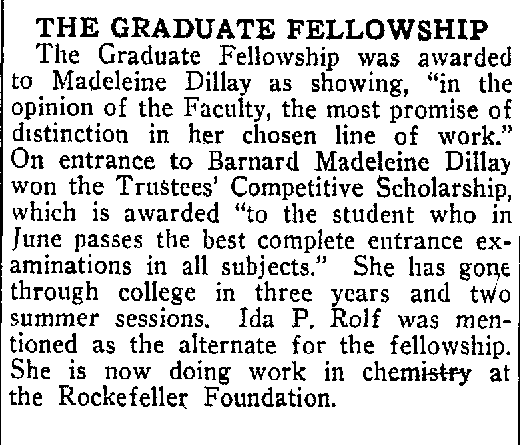
THE GRADUATE FELLOWSHIP
The Graduate Fellowship was awarded to Madeleine Dillay as showing, “in the opinion of the Faculty, the most promise of distinction in her chosen line of work.” […] She has gone through college in three years and two summer sessions. Ida P. Rolf was mentioned as the alternate for the fellowship. She is now doing work in chemistry at the Rockefeller Foundation.
- Documents
- Two reports of the same announcement, in The Brooklyn Daily Eagle and the New-York Tribune, and a third in the Barnard Bulletin
- Date
- Announced on 30 March 1916The Eagle of Friday, 31 March, speaks of chapel “yesterday”; the Tribune followed on Saturday, 1 April, the Bulletin on Monday, 3 April
- Reference
- New-York Tribune, page 9; The Brooklyn Daily Eagle, page “Daily News of Schools and Colleges”; Barnard Bulletin, vol. XX, no. 23, page 1 (Barnard Archives and Special Collections, BC12-03)The Eagle’s page number falls outside the scan
- Digital copy
- Library of Congress, Chronicling America, for the TribuneThe two city papers’ scans come from Old Fulton NY Post Cards, the Bulletin’s from Barnard Digital Collections
- Rights
- Public domain in the United States: published before 1931
- Commons
- New-York Tribune, 1 April 1916, the fellowshipAlso the Eagle’s item, and both whole pages
The fellowship went “to that member of the senior class who in the opinion of the faculty has shown the greatest promise in her chosen line of work”. Madeline Dillay, who had come from France at fourteen and finished Barnard in three years, won it and meant to go on in Romance languages. The faculty named Rolf, the chemist, next in line.
The college’s weekly closes its report with a sentence the city papers left out: “She is now doing work in chemistry at the Rockefeller Foundation.” The “she” can only mean Rolf. Dillay’s honours that June came in Latin, French and Spanish, Rolf’s in chemistry.
So two months before Commencement the senior who kept the paper’s accounts already worked in a Rockefeller laboratory. The Bulletin writes Foundation, but the laboratories belonged to the Rockefeller Institute for Medical Research, and the two names often ran together. This page had dated her start to 1917, from her memory of the war and her first paper of 1919. The student weekly puts it back into her last year at Barnard. Both women entered Phi Beta Kappa that June.
Cite as“Barnard Gives Fellowship: Miss Madeline Dillay Wins Award; Miss Ida Rolf Alternate,” New-York Tribune, 1 April 1916, p. 9.
“Barnard Fellowship,” The Brooklyn Daily Eagle, 31 March 1916.
“The Graduate Fellowship,” Barnard Bulletin 20, no. 23 (3 April 1916): 1. Barnard Archives and Special Collections, BC12-03.
Phi Beta Kappa membership card
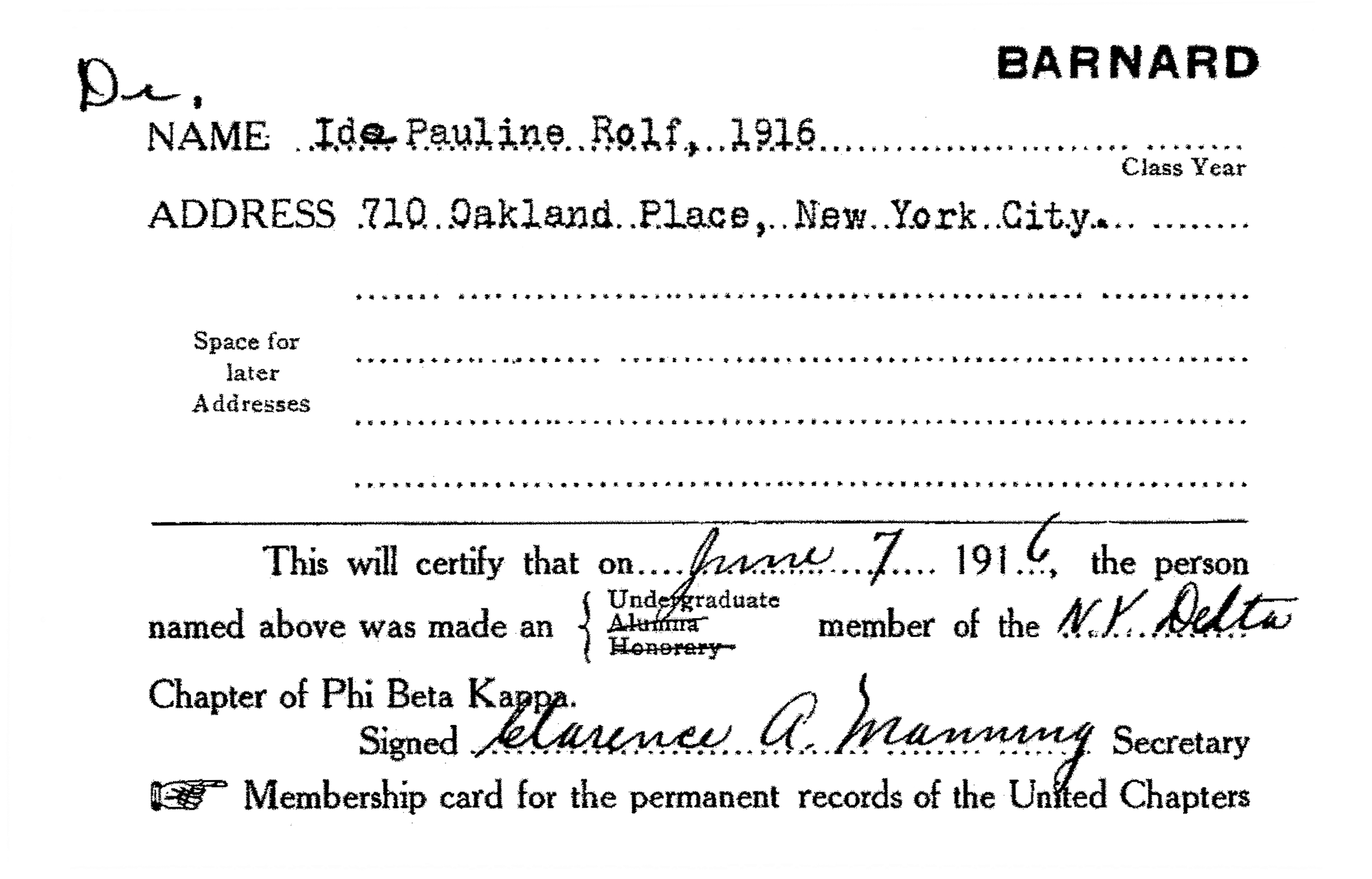
Transcription
Dr. [top left]
BARNARD
NAME Ida Pauline Rolf, 1916 [final a of Ida typed over another letter]
Class Year
ADDRESS 710 Oakland Place, New York City.
Space for later Addresses [four dotted lines, left blank]
This will certify that on June 7 1916, the person
named above was made an Undergraduate Alumna Honorary [last two struck through by hand] member of the N.Y. Delta
Chapter of Phi Beta Kappa.
Signed Clarence A. Manning Secretary
[printed pointing hand] Membership card for the permanent records of the United Chapters
- Document
- Membership card of the United Chapters of Phi Beta Kappa, completed for the New York Delta chapter
- Date
- 7 June 1916The date of election, as the card states it. The “Dr.” at top left can only date from after her doctorate.
- Held by
- The Phi Beta Kappa Society, Washington, D.C.
- Reference
- Membership records of the United Chapters
- Address
- 710 Oakland Place, the BronxThe family’s street from at least 1900 (census, enumeration district 1034, sheet 15A) to 1928 (her mother’s death notice, The New York Times, 28 August 1928, p. 11). Her father’s wall and fence: The City Record, 11 May 1905, p. 3839, Board of Aldermen, resolution 1925
- Rights
- Public domain in the United States: a printed form issued before 1931, filled in with facts and a signature, which copyright does not coverReproduced with the approval of the Phi Beta Kappa Society
The card names Columbia University’s chapter, the Delta of New York, chartered in 1869; the word Barnard at its head marks her college. The address, 710 Oakland Place, lies in the Bronx.
The family lived on that street for close to three decades. The census of June 1900 found them there, Ida aged four, and her mother still lived at number 710 when she died in August 1928. In May 1905 the Board of Aldermen gave her father leave to set a wall two feet high for an iron fence in front of his house, on the south side of Oakland Place, a hundred feet east of Crotona Avenue. The “single family, middle class house in the upper Bronx” she remembered stood here, and from it she commuted to Barnard.
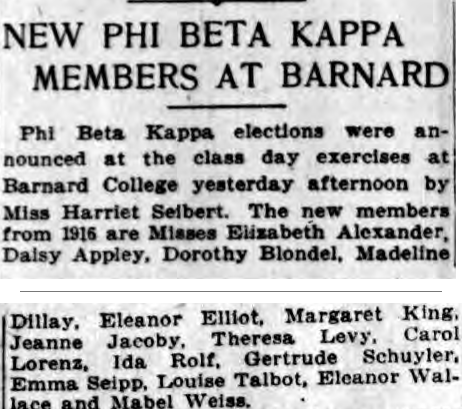
The city heard of it the next morning. “Phi Beta Kappa elections were announced at the class day exercises at Barnard College yesterday afternoon by Miss Harriet Seibert,” the New York Herald reported, and its fifteen names from the class of 1916 include “Ida Rolf”. Class Day fell on 6 June, so the card’s 7 June points to the formal admission a day later, at Commencement.
Cite asMembership card of Ida Pauline Rolf, New York Delta chapter, 7 June 1916. Membership records of the United Chapters of Phi Beta Kappa, The Phi Beta Kappa Society, Washington, D.C.
“New Phi Beta Kappa Members at Barnard,” New York Herald, 7 June 1916, p. 16.
Business manager of the Bulletin
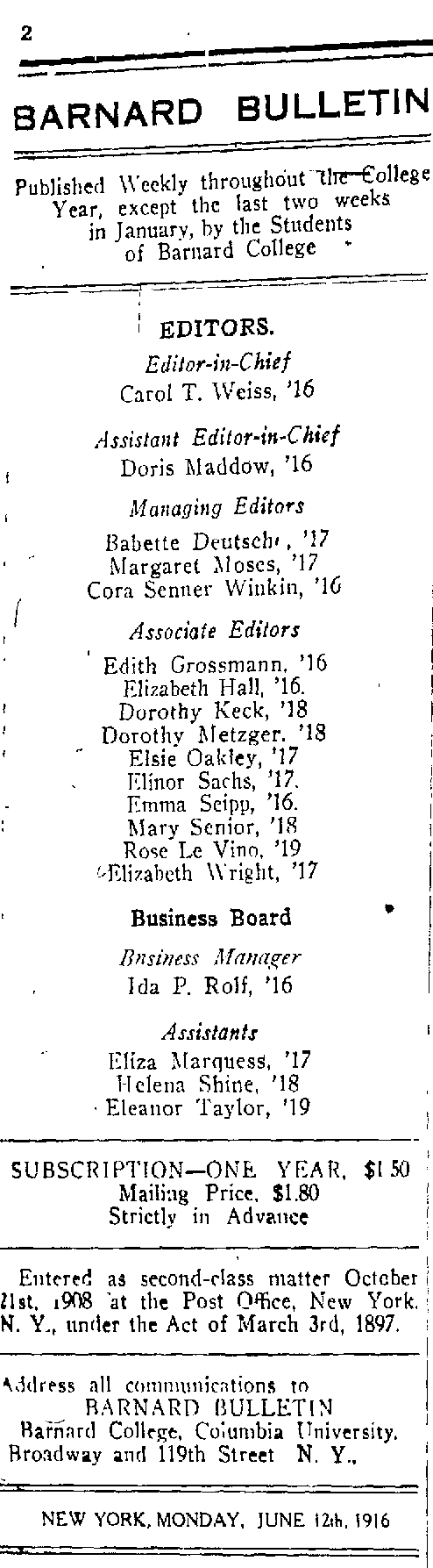
Transcription of the masthead, in part
BARNARD BULLETIN
Published Weekly throughout the College Year, except the last two weeks in January, by the Students of Barnard College
EDITORS.
Editor-in-Chief
Carol T. Weiss, ’16
[the assistant editor-in-chief, three managing editors and ten associate editors follow, then:]
Business Board
Bnsiness Manager [sic]
Ida P. Rolf, ’16
Assistants
Eliza Marquess, ’17
Helena Shine, ’18
Eleanor Taylor, ’19
[at the foot of the masthead:]
NEW YORK, MONDAY, JUNE 12th, 1916
- Document
- Masthead and the reports of Class Day and Commencement, in the Barnard Bulletin, the college’s weekly student newspaper
- Date
- Monday, 12 June 1916Class Day fell on 6 June, Commencement on 7 June, as the programme of Senior Week on page 2 shows
- Held by
- Barnard Archives and Special Collections, New York
- Reference
- BC12-03 (Barnard Bulletin), vol. XX, no. 29, printed pages 2, 5 and 7
- Digital copy
- Barnard Digital CollectionsThe whole issue, eight pages, as a PDF
- Rights
- Public domain in the United States: published before 1931
- Commons
- Barnard Bulletin, 12 June 1916, page 2, mastheadAlso the whole issue as a PDF
Transcription of pages 5 and 7, in part
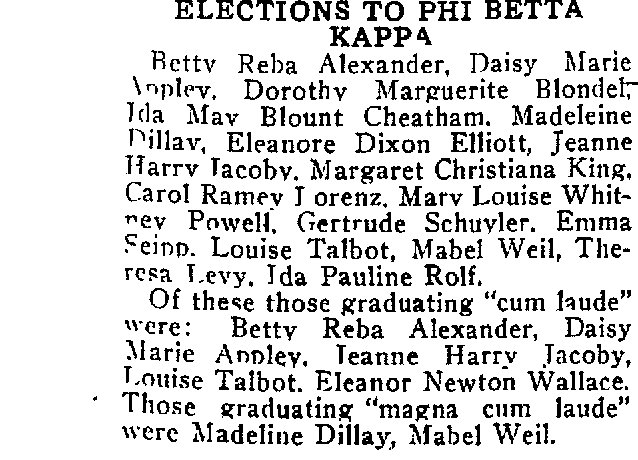
ELECTIONS TO PHI BETTA KAPPA [sic]
Betty Reba Alexander, Daisy Marie Appley, Dorothy Marguerite Blondel, Ida May Blount Cheatham, Madeleine Dillay, Eleanore Dixon Elliott, Jeanne Harry Jacoby, Margaret Christiana King, Carol Ramey Lorenz, Mary Louise Whitney Powell, Gertrude Schuyler, Emma Seipp, Louise Talbot, Mabel Weil, Theresa Levy, Ida Pauline Rolf.
Of these those graduating “cum laude” were: Betty Reba Alexander, Daisy Marie Appley, Jeanne Harry Jacoby, Louise Talbot, Eleanor Newton Wallace. Those graduating “magna cum laude” were Madeline Dillay, Mabel Weil.
[page 7:]
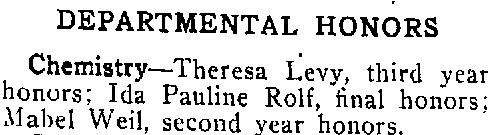
DEPARTMENTAL HONORS
Chemistry—Theresa Levy, third year honors; Ida Pauline Rolf, final honors; Mabel Weil, second year honors.
Five days after Commencement the student weekly closed its year with the news of the class of 1916, and Rolf turns up in it three times. The masthead names her business manager, at the head of the Business Board, with an assistant from each of the younger classes beneath her. She held the post all through her senior year, from the first issue of the year, 4 October 1915, to this last one, and in March she co-signed a letter on teaching in the paper’s own columns. On a college paper of the time that post usually meant chasing advertisers and minding the accounts: the side that kept the paper in print.
The job had its own salesmanship. On 17 January 1916 the paper ran a short notice headed “Are you broke?”: “The Business Board of the Bulletin is favorably considering the giving of ten per cent commissions on all advertisements secured by Barnard students. If you’re interested in earning some money this way confer with Ida Rolf at once.”
Page 5 lists her among the classmates elected to Phi Beta Kappa, the election her membership card records. She and Theresa Levy close the list, out of alphabetical order. Page 7 gives her final honors in chemistry, the only final honors the department awarded that year.
One more name on the masthead: Babette Deutsch, ’17, among the managing editors, later a poet and a translator of Pushkin and Rilke.
Cite asBarnard Bulletin 20, no. 29 (12 June 1916): 2, 5, 7. Barnard Archives and Special Collections, BC12-03.
Masthead, Barnard Bulletin 20, no. 1 (4 October 1915): 2.
“Are You Broke?,” Barnard Bulletin 20, no. 14 (17 January 1916): 4.
Most likely summer 1916
A blind osteopath in Port Jefferson
Her first lesson in structure came through an illness. In her own telling, a horse’s hoof struck her on her first visit to Colorado, the day before she set out for Yellowstone, and what followed looked like pneumonia.
“Eventually I landed in a hospital in Montana. The doctor wasn’t satisfied with my progress so he brought in an osteopath. After his ministrations I could breathe again. […] my mother took me with her to this blind osteopath, Dr. Morrison, in Port Jefferson. It was unusual to go to an osteopath in those days. […] I got to be friends with Morrison, and I became interested in the theory of osteopathy—that structure determines function.”
- Document
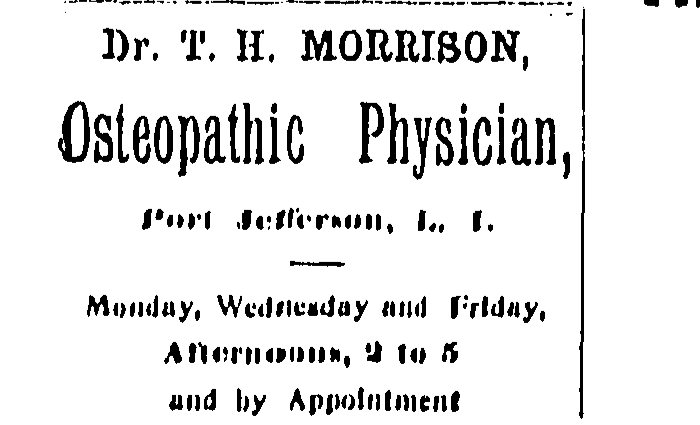
- Advertisement, The Port Jefferson Echo, Saturday 30 January 1915, page 8“Dr. T. H. Morrison, Osteopathic Physician, Port Jefferson, L. I. Monday, Wednesday and Friday, Afternoons, 2 to 5 and by Appointment”
- Osteopath
- Thomas H. Morrison, D.O.A former pupil of the California School for the Blind; D.O. of the California Osteopathic College, Los Angeles; “moved to Long Island, New York, where he practiced osteopathy until his death” (Outlook for the Blind, November 1947). In San Francisco in 1904
- In Port Jefferson
- From 1908 at the latest, still in 1930Journal of the American Osteopathic Association, June 1908, p. 448, and its list of December 1930
- Her visit
- Most likely summer 1916By her own “when I was 20 years old” on a class tape, and the railroad strike called for 4 September 1916. The film’s timeline says around 1910; a strike of 1922 offers the other candidate
- Digital copy
- NYS Historic Newspapers
- Rights
- Public domain in the United States: published in 1915Her words quoted briefly, for documentation
She turned twenty in May 1916, a month before her graduation from Barnard. That summer the railroad brotherhoods called a national strike for 4 September. Freight stopped and travellers cancelled until Congress passed the eight-hour law two days before the deadline. “I could hardly get across the country,” she remembered.
Back on Long Island her mother took her to her own osteopath. Thomas H. Morrison had come east from California, where he went to the state’s school for the blind and took his degree in Los Angeles. By 1908 he practised in Port Jefferson, and in January 1915 his card in the Echo offered three afternoons a week. In those years, as she put it, osteopaths “were not accepted at all.”
She made a friend of him. From the blind man’s hands she took the idea her own work would turn on: structure determines function.
Cite asAdvertisement of Dr. T. H. Morrison, The Port Jefferson Echo (Port Jefferson, N.Y.), 30 January 1915, p. 8. NYS Historic Newspapers.
Rosemary Feitis, ed., Ida Rolf Talks about Rolfing and Physical Reality (New York: Harper & Row, 1978).
Journal of the American Osteopathic Association 7, no. 10 (June 1908): 448; Outlook for the Blind 41, no. 9 (November 1947).
Phi Beta Kappa roll in the yearbook
Transcription, in part
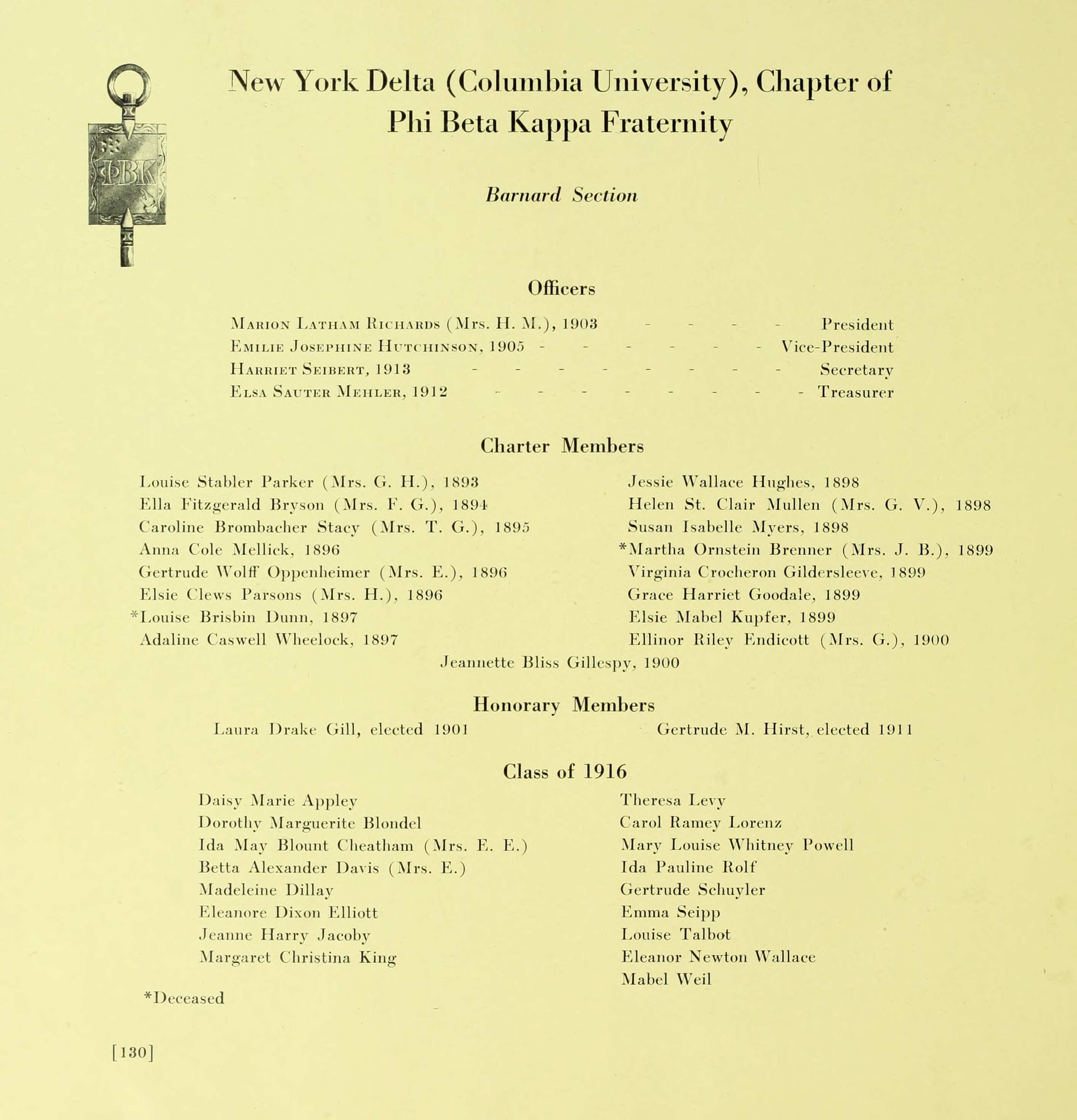
New York Delta (Columbia University), Chapter of Phi Beta Kappa Fraternity
Barnard Section
[officers, charter members and honorary members follow, then:]
Class of 1916
Daisy Marie Appley · Dorothy Marguerite Blondel · Ida May Blount Cheatham (Mrs. E. E.) · Betta Alexander Davis (Mrs. E.) · Madeleine Dillay · Eleanore Dixon Elliott · Jeanne Harry Jacoby · Margaret Christina King · Theresa Levy · Carol Ramey Lorenz · Mary Louise Whitney Powell · Ida Pauline Rolf · Gertrude Schuyler · Emma Seipp · Louise Talbot · Eleanor Newton Wallace · Mabel Weil
[set in two columns; read here left column first]
- Document
- Members of the Barnard section of Phi Beta Kappa, in Mortarboard 1918, the Barnard College yearbook
- Date
- 1917Compiled by the class of 1918 in its junior year, following the dating Barnard Archives gives the series
- Held by
- Barnard Archives and Special Collections, New York
- Reference
- BC12-01 (Mortarboard), volume 1918, printed page 130
- Rights
- Public domain in the United States: published before 1931
A year after her election, the yearbook of the class of 1918 printed the roll of the Barnard section. Rolf appears in the list of seventeen from her own class.
Cite asBarnard College class of 1918, Mortarboard 1918 (New York, 1917), p. 130. Barnard Archives and Special Collections, BC12-01.
Chapter III · 1917 to 1924
Chemist in New York
The war opened the door. In 1917 the Rockefeller Institute took her into a laboratory hunting a safer Salvarsan, and in 1920 Columbia made her a Doctor of Philosophy. Within a year she had married her cousin Walter in secret, and soon her doctoral work lay bound under her own name. Promotion to associate followed in July 1922. By 1923 the Institute wanted her portrait for its records, and its director and his wife asked her to tea.
to
Salvarsan in wartime
The war in Europe opened a laboratory door for her. Sixty years later she told how, and a paper of 1919 bears her out.
“I had what was for me and for a lot of women at that time a piece of good luck. Namely, there was a European war. And all of the young men were either in Europe or were being trained to go to Europe … and they started hiring women. And actually, I don’t know how many of those of us women who got our starts through this accident appreciate the fact that for us, that war was a great blessing.”
“I was working in chemotherapy. And I was one of the workers in a laboratory of the Rockefeller Institute where they were trying to solve the problem of Salvarsan and neo-Salvarsan. The American product was proving very toxic. The German product was fine, but the German product was no longer available.”
“I was employed in the organic chemistry department with Walter Jacobs and Michael Heidelberger. Some of you out there might recognize those names.”
- Her account
- Interview following her lecture “Structure: A New Factor in Understanding the Human Condition”, Explorers of Humankind conference, Los Angeles, 1978Audio recording; a copy rests with the production. The same recording sits in the Ida Rolf Archive at bostonrolf.com as tape STRUC1, from 29:50.
- The paper
- Walter A. Jacobs, Michael Heidelberger and Ida P. Rolf, “On Certain Aromatic Amines and Chloroacetyl Derivatives”Journal of the American Chemical Society 41, no. 3 (1919): 458–474, doi:10.1021/ja01460a022. Her earliest known publication.
- The laboratory
- Walter A. Jacobs (1883–1967) and Michael Heidelberger (1888–1991), Rockefeller Institute for Medical Research“Jacobs and Heidelberger investigated possible synthetic substitutes for Salvarsan, a drug in scant supply and of undesirable toxicity,” in the National Academy of Sciences memoir of Jacobs, which lists the paper of 1919
- Rights
- Her words belong to her heirsQuoted briefly, for documentation. The paper’s bibliographic data carry no copyright. Ehrlich’s portrait: public domain, as the National Library of Medicine judges it.
Salvarsan, the arsenic compound Paul Ehrlich and Sahachiro Hata found in 1909, gave medicine its first effective treatment for syphilis, a disease that mercury had only held at bay for centuries. Ehrlich called it a “magic bullet”, a drug built in the laboratory to strike the germ and spare the patient, and with it began the age of chemotherapy, the very field Rolf named as her own. The good German product, as she remembered it, stopped reaching America once the war cut off trade, and the American substitute proved toxic, so the Rockefeller Institute set its chemists to work on safer arsenicals. In the laboratory of Walter A. Jacobs and Michael Heidelberger that search led to tryparsamide, a drug against African sleeping sickness. Rolf, a Barnard graduate of 1916, joined them as one of the women the war let in.
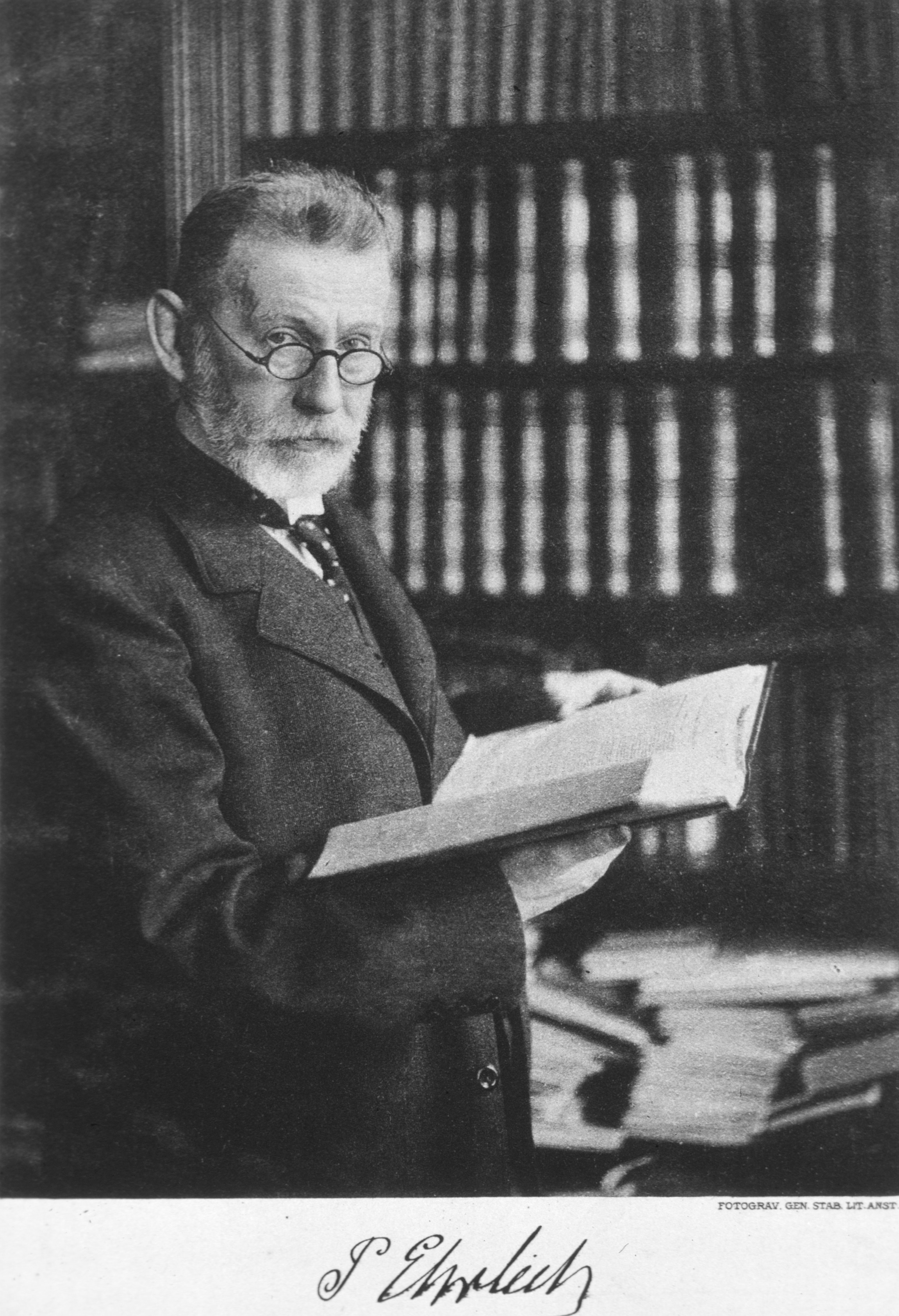
Her memory and the printed page agree. In 1919 the Journal of the American Chemical Society printed a paper on aromatic amines and their chloroacetyl derivatives under three names: Jacobs, Heidelberger and Ida P. Rolf. No earlier paper of hers has come to light. The three papers bound as her dissertation she wrote later, with Phoebus Levene, in whose laboratory she took the doctorate of 1920.
Cite asIda P. Rolf, interview following “Structure: A New Factor in Understanding the Human Condition,” Explorers of Humankind conference, Los Angeles, 1978, audio recording; Ida Rolf Archive, bostonrolf.com, tape STRUC1.
Walter A. Jacobs, Michael Heidelberger and Ida P. Rolf, “On Certain Aromatic Amines and Chloroacetyl Derivatives,” Journal of the American Chemical Society 41, no. 3 (1919): 458–474.
A good employer
Eighteen months after Commencement she came back to Barnard to tell students what waited for them outside.
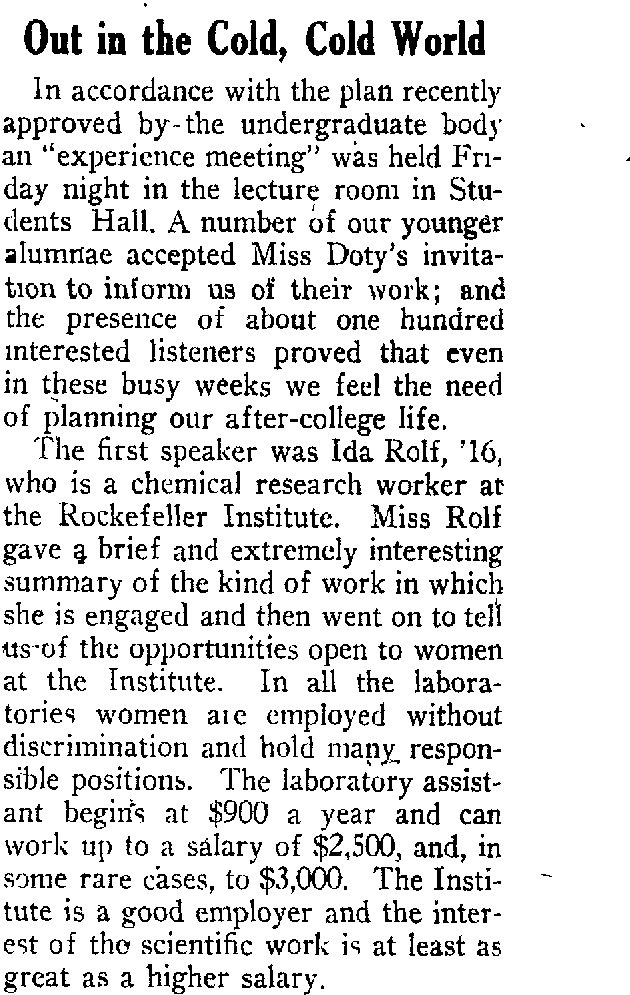
Transcription, in part
Out in the Cold, Cold World
In accordance with the plan recently approved by the undergraduate body an “experience meeting” was held Friday night in the lecture room in Students Hall. A number of our younger alumnae accepted Miss Doty’s invitation to inform us of their work; and the presence of about one hundred interested listeners proved that even in these busy weeks we feel the need of planning our after-college life.
The first speaker was Ida Rolf, ’16, who is a chemical research worker at the Rockefeller Institute. Miss Rolf gave a brief and extremely interesting summary of the kind of work in which she is engaged and then went on to tell us of the opportunities open to women at the Institute. In all the laboratories women are employed without discrimination and hold many responsible positions. The laboratory assistant begins at $900 a year and can work up to a salary of $2,500, and, in some rare cases, to $3,000. The Institute is a good employer and the interest of the scientific work is at least as great as a higher salary.
[Dorothy Meyers, ’16, of the City Health Department, and Helene Bausch, ’17, of the American Telephone and Telegraph Co., follow]
- Document
- Report “Out in the Cold, Cold World”, in the Barnard Bulletin
- Date
- The meeting on Friday, 11 January 1918The issue of Thursday, 17 January 1918, speaks of “Friday night”
- Place
- Lecture room, Students Hall, Barnard CollegeThe hall’s cornerstone went down on the afternoon of her Commencement, 7 June 1916 (Barnard Bulletin, 12 June 1916, p. 1)
- Held by
- Barnard Archives and Special Collections, New York
- Reference
- BC12-03 (Barnard Bulletin), vol. XXII, no. 14, printed page 1The report runs on to page 6, with the later speakers
- Digital copy
- Barnard Digital CollectionsPointed out by Barnard Archives in November 2026
- Rights
- Public domain in the United States: published before 1931
The college had asked young alumnae to talk about their work, and about a hundred students came to listen in the middle of examination weeks. Rolf spoke first. The paper calls her “a chemical research worker at the Rockefeller Institute”, the earliest print so far to name the Institute itself; in April 1916 the student weekly had written Foundation.
She described her own work, then the openings for women. In every laboratory, by the reporter’s account, women worked without discrimination and held responsible posts. An assistant started at $900 a year and could rise to $2,500, in rare cases $3,000. Sixty years later she would credit the war for opening those doors, as in Salvarsan in wartime. In January 1918, nine months after the United States entered it, she spoke of the doors as simply open.
The reporter closed her part on a line that reads like a rule she kept: the Institute made a good employer, but “the interest of the scientific work is at least as great as a higher salary.”
Cite as“Out in the Cold, Cold World,” Barnard Bulletin 22, no. 14 (17 January 1918): 1, 6. Barnard Archives and Special Collections, BC12-03.
Doctor of Philosophy
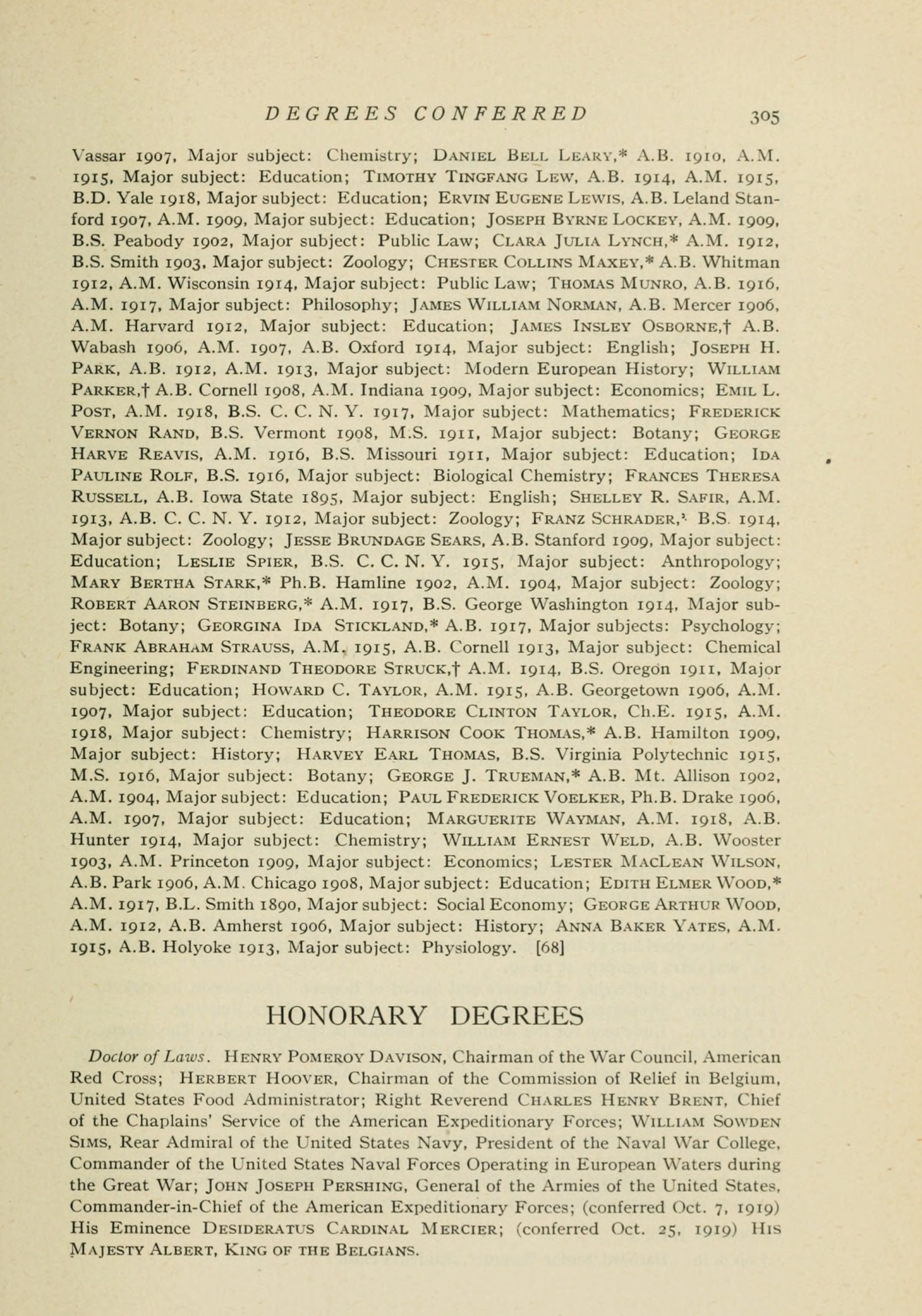
Transcription, in part
[page 304, under the heading]
DOCTORS OF PHILOSOPHY
[sixty-eight names in alphabetical order, from page 304 to page 305; on page 305:]
… George Harve Reavis, A.M. 1916, B.S. Missouri 1911, Major subject: Education; Ida Pauline Rolf, B.S. 1916, Major subject: Biological Chemistry; Frances Theresa Russell, A.B. Iowa State 1895, Major subject: English; …
[footnote, page 304:]
* October, 1919. † February, 1920.
- Document
- List of degrees conferred, in the Columbia University Catalogue 1920–1921
- Date
- Academic year 1919–20Each catalogue lists the degrees of the year before, and the volume for 1919–1920 does not name her. Her name carries neither the asterisk of October 1919 nor the dagger of February 1920, so she most likely received the degree at Commencement in June 1920.
- Degree
- Doctor of Philosophy, major subject Biological ChemistryThe list names no faculty; her dissertation’s title page names the Faculty of Pure Science
- Held by
- Columbia University Libraries
- Reference
- Columbia University Catalogue 1920–1921 (New York: Columbia University, 1920), “Degrees conferred”, pages 304–305
- Digital copy
- HathiTrust, page 305
- Rights
- Public domain in the United States: published before 1931
Four years after Barnard, Columbia counts her among sixty-eight new doctors of the year. The line settles a date that biographies give as 1920 and the film as 1922: she held her doctorate in 1920, two years before the printer in Baltimore delivered the bound dissertation. Columbia allowed that order when a journal had accepted the work, and the Journal of Biological Chemistry had.
It also names her subject in the university’s own words, biological chemistry, the field of Phoebus Levene’s laboratory at the Rockefeller Institute, where she had worked since her senior year, by the student weekly’s account.
Cite asColumbia University, Columbia University Catalogue 1920–1921 (New York: Columbia University, 1920), “Degrees conferred,” 304–305. Columbia University Libraries; HathiTrust.
A wedding kept secret
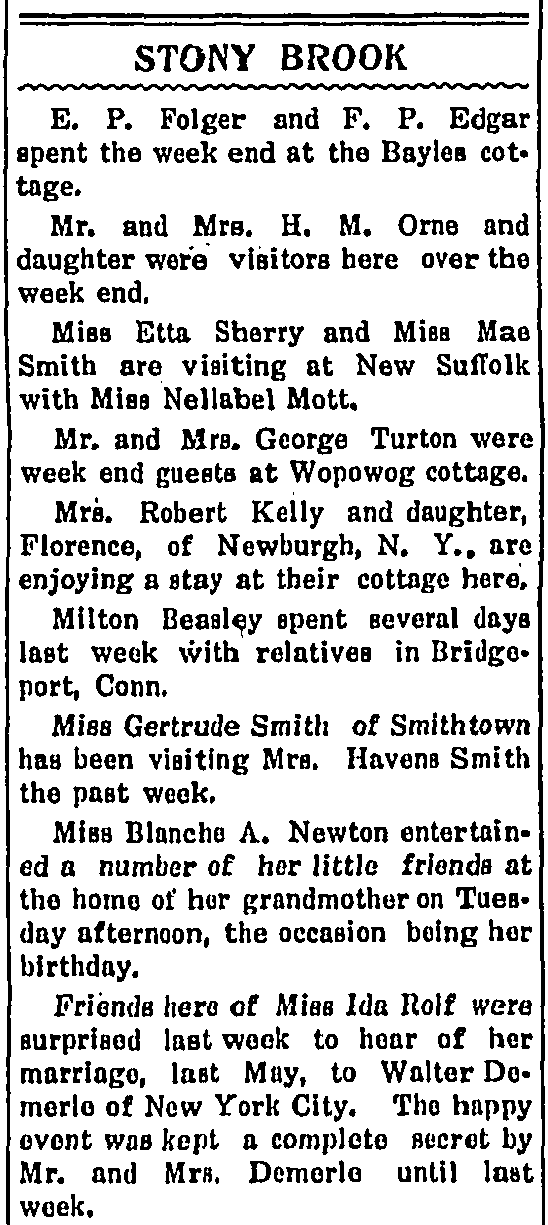
Transcription
STONY BROOK [column heading, front page]
[eight items on other residents and visitors, then:]
Friends here of Miss Ida Rolf were surprised last week to hear of her marriage, last May, to Walter Demerle of New York City. The happy event was kept a complete secret by Mr. and Mrs. Demerle until last week.
- Document
- Local news item in the “Stony Brook” column of The Port Jefferson Echo, a weekly paper of Port Jefferson, Long Island
- Date
- Saturday, 22 October 1921The wedding itself took place in May 1921
- Held by
- NYS Historic Newspapers, digital collection
- Reference
- The Port Jefferson Echo, vol. 30, no. 17, 22 October 1921, p. 1Library of Congress control number sn88075686
- Rights
- Public domain in the United States: published before 1931
Stony Brook lies on the North Shore of Long Island, a few miles west of Port Jefferson. The column counts her among its own. Friends there learned of the wedding only months after it happened.
The paper spells the groom’s name Demerle. The family wrote it Demmerle, and so does the stone they share at Woodlawn.
The groom: Walter F. Demmerle
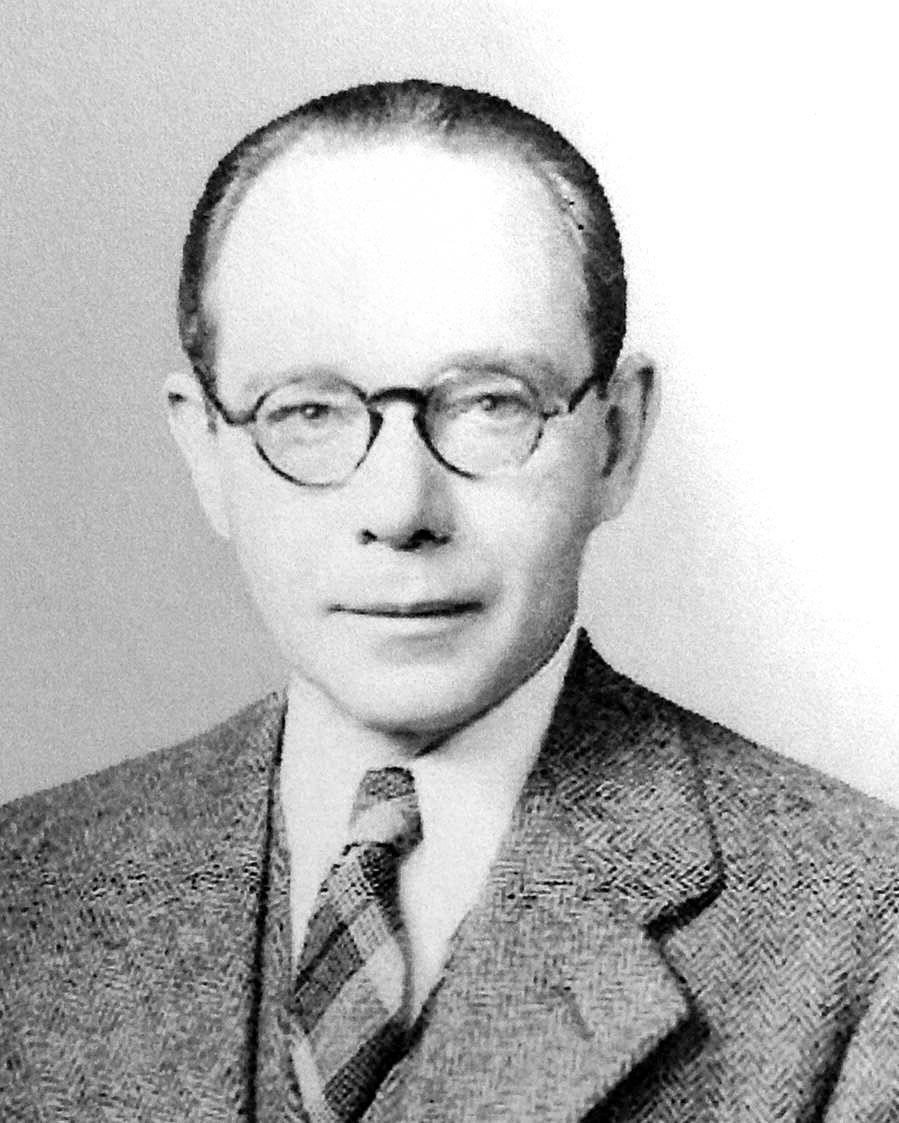
- Photograph
- Studio portrait of Walter Frederick Demmerle (1893–1947), Ida Rolf’s husband and her first cousin
- Date
- Undated
- Held by
- The family of Ida P. Rolf
- Rights
- Photographer unknownShown here with the permission of her grandson Jean-Pierre Demmerle. Please ask before reusing it.
Walter Frederick Demmerle, born in Brooklyn on 11 November 1893, came last of four brothers. Martin died as a baby. Frank and Charles died together in the lightning at Coney Island on 30 July 1905.
The groom also belonged to the bride’s own family. His mother, Emilie Sophia, and her mother, Ida, grew up as sisters, daughters of Jakob Friedrich Mayer and Fredericka Kienzle. So Ida married her first cousin, the boy who had lost two brothers in the storm that took three of her cousins. The family tree in chapter I draws both lines down to this wedding.
Round glasses and a patient half smile: the man beside the scientist, seen for once on his own. He died on 16 March 1947, aged fifty-three, and his name stands above hers on their shared headstone.
Cite as“Stony Brook,” The Port Jefferson Echo (Port Jefferson Station, N.Y.), 22 October 1921, p. 1. NYS Historic Newspapers.
Portrait of Walter F. Demmerle, photograph, undated. Family of Ida P. Rolf; courtesy of Jean-Pierre Demmerle.
, reprinted
Her dissertation, then and now
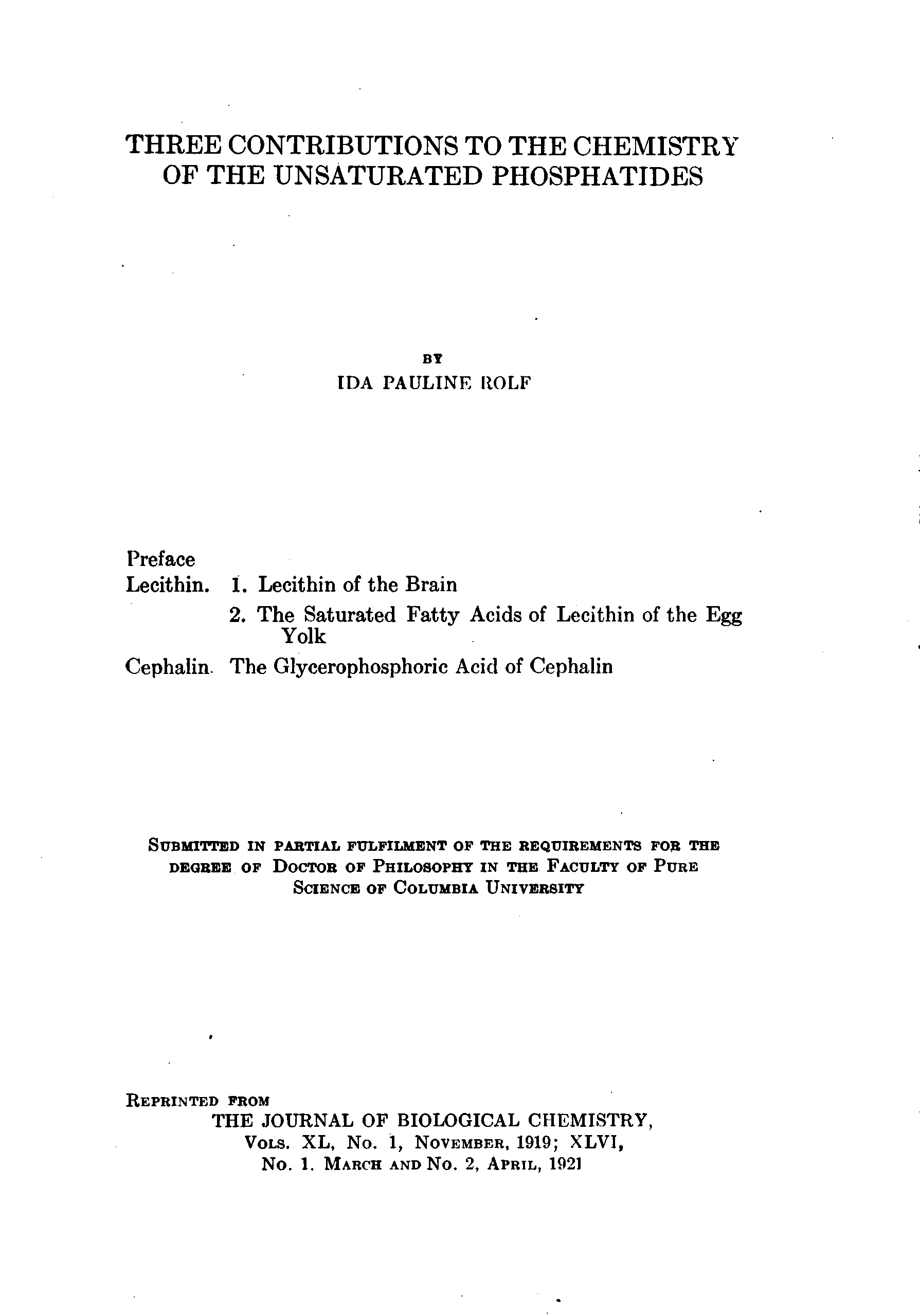

Transcription of the 1922 title page
THREE CONTRIBUTIONS TO THE CHEMISTRY OF THE UNSATURATED PHOSPHATIDES
BY
IDA PAULINE ROLF
Preface
Lecithin. 1. Lecithin of the Brain
2. The Saturated Fatty Acids of Lecithin of the Egg Yolk
Cephalin. The Glycerophosphoric Acid of Cephalin
Submitted in partial fulfilment of the requirements for the degree of Doctor of Philosophy in the Faculty of Pure Science of Columbia University
Reprinted from The Journal of Biological Chemistry, Vols. XL, No. 1, November, 1919; XLVI, No. 1. March and No. 2, April, 1921
[degree statement and reprint note set in small capitals; no place or date on the page]
- Document
- Doctoral dissertation, bound from offprints of three journal papers written with P. A. Levene
- Date
- 1922The page names no year. The Library of Congress dates the printing [1922]; the last paper appeared in April 1921.
- Printer
- The Waverly Press, BaltimoreAs the Library of Congress records it
- Held by
- Columbia University Libraries; a further copy at the Library of Congress, QP801.P45 R6
- Digital copy
- HathiTrust, nnc1.cu56097450, image 5
- Vita
- “IDA PAULINE ROLF was born May 19, 1896, in New York City. She attended the public schools in that city, and was graduated from the Morris High School. She entered Barnard College in …”Her short biography, printed with the dissertation. Read in the Google Books copy of the same Columbia volume; see Morris High School
- Rights
- Public domain in the United States: published before 1931
- Reprint
- Legare Street Press, 18 July 2023, hardback, 62 pages, ISBN 9781020476075Available from Foyles. A paperback edition from Creative Media Partners carries ISBN 9781022424388.
Columbia asked every doctoral candidate for printed copies of the dissertation. Here offprints of three papers from the Journal of Biological Chemistry serve, bound under one title page. Inside, the papers carry Levene’s name beside hers; the title page names her alone.
Its degree line names her faculty without hedging: she took her doctorate in Columbia’s Faculty of Pure Science. The degree itself dates from 1920, as Columbia’s list of degrees shows.
A century after the Waverly Press in Baltimore, the work has come back into print. Legare Street Press, a publisher of facsimile reprints, brought it out in July 2023 as a slim hardback. Its cover sets Phoebus Aaron Theodore Levene beside her as author: faithful to the papers inside, though the title page of 1922 gives her name alone.
Cite asIda Pauline Rolf, Three Contributions to the Chemistry of the Unsaturated Phosphatides, PhD dissertation, Faculty of Pure Science, Columbia University (Baltimore: Waverly Press, [1922]). Columbia University Libraries; HathiTrust nnc1.cu56097450. Reprint: Legare Street Press, 2023, ISBN 9781020476075.
, granted
Walter’s patent
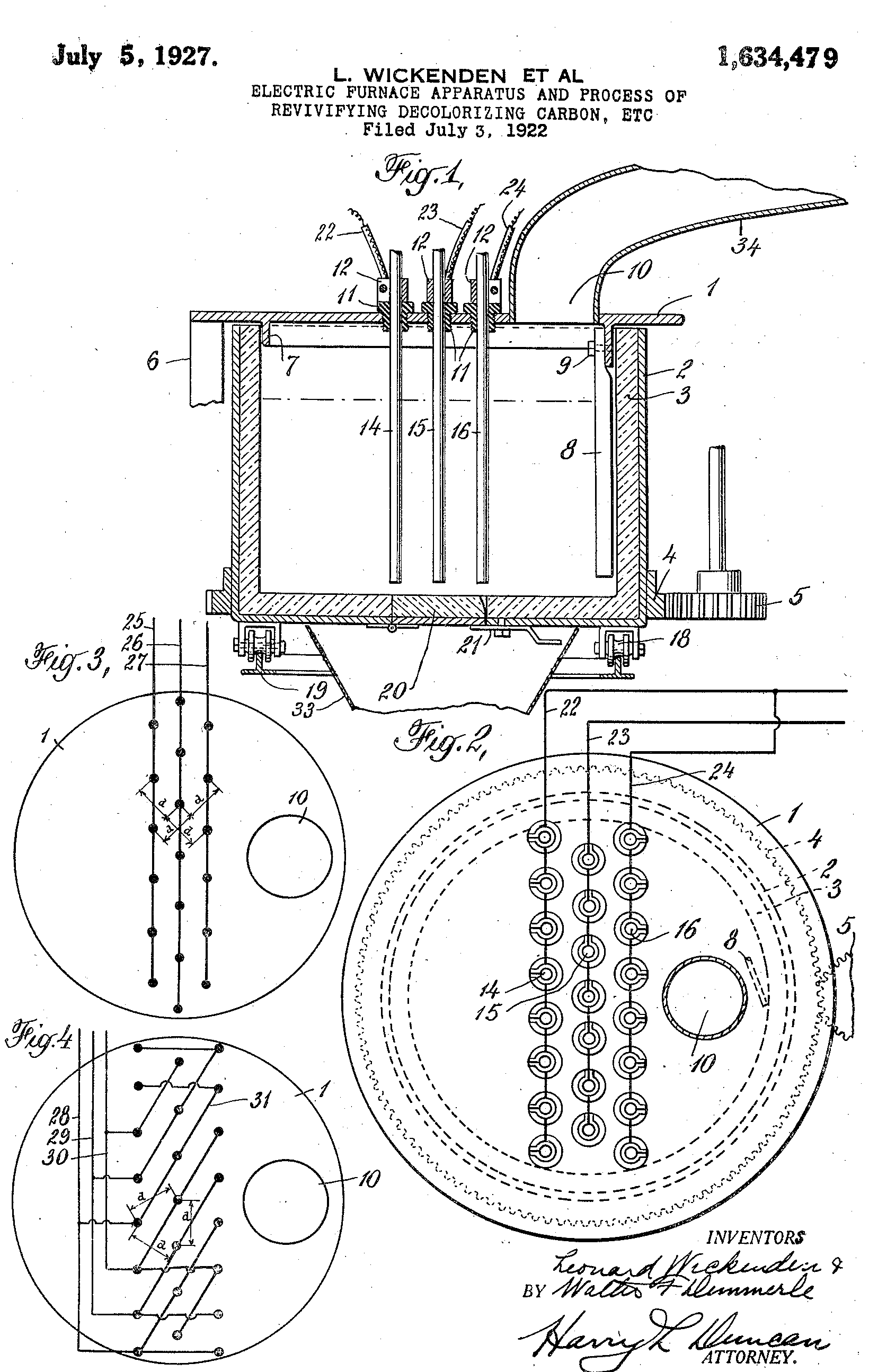
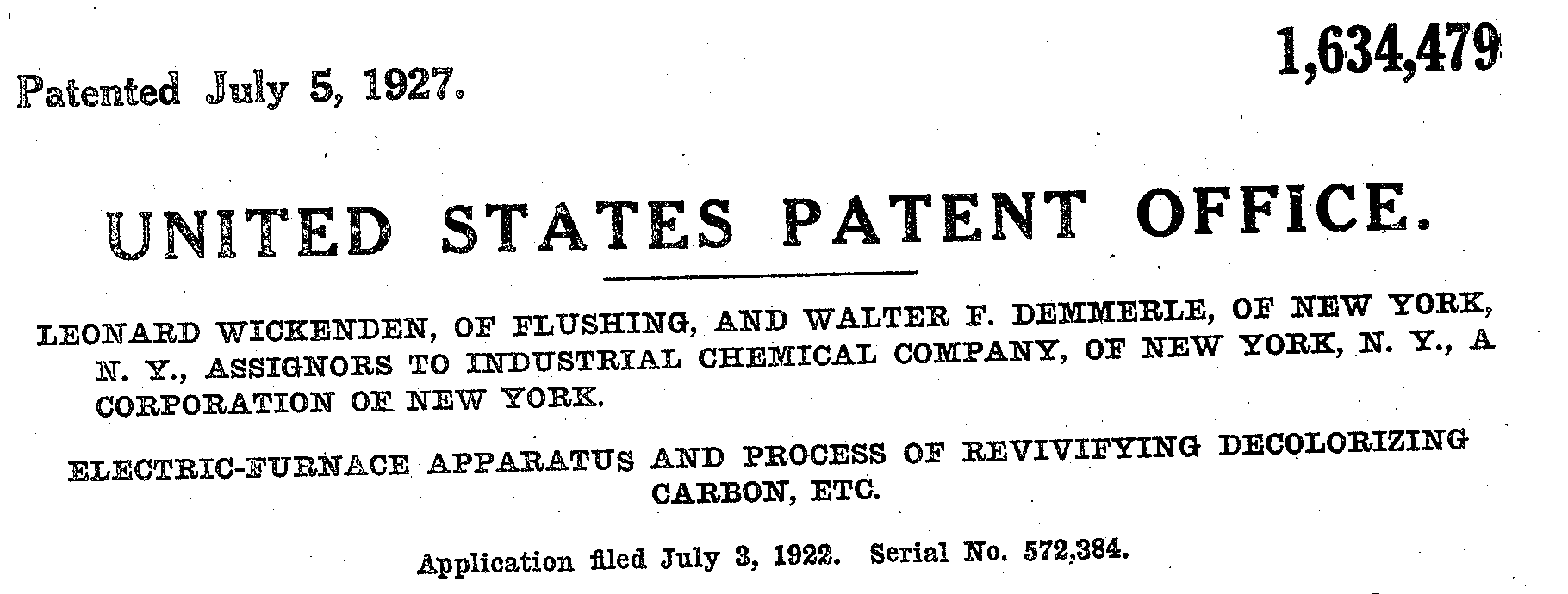
Transcription, in part
Patented July 5, 1927. 1,634,479
UNITED STATES PATENT OFFICE.
LEONARD WICKENDEN, OF FLUSHING, AND WALTER F. DEMMERLE, OF NEW YORK, N. Y., ASSIGNORS TO INDUSTRIAL CHEMICAL COMPANY, OF NEW YORK, N. Y., A CORPORATION OF NEW YORK.
ELECTRIC-FURNACE APPARATUS AND PROCESS OF REVIVIFYING DECOLORIZING CARBON, ETC.
Application filed July 3, 1922. Serial No. 572,384.
This invention relates especially to electric furnace apparatus and processes for revivifying carbonaceous decolorizing, deodorizing or filtering material, especially when in powdered or finely-divided condition.
[sixteen claims follow; at the end of page 4:]
LEONARD WICKENDEN.
WALTER F. DEMMERLE.
- Document
- United States patent 1,634,479, four pages of text and one sheet of drawings
- Date
- Filed 3 July 1922, granted 5 July 1927Filed eight months after the wedding notice
- Issued by
- United States Patent Office
- Reference
- US 1,634,479; application serial no. 572,384
- Digital copy
- Google Patents
- Rights
- Public domain: United States patents carry no copyright
The 1979 obituary made Walter a building contractor. His patent tells another story. In July 1922, a year into the marriage, he and Leonard Wickenden of Flushing filed for an electric furnace that brings spent decolorizing carbon back to use: the powdered charcoal that strips colour and smell from liquids. Rods hang from the cover into a turning drum; they carry the current and stir the powder as it heats. The rights went to the Industrial Chemical Company of New York.
So the young couple worked in neighbouring fields: she on the chemistry of the phosphatides at the Rockefeller Institute, he on the engineering of industrial chemistry. The Manhasset Press of 1947 called him a consulting engineer, and the family remembers an inventor. Here stands the first record of it.
Cite asLeonard Wickenden and Walter F. Demmerle, “Electric-Furnace Apparatus and Process of Revivifying Decolorizing Carbon, Etc.,” US Patent 1,634,479, filed 3 July 1922, issued 5 July 1927.
Associate in Chemistry
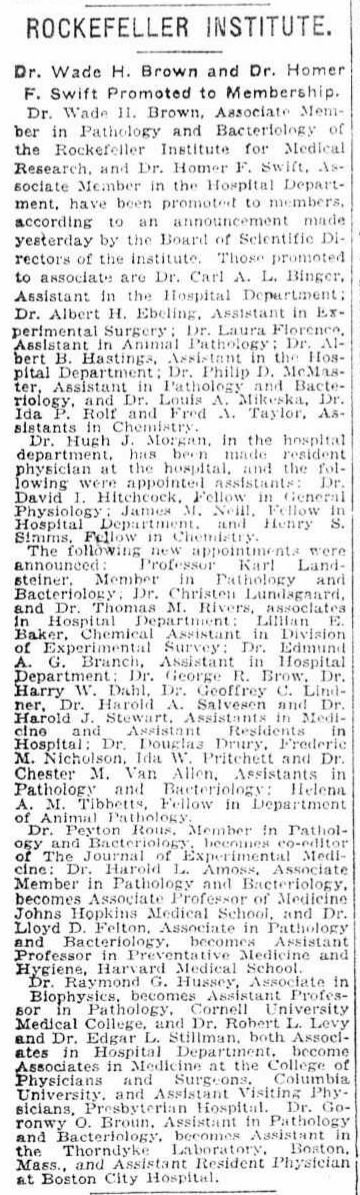
Transcription, in part
ROCKEFELLER INSTITUTE.
Dr. Wade H. Brown and Dr. Homer F. Swift Promoted to Membership.
Dr. Wade H. Brown, Associate Member in Pathology and Bacteriology of the Rockefeller Institute for Medical Research, and Dr. Homer F. Swift, Associate Member in the Hospital Department, have been promoted to members, according to an announcement made yesterday by the Board of Scientific Directors of the institute. Those promoted to associate are Dr. Carl A. L. Binger, Assistant in the Hospital Department; Dr. Albert H. Ebeling, Assistant in Experimental Surgery; Dr. Laura Florence, Assistant in Animal Pathology; Dr. Albert B. Hastings, Assistant in the Hospital Department; Dr. Philip D. McMaster, Assistant in Pathology and Bacteriology, and Dr. Louis A. Mikeska, Dr. Ida P. Rolf and Fred A. Taylor, Assistants in Chemistry.
[appointments follow, among them:]
Professor Karl Landsteiner, Member in Pathology and Bacteriology
- Document
- Report in The New York Times on promotions and appointments at the Rockefeller Institute for Medical Research
- Date
- Thursday, 6 July 1922The Board of Scientific Directors announced the promotions on 5 July
- Reference
- Page 11
- Digital copy
- Old Fulton NY Post CardsAlso in ProQuest Historical Newspapers: The New York Times
- Rights
- Public domain in the United States: published before 1931
Five years after she joined the Institute as an assistant, its Board of Scientific Directors raised her to associate. She shared the step with two other Assistants in Chemistry, Louis A. Mikeska and Fred A. Taylor, and with Laura Florence of Animal Pathology, the only other woman among the eight promoted. The same announcement brought Karl Landsteiner to the Institute as a Member; eight years later he received the Nobel Prize for discovering the blood groups.
Later accounts stretch her title; the report holds it to size. Her obituary of 1979 says she “attained the rank of associate”; a Barnard profile of 2021 makes it “associate professor”, a rank the Institute did not have. The Times of 1922 gives the step and its date. Two days before, Walter had filed his patent.
Cite as“Rockefeller Institute: Dr. Wade H. Brown and Dr. Homer F. Swift Promoted to Membership,” The New York Times, 6 July 1922, p. 11.
A sitting for the Institute
Six years into her work at the Rockefeller Institute, its director asked Dr. Rolf to sit for a photograph. The Institute kept a series of portraits for its records, and her face still had no place in it.
Transcription
[at top right, in red pencil:] Rolf, Ida P.
November 28, 1923.
Dear Dr Rolf: [“Dr” written in ink over an erasure]
We are eager to complete our series of photographs for the records of the Institute, and hence I will ask you kindly to arrange with Mr. Schmidt for a sitting as soon as you can.
Yours sincerely,
[no signature on the carbon; across the text, large outlined letters S.F. stamped in red]
[at the foot:] Dr. Ida P. Rolf,
Rockefeller Institute.
- Document
- Carbon copy of a typed note from Simon Flexner, director of the Rockefeller Institute for Medical Research, to Ida P. RolfThe unsigned file copy, on yellow paper, addressed to her at the Institute
- Date
- 28 November 1923The last digit of the year reads as a typewriter 3, slightly blurred
- Held by
- American Philosophical Society, PhiladelphiaSimon Flexner Papers, in the folder for Ida P. Rolf. The Rockefeller Archive Center keeps the papers on microfilm.
- Digital copy
- APS Digital Library, text:272033
- Rights
- Written by Simon Flexner (1863–1946) as director of the InstituteThis page gives the transcription and links to the Society’s own scan.
“Mr. Schmidt” most likely means Louis Schmidt, who photographed the Institute’s people. The National Library of Medicine keeps his portrait of Hermann M. Biggs, a member of the Institute’s Board of Scientific Directors.
Whether she sat, and whether the print survives, nobody yet knows. It would show the chemist at twenty-seven, two years before Flexner’s letter of January 1926 asked her to find another post. We would gladly hear from anyone who has seen it.
Cite asSimon Flexner to Ida P. Rolf, [New York], 28 November 1923. Carbon copy. Simon Flexner Papers, Series 1, Rockefeller Institute for Medical Research, Subseries 1.2, folder “Rolf, Ida P.”, American Philosophical Society, Philadelphia; APS Digital Library, text:272033.
, most likely
Tea with the Flexners
The director and his wife, the writer Helen Thomas Flexner, asked her to tea. Her reply keeps the old formula of a written acceptance, in the third person and unsigned.
Transcription
[at top right, an office stamp “Received / Answered”; beside “Received”, in pencil:] 4/26 [above it, in red pencil:] Rolf, Dr. Ida
Doctor Rolf
accepts with pleasure
the kind invitation of
Doctor and Mrs. Flexner
to tea on
Friday, May sixteenth
at four o’clock.
- Document
- Handwritten note by Ida P. Rolf, one leafAn acceptance in the third person, as etiquette asked
- Date
- Friday, 16 May; year not writtenBetween 1917 and 1940, 16 May fell on a Friday in 1919, 1924 and 1930. “Doctor Rolf” rules out 1919, before her doctorate. In the folder the note lies between Flexner’s letters of November 1923 and January 1926; if the folder keeps date order, that leaves 1924. The pencilled 4/26 then records its arrival on 26 April.
- Held by
- American Philosophical Society, PhiladelphiaSimon Flexner Papers, in the folder for Ida P. Rolf
- Digital copy
- APS Digital Library, text:272034
- Rights
- Written by Ida P. RolfThis page gives the transcription and links to the Society’s own scan.
A small social note, and a telling one. Less than two years before Flexner’s letter of 1926 sent her looking for another post, the director’s household counted her among its guests.
Cite asIda P. Rolf to Dr. and Mrs. Simon Flexner, acceptance of an invitation to tea on Friday, 16 May [1924?]. Simon Flexner Papers, Series 1, Rockefeller Institute for Medical Research, Subseries 1.2, folder “Rolf, Ida P.”, American Philosophical Society, Philadelphia; APS Digital Library, text:272034.
Chapter IV · 1926, recalled in 1978
Paris and Zurich
In January 1926 she sailed for Europe on leave from the Rockefeller Institute. Letters between her and its director follow her across a stormy Atlantic to Paris and the Pasteur Institute; ETH’s register and her memory place her in Zurich, her weekends in Geneva. Somewhere on a European train, by her own account, the first idea of her life’s work took root.
Warm thanks to Sam Johnson, who shared all the Rockefeller documents with us. Because of him, the letters below carry Ida Rolf once more over the winter sea to her long reading days at the Pasteur Institute, in the very weeks her Rockefeller years drew to a close.
A fare to Europe, and notice
Days after Rolf sailed, Simon Flexner, director of the Rockefeller Institute for Medical Research, sent her two hundred dollars toward the fare. The same letter told her to look for another post once she came home.
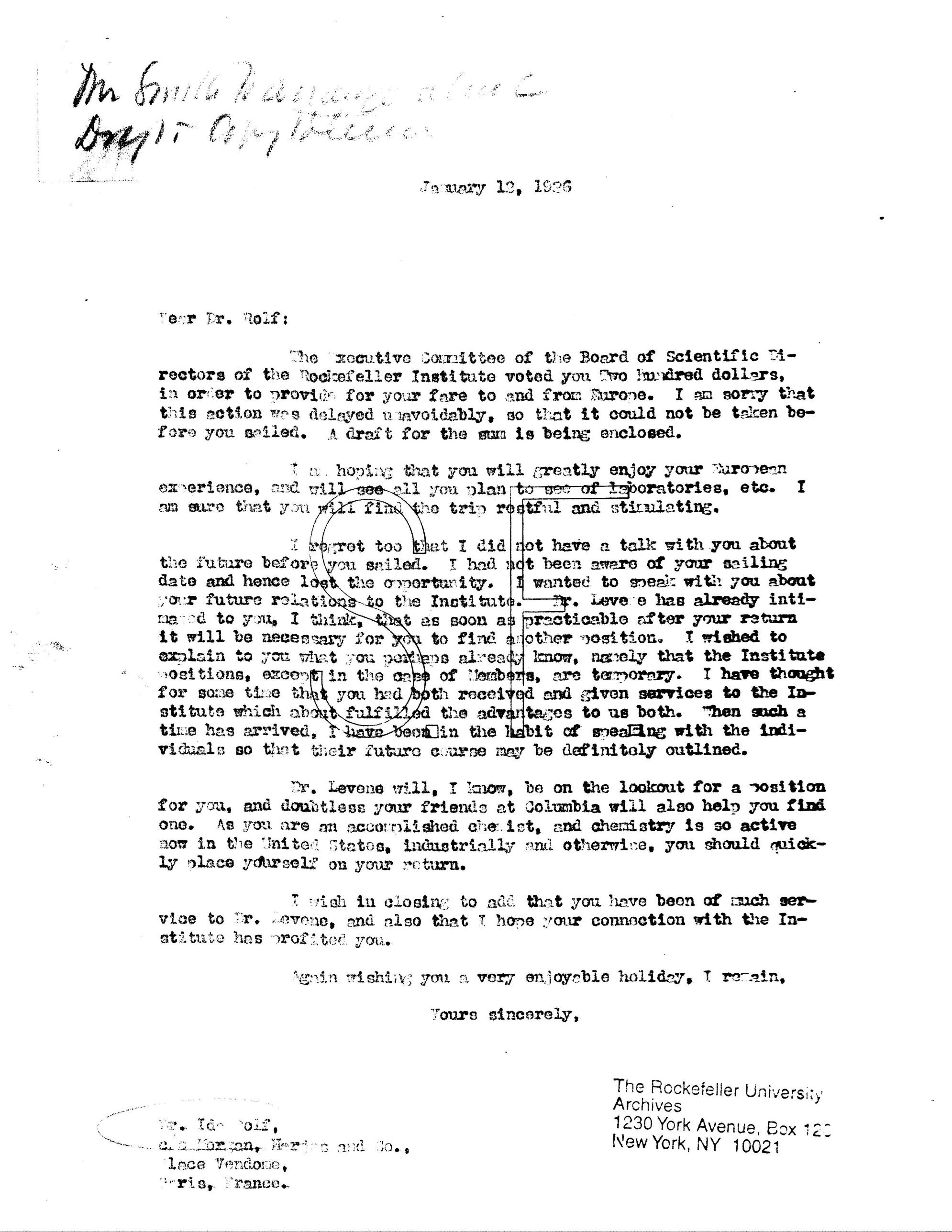
Transcription
[at the head, in pencil, partly faded:] Mr Smith to arrange [two words unread] / Draft to [Ass’t?] Treasurer
January 12, 1926
Dear Dr. Rolf:
The Executive Committee of the Board of Scientific Directors of the Rockefeller Institute voted you Two hundred dollars, in order to provide for your fare to and from Europe. I am sorry that this action was delayed unavoidably, so that it could not be taken before you sailed. A draft for the sum is being enclosed.
I am hoping that you will greatly enjoy your European experience, and will see all you plan to see of laboratories, etc. I am sure that you will find the trip restful and stimulating.
I regret too that I did not have a talk with you about the future before you sailed. I had not been aware of your sailing date and hence lost the opportunity. I wanted to speak with you about your future relations to the Institute. Dr. Levene has already intimated to you, I think, that as soon as practicable after your return it will be necessary for you to find another position. I wished to explain to you what you perhaps already know, namely that the Institute positions, except in the case of Members, are temporary. I have thought for some time that you had both received and given services to the Institute which about fulfilled the advantages to us both. When such a time has arrived, I have been in the habit of speaking with the individuals so that their future course may be definitely outlined.
Dr. Levene will, I know, be on the lookout for a position for you, and doubtless your friends at Columbia will also help you find one. As you are an accomplished chemist, and chemistry is so active now in the United States, industrially and otherwise, you should quickly place yourself on your return.
I wish in closing to add that you have been of much service to Dr. Levene, and also that I hope your connection with the Institute has profited you.
Again wishing you a very enjoyable holiday, I remain,
Yours sincerely,
[no signature on the carbon; across the middle of the page, large outlined letters S F stamped over the text]
[at the foot, circled in pencil:] Dr. Ida Rolf,
c/o Morgan, Harjes and Co.,
Place Vendome,
Paris, France.
- Document
- Carbon copy of a typed letter from Simon Flexner, director of the Rockefeller Institute for Medical Research, to Ida P. RolfThe Institute’s unsigned file copy. Addressed to her care of Morgan, Harjes and Co., the Paris partner of J. P. Morgan on the Place Vendôme.
- Date
- 12 January 1926
- Held by
- The Rockefeller University Archives, New York, by the stamp on the copyThe Rockefeller Archive Center in Sleepy Hollow, New York, now keeps the university’s records. Collection and folder still to identify.
- Second copy
- American Philosophical Society, PhiladelphiaAnother carbon of the same letter, in the Simon Flexner Papers, without the pencilled note and the stamped S F. Its wording agrees with the transcription here. Online: APS Digital Library, text:272035.
- Copy
- A photocopy rests with the production
- Rights
- Written by Simon Flexner (1863–1946) as director of the InstituteShown here for research and documentation. The page will take the scan down at a rights holder’s request.
Flexner writes as a director putting his staff in order. Below the rank of Member, he explains, every post at the Institute ran for a time only, and hers had given and taken about all it could. Levene, he believed, had already hinted as much. He had meant to say so in person, but she sailed before he learned the date.
The tone stays kind. He calls her “an accomplished chemist” and expects her to place herself quickly in a booming American chemistry.
The letter reorders a familiar story. Wikipedia, like most biographies, has her leaving her academic work in New York in 1926. Here the Board grants a leave first, and the notice follows her across the ocean by post. Half a century later she still told it that way: “I was on a leave of absence from the Institute.”
Cite asSimon Flexner to Ida P. Rolf, [New York], 12 January 1926. Carbon copy; photocopy stamped “The Rockefeller University Archives”; research files of Ida Rolf – Mother of Fascia.
Second carbon: Simon Flexner Papers, Series 1, Rockefeller Institute for Medical Research, Subseries 1.2, folder “Rolf, Ida P.”, American Philosophical Society, Philadelphia; APS Digital Library, text:272035.
Aboard the De Grasse
On the last night of a rough crossing, Rolf wrote to Flexner on the French Line’s letter paper. His letter of 12 January had not yet reached her; hers thanks him for the leave.
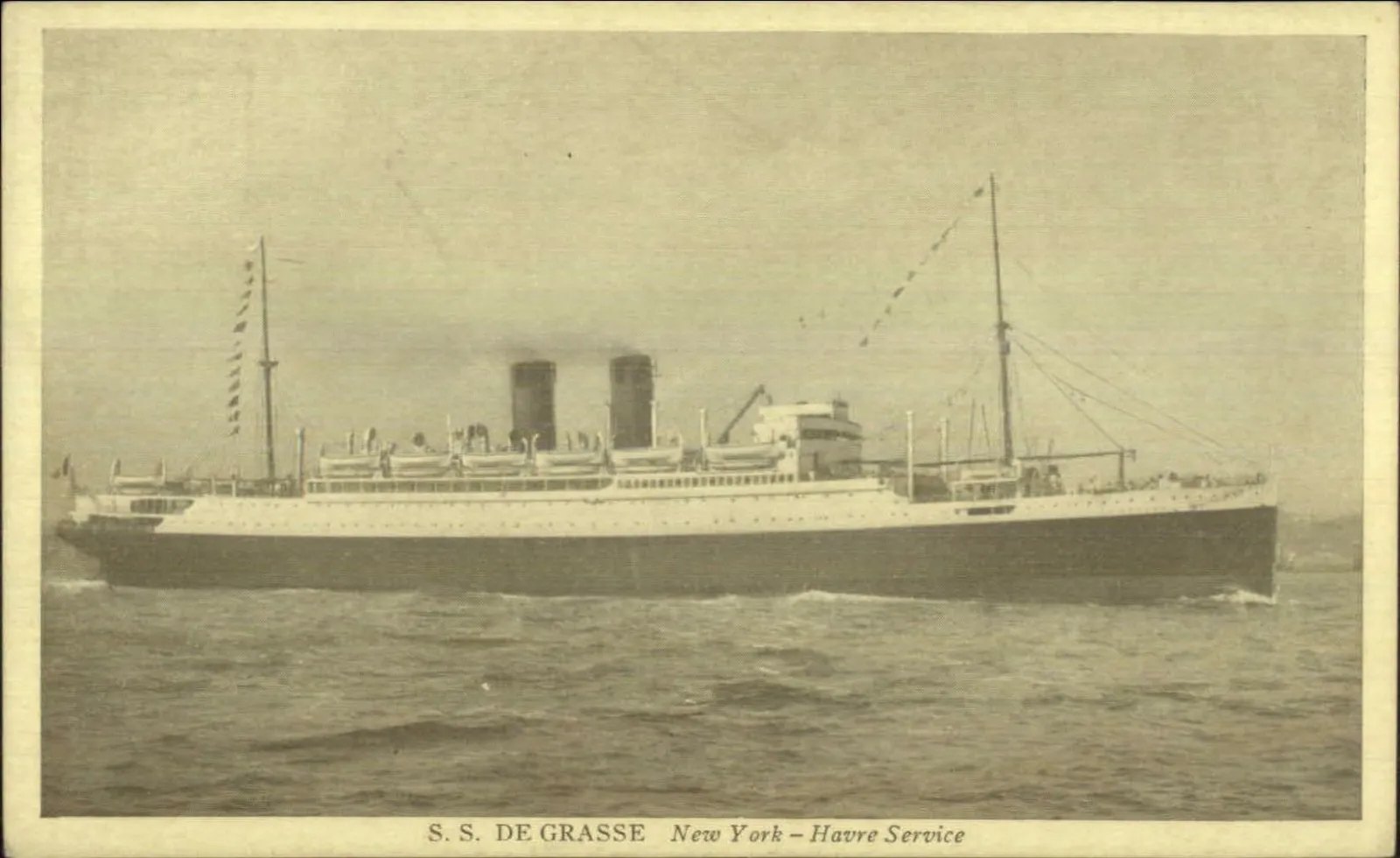
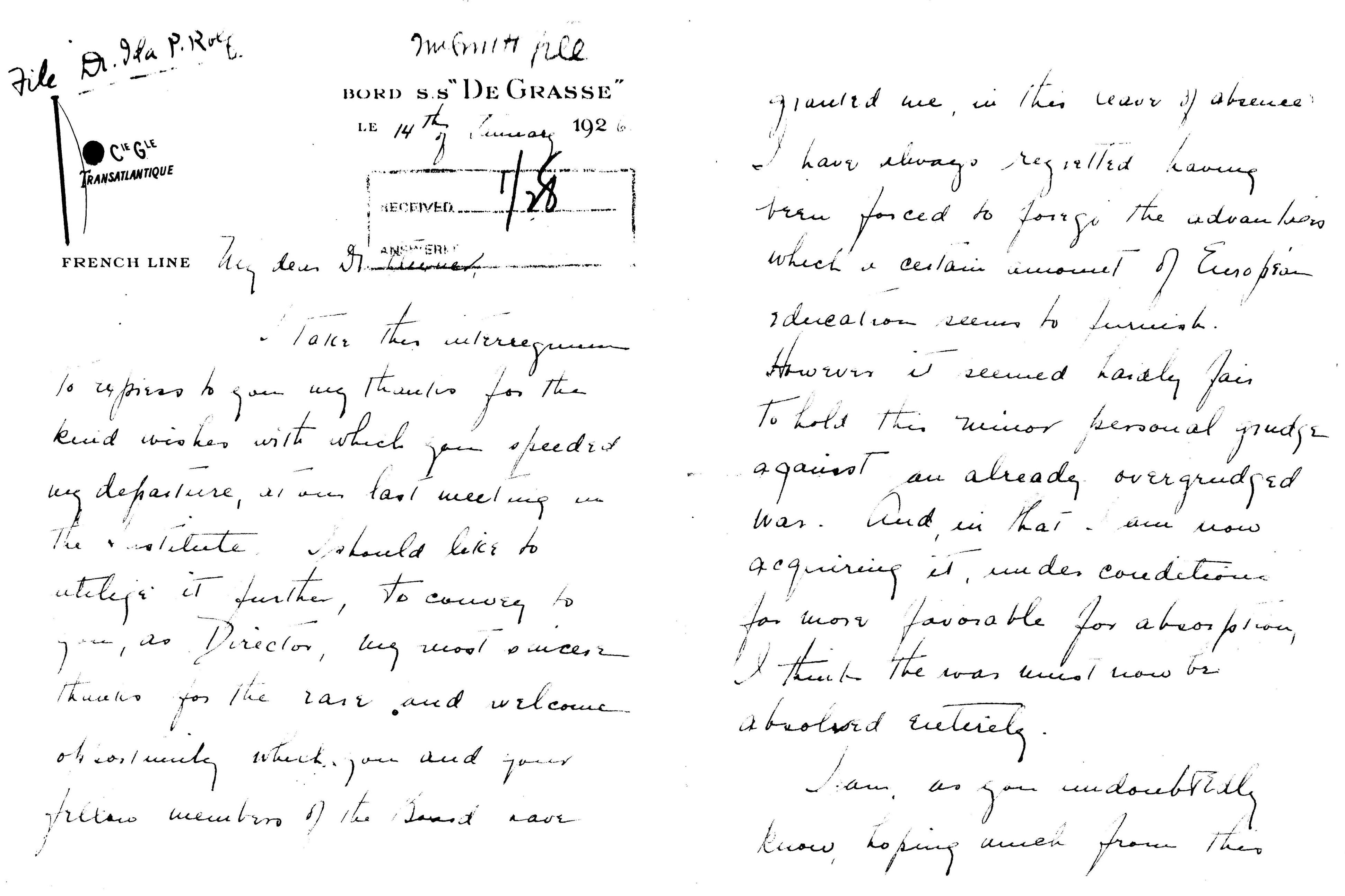
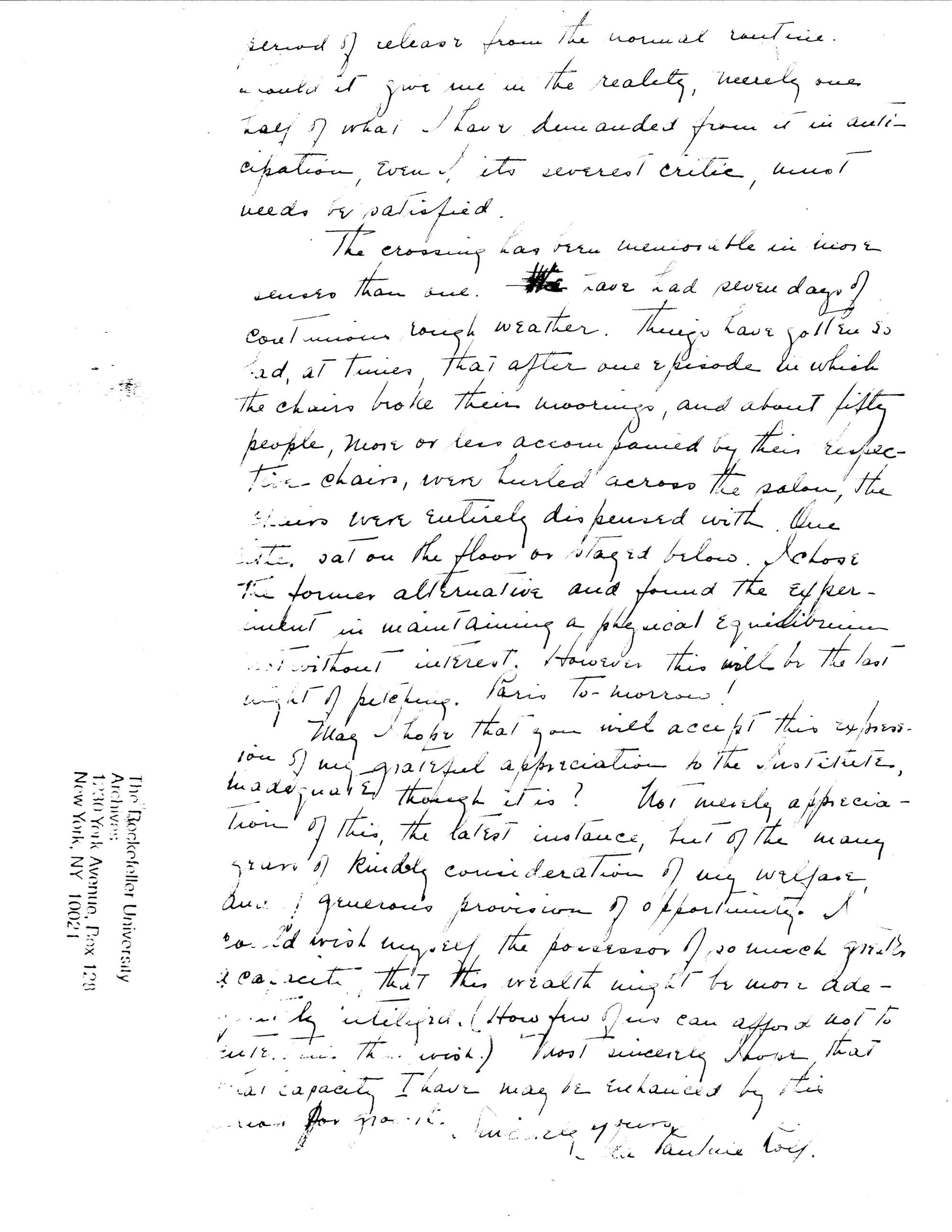
Transcription
[at the head, in two other hands:] File Dr. Ida P. Rolf. and Mr Smith file
BORD S.S. “DE GRASSE” [printed letterhead, beside the house flag of the Compagnie Générale Transatlantique and the words FRENCH LINE]
LE 14th of January 1926. [across it, the office stamp RECEIVED with 1/28 written in; below, faintly, ANSWERED]
My dear Dr. Flexner,
I take this interregnum to express to you my thanks for the kind wishes with which you speeded my departure, at our last meeting in the Institute. I should like to utilize it further, to convey to you, as Director, my most sincere thanks for the rare and welcome opportunity which you and your fellow members of the Board have granted me, in this leave of absence.
I have always regretted having been forced to forgo the advantages which a certain amount of European education seems to furnish. However it seemed hardly fair to hold this minor personal grudge against an already overgrudged war. And, in that I am now acquiring it, under conditions far more favorable for absorption, I think the war must now be absolved entirely.
I am, as you undoubtedly know, hoping much from this [page 3] period of release from the normal routine. Could it give me in the reality, merely one half of what I have demanded from it in anticipation, even I, its severest critic, must needs be satisfied.
The crossing has been memorable in more senses than one. We [inked over] have had seven days of continuous rough weather. Things have gotten so [b]ad, at times, that after one episode in which the chairs broke their moorings, and about fifty people, more or less accompanied by their respective chairs, were hurled across the salon, the chairs were entirely dispensed with. One [e]ither sat on the floor or stayed below. I chose the former alternative and found the experiment in maintaining a physical equilibrium [n]ot without interest. However this will be the last night of pitching. Paris to-morrow!
May I hope that you will accept this expression of my grateful appreciation to the Institute, inadequate though it is? Not merely appreciation of this, the latest instance, but of the many years of kindly consideration of my welfare and of generous provision of opportunity. I [c]ould wish myself the possessor of so much greater a capacity that this wealth might be more ade[quate]ly utilized. (How few of us can afford not to entertain this wish.) Most sincerely I hope that [wh]at capacity I have may be enhanced by this [a word lost at the margin] for growth.
Sincerely yours,
Ida Pauline Rolf.
- Document
- Letter from Ida P. Rolf to Simon Flexner, three pages, on letter paper of the steamer De GrasseNotes in other hands at the head: “File Dr. Ida P. Rolf” and “Mr Smith file”
- Date
- 14 January 1926, at sea, on the eve of her arrival in ParisStamped received at the Institute on 28 January
- Ship
- De Grasse, Compagnie Générale Transatlantique (French Line)In service between Le Havre and New York since August 1924; sold several times later and broken up in the 1950s
- Postcard
- “S.S. De Grasse, New York – Havre Service”, undatedPrinted in the USA, no publisher or copyright notice; 1924 or later. Bought by Aleš Urbanczik on eBay; research files of the production. Public domain in the United States, as a card published without notice
- Held by
- The Rockefeller University Archives, New York, by the stamp on the copyNow kept by the Rockefeller Archive Center, Sleepy Hollow, New York
- Copy
- Photocopies of all three pages rest with the production
- Rights
- Copyright in the letter rests with the heirs of Ida P. Rolf (1896–1979)Shown here for research and documentation. The page will take the scan down at a rights holder’s request.
Notes to a “Mr Smith” head all three letters of these weeks. On Flexner’s copy he receives the task of arranging the draft, which places him, in all likelihood, in the Institute’s business office.
She opens with an old grudge. Graduating in 1916, in the middle of the war, she had missed the European study that many American scientists of her generation sought. Ten years on, travelling at last, she declares the war absolved.
Then the storm. When the salon chairs broke their moorings and some fifty passengers slid across the room with them, Rolf chose the floor and made a study of “maintaining a physical equilibrium”. Anyone who knows her later work on the human body in the field of gravity may smile at that line.
Cite asIda P. Rolf to Simon Flexner, aboard S.S. De Grasse, 14 January 1926, 3 pp. Photocopy stamped “The Rockefeller University Archives”; research files of Ida Rolf – Mother of Fascia.
Letter to Simon Flexner from Paris
A month after landing, Rolf answered Flexner from Paris. She accepts the end of her post with thanks, and her second page reports on her days at the Pasteur Institute.
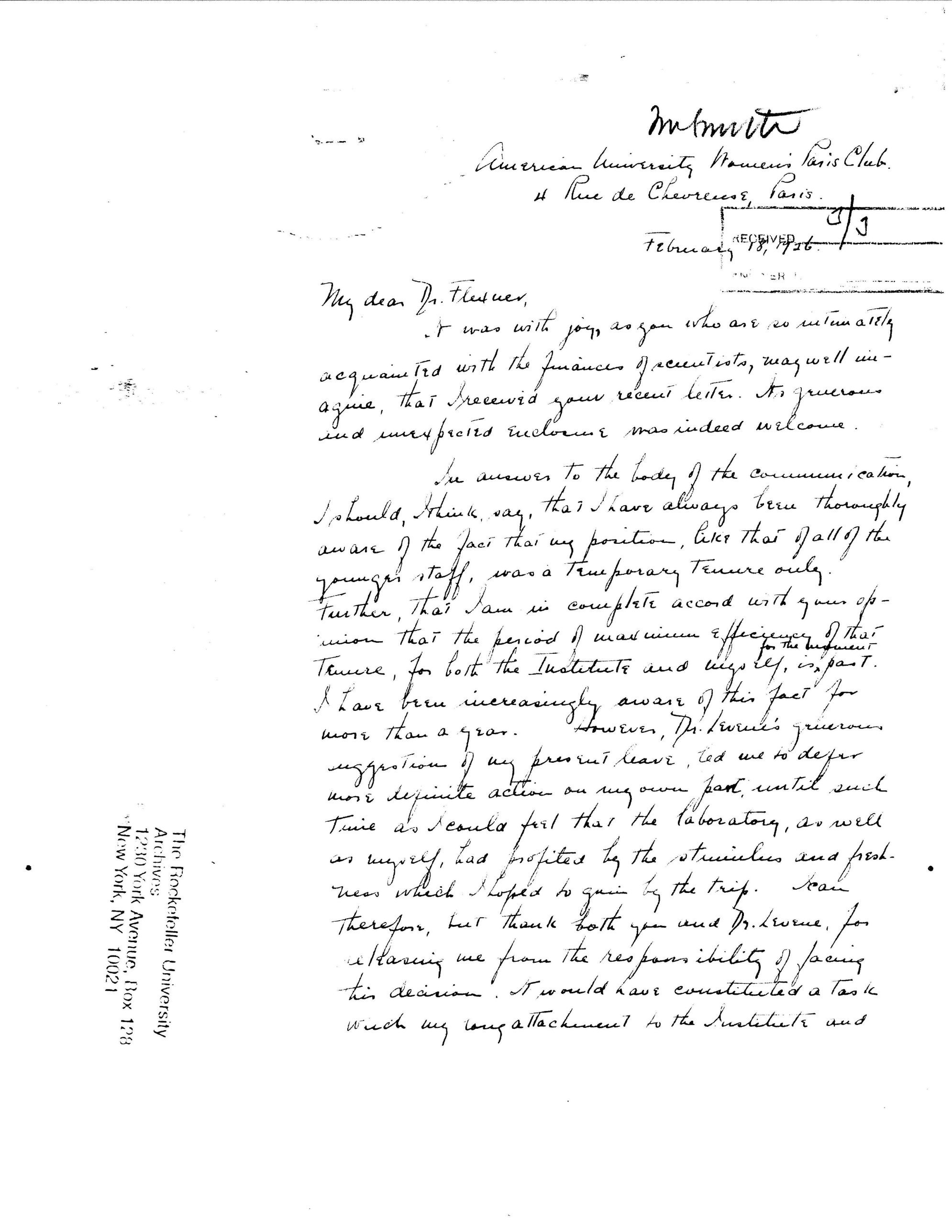
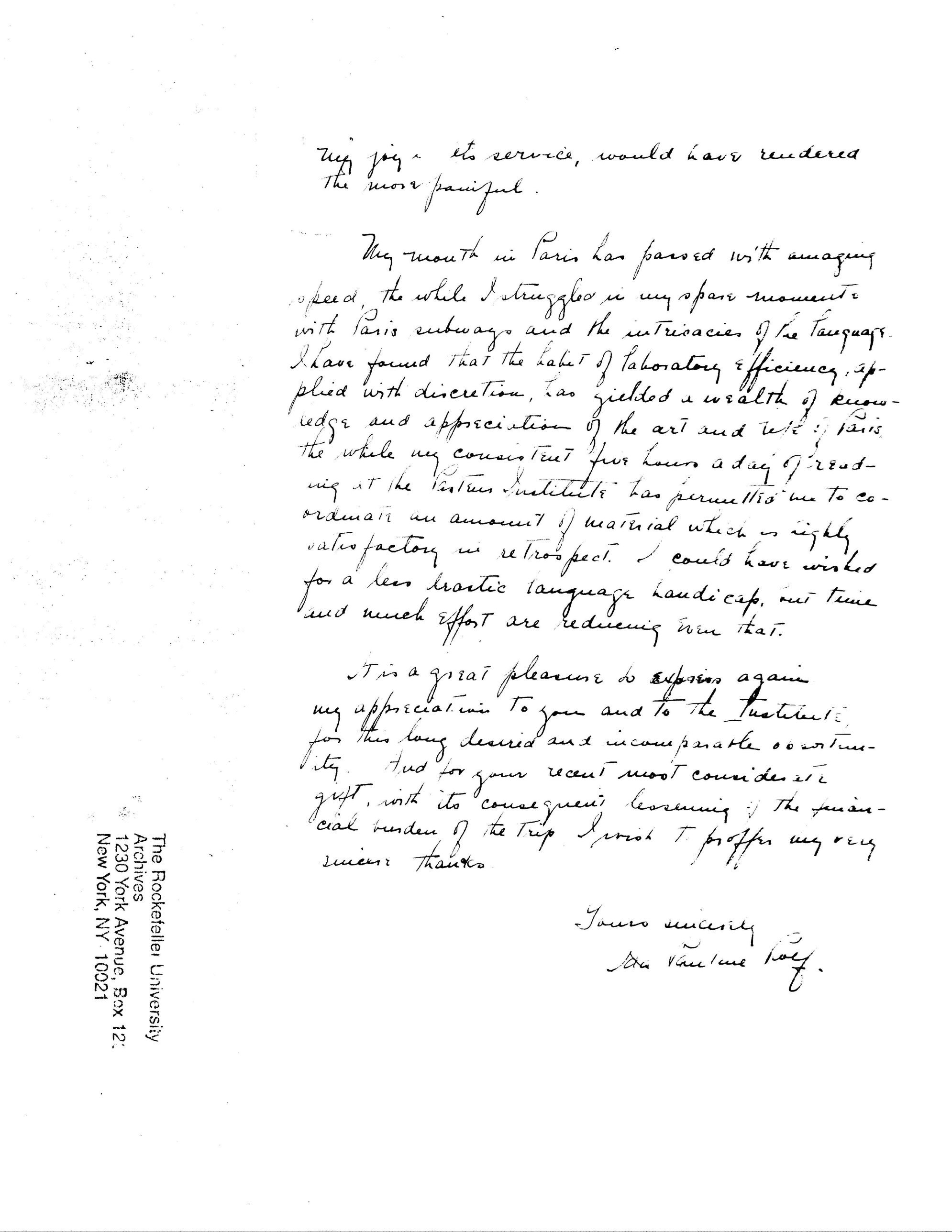
Transcription
[above the address, in another hand:] Mr Smith
American University Women’s Paris Club.
4 Rue de Chevreuse, Paris.
February 18, 1926. [across the date, the office stamp RECEIVED with 3/3 written in; below it, faintly, ANSWERED]
My dear Dr. Flexner,
It was with joy, as you who are so intimately acquainted with the finances of scientists, may well imagine, that I received your recent letter. Its generous and unexpected enclosure was indeed welcome.
In answer to the body of the communication, I should, I think, say, that I have always been thoroughly aware of the fact that my position, like that of all of the younger staff, was a temporary tenure only. Further, that I am in complete accord with your opinion that the period of maximum efficiency of that tenure, for both the Institute and myself, is, [added above the line:] for the moment past. I have been increasingly aware of this fact for more than a year. However, Dr. Levene’s generous suggestion of my present leave, led me to defer more definite action on my own part, until such time as I could feel that the laboratory, as well as myself, had profited by the stimulus and freshness which I hoped to gain by the trip. I can therefore, but thank both you and Dr. Levene, for releasing me from the responsibility of facing this decision. It would have constituted a task which my long attachment to the Institute and [page 2] my joy in its service, would have rendered the more painful.
My month in Paris has passed with amazing speed, the while I struggled in my spare moments with Paris subways and the intricacies of the language. I have found that the habit of laboratory efficiency, applied with discretion, has yielded a wealth of knowledge and appreciation of the art and life of Paris, the while my consistent five hours a day of reading at the Pasteur Institute has permitted me to coordinate an amount of material which is highly satisfactory in retrospect. I could have wished for a less drastic language handicap, but time and much effort are reducing even that.
It is a great pleasure to express again my appreciation to you and to the Institute for this long desired and incomparable opportunity. And for your recent most considerate gift, with its consequent lessening of the financial burden of the trip I wish to proffer my very sincere thanks.
Yours sincerely
Ida Pauline Rolf.
[in the left margin of both pages, the archive’s stamp:] The Rockefeller University Archives, 1230 York Avenue, Box 128, New York, NY 10021
- Document
- Letter from Ida P. Rolf to Simon Flexner, director of the Rockefeller Institute for Medical Research, two pagesHandwritten, headed with the address of the American University Women’s Paris Club
- Date
- 18 February 1926Stamped received at the Institute on 3 March
- Held by
- The Rockefeller University Archives, New York, by the stamp on the copyThe Rockefeller Archive Center in Sleepy Hollow, New York, now keeps the university’s records. Collection and folder still to identify.
- Copy
- Photocopies of both pages rest with the production
- Rights
- Copyright in the letter rests with the heirs of Ida P. Rolf (1896–1979)Shown here for research and documentation. The page will take the scan down at a rights holder’s request.
- Postcard
- Garden of Reid Hall, “The American University Women’s Paris Centre”, undatedCourtesy of Reid Hall, Columbia Global Centers | Paris. Please ask Reid Hall before reusing it.
She answers Flexner’s letter point by point. He had called posts below the rank of Member temporary; she agrees that hers, “like that of all of the younger staff”, had always counted as temporary, and that for more than a year she had felt its most fruitful period slipping behind her. His “draft for the sum” returns as a “generous and unexpected enclosure”, and on page 2 as a gift that lightened “the financial burden of the trip”.
Page 2 answers a claim that biographies repeat without a source. Wikipedia has her studying biochemistry at the Pasteur Institute in 1926; here she reports “five hours a day of reading” there, while Paris subways and the French language claimed her spare hours.
She wrote from 4 rue de Chevreuse in Montparnasse, a residence for university women that opened in 1922 as the American University Women’s Paris Club. Virginia Gildersleeve, dean of Barnard College, where Rolf had graduated in 1916, stood among its founding signatories. The house later took the name Reid Hall, and Columbia University received it as a gift in 1964.
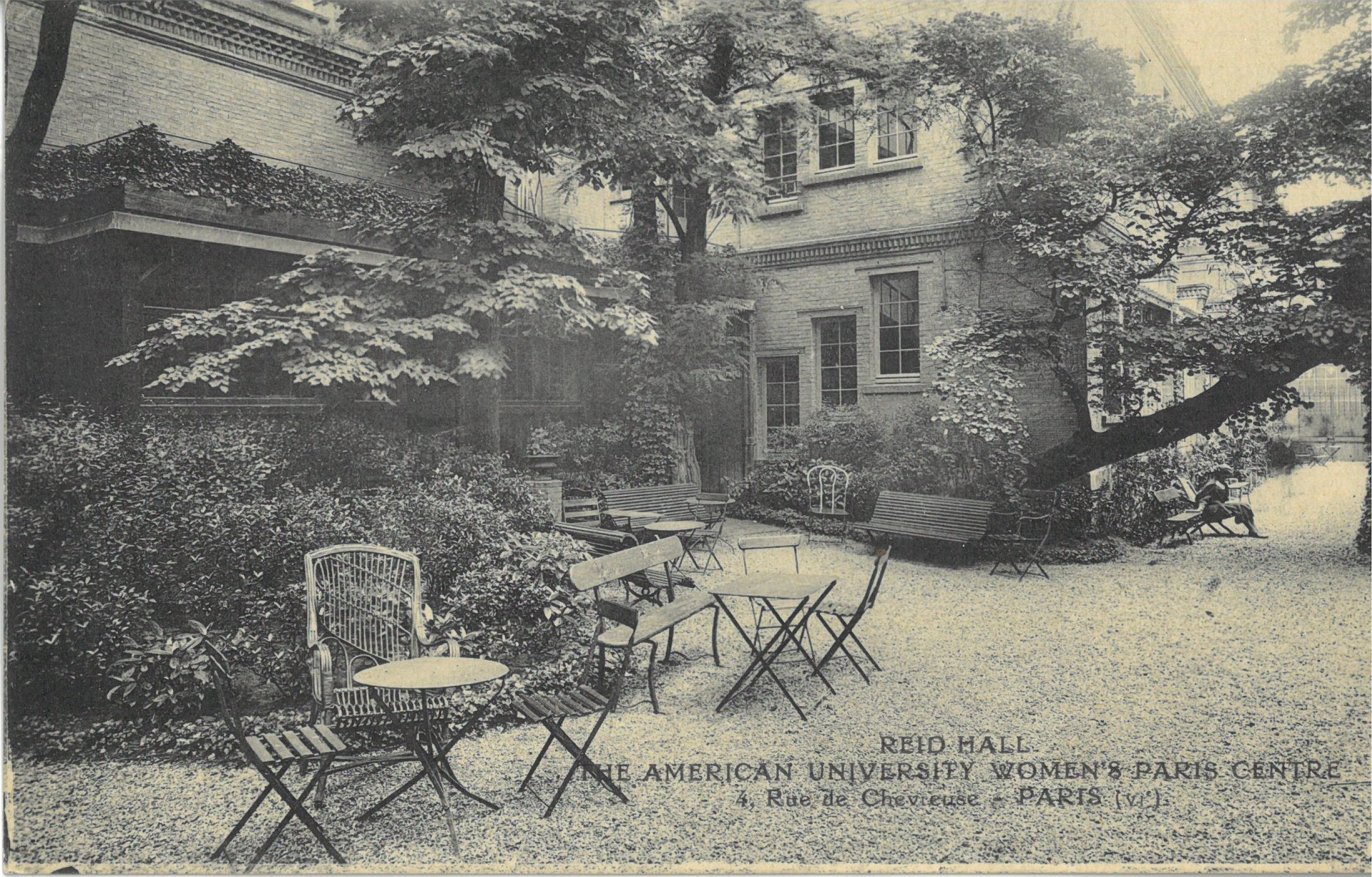
Her month in Paris began around 15 January, the day after she wrote from the De Grasse. Her ETH lectures, in the register below, presumably followed. Her memory of a stay abroad “from January to October” fits a departure from New York in the first days of January.
Cite asIda P. Rolf to Simon Flexner, Paris, 18 February 1926, p. 1. Photocopy stamped “The Rockefeller University Archives”; research files of Ida Rolf – Mother of Fascia.
ETH Zurich register of auditors

Reading of entry 63
| Entry | 63 |
|---|---|
| Name | Rolf-Demmerle, Ida |
| Year of birth | 1896 |
| Place of origin (Heimatort) | New York City |
| Address in Zurich (Wohnung) | Ebelstrasse 29 |
| Lectures, by number and lecturer | 283 Plancherel, 64 Debye, 164 Hückel, 347 Scherrer |
| Student of the University (Stud. der Universität) | [left empty] |
- Document
- Verzeichnis der Fachhörer [register of auditors], 1926, entry 63
- Held by
- ETH-Bibliothek, Hochschularchiv der ETH Zürich
- Reference
- EZ-2.1/08
- Rights
- Administrative recordETH Zurich confirmed in writing in October 2026 that publishing its registers of auditors raises no copyright concerns
- Commons
- ETH Zurich register of auditors 1926, entry 63Column headings and entry 63 from the same page, joined at a dashed line
An auditor, or Fachhörer, attended chosen lectures without enrolling for a degree. The register lists her under her married name and names each lecturer by surname. Peter Debye and Paul Scherrer taught physics, Michel Plancherel mathematics. Erich Hückel, Debye’s assistant, had qualified as a lecturer at ETH in December 1924.
The column for students of the University of Zurich stays empty in her row.
Cite asETH Zürich, Verzeichnis der Fachhörer, 1926, entry 63 (Rolf-Demmerle, Ida). ETH-Bibliothek, Hochschularchiv der ETH Zürich, EZ-2.1/08.
Still on the Institute’s list
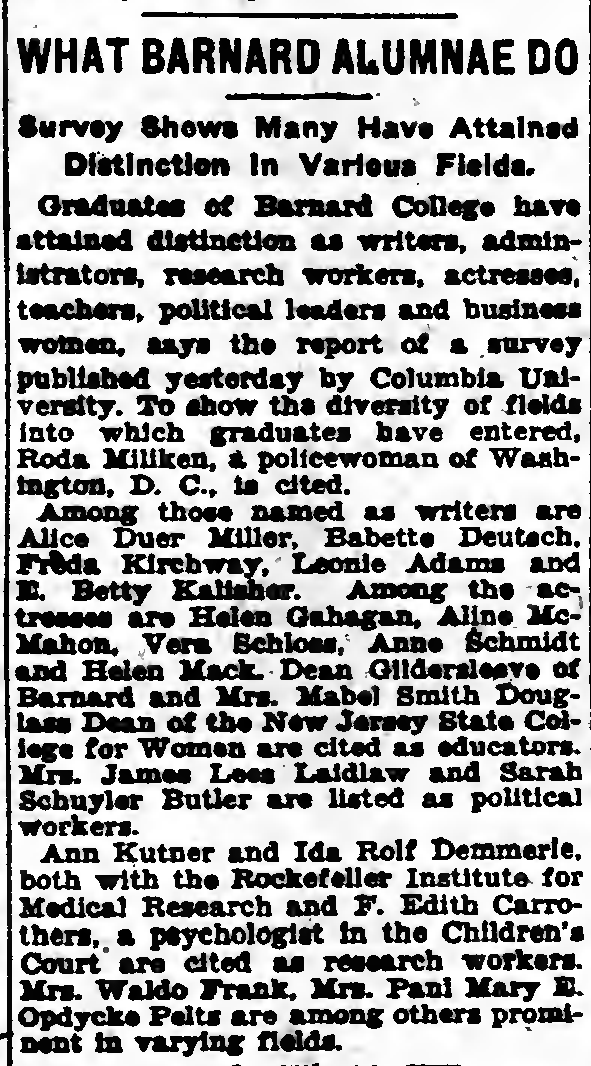
Transcription, in part
WHAT BARNARD ALUMNAE DO
Survey Shows Many Have Attained Distinction in Various Fields.
Graduates of Barnard College have attained distinction as writers, administrators, research workers, actresses, teachers, political leaders and business women, says the report of a survey published yesterday by Columbia University.
[writers, actresses, educators and political workers follow, then:]
Ann Kutner and Ida Rolf Demmerle, both with the Rockefeller Institute for Medical Research and F. Edith Carrothers, a psychologist in the Children’s Court are cited as research workers.
- Document
- Report in The New York Times on a survey of Barnard graduates published by Columbia University
- Date
- Sunday, 19 December 1926The scan cuts off the header; a dateline of 18 December on the same page fixes the day. The survey itself appeared on 18 December.
- Reference
- Page number not yet confirmed
- Digital copy
- Old Fulton NY Post Cards
- Rights
- Public domain in the United States: published before 1931
Eleven months after Flexner’s letter told her to look for another post, Columbia still counted her among the research workers of the Rockefeller Institute. She appears under her married name, Ida Rolf Demmerle, as in the ETH register of the same year, in company that includes the actress Helen Gahagan and the writers Freda Kirchwey and Babette Deutsch.
The line raises a question rather than settling one. A survey printed in December may rest on answers gathered months before, while she still held her post or sat in Zurich on leave. Or the end came later than the letter of January suggests, which would fit her obituary’s “mid-1930’s” better. The Institute’s staff lists for 1926 and 1927 would tell.
Cite as“What Barnard Alumnae Do: Survey Shows Many Have Attained Distinction in Various Fields,” The New York Times, 19 December 1926.
Her own account of Zurich
Fifty-two years after her ETH lectures, at a conference in Los Angeles, an interviewer asked Rolf about her time in Europe. The passage below follows the recording word for word.
- 35:38
[Asked whether she studied in Europe]
“Oh yes, oh yes. I studied in Europe, but that wasn’t my elementary study.”
- 35:54
“I probably learned less from Schrödinger than I did from Debye, who was a physicist. And what I learned from Schrödinger was how to understand the physicist Debye.”
- 36:10
“Debye was teaching at that time in Zurich, and I was on a leave of absence from the Institute.”
- 36:34
[Asked how long she stayed]
“probably the best part of the year, from January to October.”
- 36:42
[She places her return first in the late 1920s, then in “the early 30s”.]
- Recording
- Ida P. Rolf, “Structure: A New Factor in Understanding the Human Condition,” lecture and interview, Explorers of Humankind conference, Los Angeles, 1978
- Passage
- 35:38 to 36:45, of 64 minutesThe lecture ends at about 27:10; questions follow
- Copy
- An audio copy rests with the productionNo one has yet identified the rights holder, so this page quotes only the passage on Zurich
Erwin Schrödinger taught at the University of Zurich, a separate institution from ETH. The register records ETH alone, so her contact with him rests on her own account. Her dates waver, as memory does after half a century; the register fixes the year of her ETH lectures. Her letters of 1926 bear out the leave of absence.
Cite asRolf, Ida P. “Structure: A New Factor in Understanding the Human Condition.” Lecture and interview, Explorers of Humankind conference, Los Angeles, 1978. Audio recording, 35:38–36:45.
, told in 1976
Weekends in Geneva
Zurich held only half of her week. Fifty years later she told Rosemary Feitis where the other half went.
“I had plenty wrong with me; I was a curvature case but I didn’t know it.”
“I went to Switzerland on a leave of absence from the Rockefeller Institute. I studied in Zurich during the week and on weekends I went over to Geneva and got hold of the homeopathic Materia Medica. I read all Saturday night and all Sunday night and I went back to my physics classes in Zurich on Monday morning.”
- Her account
- Interview with Rosemary Feitis, July 1976Printed in part in the Bulletin of Structural Integration, and in Feitis’s introduction to Ida Rolf, Ida Rolf Talks about Rolfing and Physical Reality (New York: Harper & Row, 1978); reprinted as Rolfing and Physical Reality (Rochester, Vermont: Healing Arts Press, 1990)
- The homeopath
- Pierre Schmidt (1894–1987), GenevaBorn at Chaumont, Neuchâtel, on 22 July 1894; died at Tence on 15 October 1987 (Deutsche Nationalbibliothek, GND 127158367). Back in Geneva since 1921 from his studies in the United States with direct pupils of James Tyler Kent. His papers rest at the Institut für Geschichte der Medizin der Robert Bosch Stiftung, Stuttgart. His years in New York (the Flower Hospital, Alonzo Austin, Frederica Gladwin) after the biographies by Sue Young (Sue Young Histories) and Hpathy, which differ on the years
- In the press
- “Deux congrès à Londres: Les homéopathes”Journal de Genève, Thursday 14 July 1927, p. 3: “Le Dr Pierre Schmidt, à Genève, a été désigné comme délégué officiel de la Suisse” to the ninth quinquennial International Homoeopathic Congress, London, 18 to 23 July 1927
- Timetable
- Official Swiss timetable, winter 1925–26, table 22: (Zürich u. Basel)-Bern-Fribourg-Lausanne-GenèveValid from 1 October 1925 to 14 May 1926. Express 12: Zurich 11.45, Geneva 17.14; express 18: Zurich 15.15, Geneva 21.08; both with through carriages from Zurich to Geneva
- Rights
- Her words belong to her heirs, the book to Rosemary FeitisQuoted briefly, for documentation
A friend in treatment with “a Dr. Schmidt in Geneva” had urged her to “go and get what they call a chronic”, a homeopath’s long remedy for an old complaint, followed back to its first cause. In Geneva in 1926 that name in that field points to one man: Pierre Schmidt.
She had a gift for finding the best teacher in the room. In Zurich she sat before Peter Debye at ETH and, as she remembered it, before Erwin Schrödinger across the road at the university: two physicists whom Stockholm would crown with the Nobel Prize within a decade. And when the weekend carried her to Geneva, she went once more to the summit. Pierre Schmidt, barely past thirty, had learned his craft in New York around 1920, at the Flower Hospital and from Alonzo Austin, physician to John D. Rockefeller himself. He came home with more than a thousand books and brought Kent’s classical homeopathy back to Europe. So the chemist on leave from Rockefeller’s Institute found, in Geneva, the pupil of Rockefeller’s own homeopath. In July 1927 the Journal de Genève named Schmidt Switzerland’s official delegate to the ninth International Homoeopathic Congress in London.
Thus her week ran in two halves. From Monday to Friday she sat in ETH’s lecture halls, where Debye and Scherrer taught physics. On Saturday and Sunday she read Hahnemann’s remedies through the night. Between the two lay five and a half to six hours by train each way: that winter the midday express left Zurich at 11.45 and reached Geneva at 17.14, its through carriages running the whole way. Her weekdays belonged to the laws of physics, her weekends to the art of healing. Two decades later her own work would need both in a single pair of hands.
Rosemary Feitis, who recorded the story, dated it to the early 1920s. Rolf’s own words tie it to her leave and to her physics classes in Zurich, which the ETH register fixes in 1926.
Cite asIda P. Rolf, interview with Rosemary Feitis, July 1976, quoted in Rosemary Feitis, introduction to Ida Rolf, Ida Rolf Talks about Rolfing and Physical Reality (New York: Harper & Row, 1978).
On a train in Europe, most likely
The seed
In 1978 an interviewer in Los Angeles asked her where Structural Integration began. She named no teacher and no book. She named a train.
The seed of Structural Integration
“What’s the first idea that occurred to you that was like the seed of Structural Integration?”
“I remember speculating as I was traveling on a train in Europe, as to what was going to happen in terms of behavior if you change chemistry. I remember speculating on that. What was going to happen if you changed chemistry … how would you change chemistry?
The first way to change chemistry would be to change physics.
This I recall. I don’t know where it came from. It was just an accident.”
- Recording
- Lecture and interview, “Structure: A New Factor in Understanding the Human Condition”, Explorers of Humankind conference, Los Angeles, 1978A copy rests with the production; the Ida Rolf Archive at bostonrolf.com keeps the same recording as tapes STRUC1 and STRUC2
- In print
- “An Interview with Ida Rolf. Rolfing: How It Started, How It Grew and Where It Is Now”Somatics, Spring 1979, pp. 9–12, the edited text of the same interview
- Rights
- Her words belong to her heirsQuoted briefly, for documentation
She names neither the year nor the line. Her one known stay in Europe before the work began fell in 1926: Paris in the winter, then Zurich, with physics at ETH through the week and Hahnemann’s remedies in Geneva at weekends. A chemist by training sat five days a week among physicists. Perhaps the thought came to her on the Saturday train to Geneva; she never said.
The thought turns her own trade around. Her laboratory years had tried to mend the body through chemistry, with Salvarsan and its kin. On the train she reversed the order: change the physics, and the chemistry follows. Some fourteen years later, in Manhasset, she took her first client in hand. Half a century on she gave the idea its grown form:
“We are using gravity as our tool, not chemistry. When you come to look at it, this is quite an idea.”
Cite asIda P. Rolf, interview following “Structure: A New Factor in Understanding the Human Condition,” Explorers of Humankind conference, Los Angeles, 1978, audio recording; printed as “An Interview with Ida Rolf. Rolfing: How It Started, How It Grew and Where It Is Now,” Somatics, Spring 1979, pp. 9–12.
Chapter V · 1928 to 1947
Family
Between the laboratory and the work lies a family life that few biographies mention. It opens with a loss: in 1928 both her parents died, seven months apart. In the 1930s her Saturday nights belonged to Pierre Bernard’s club in Nyack. Her sons, Richard and Alan, appear with Walter and with her in pictures the family still keeps, shared here by her grandson Jean-Pierre Demmerle. Walter’s own portrait stands beside the wedding notice in chapter III. The chapter closes in March 1947, with Walter’s death at Pierre Bernard’s club in South Nyack.
Two stones, one year
In 1928 Ida lost both her parents, seven months apart. Bernard Rolf died on 21 January, Ida Mayer Rolf on 22 August. They lie at Woodlawn in the Bronx, among the family.
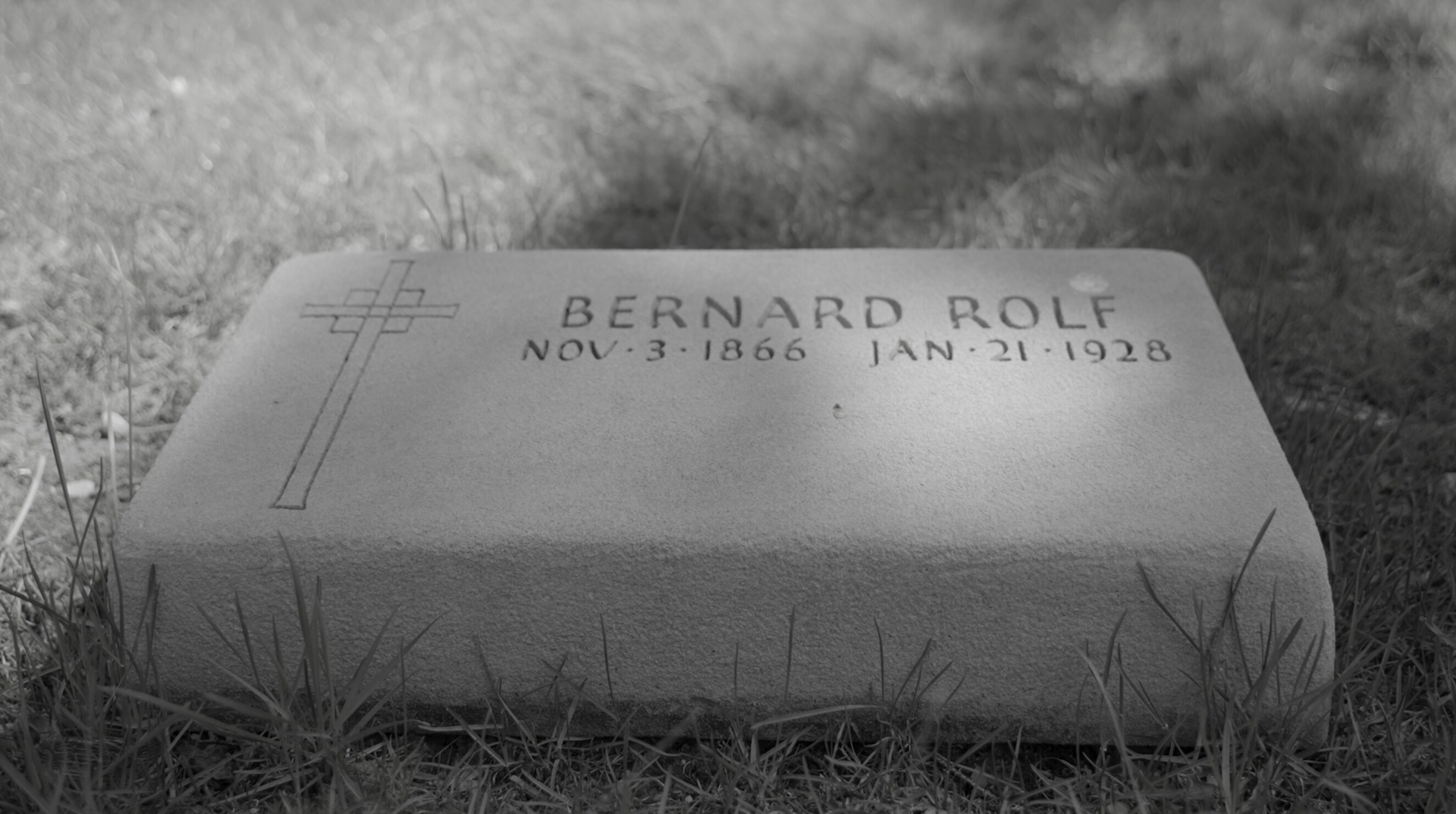
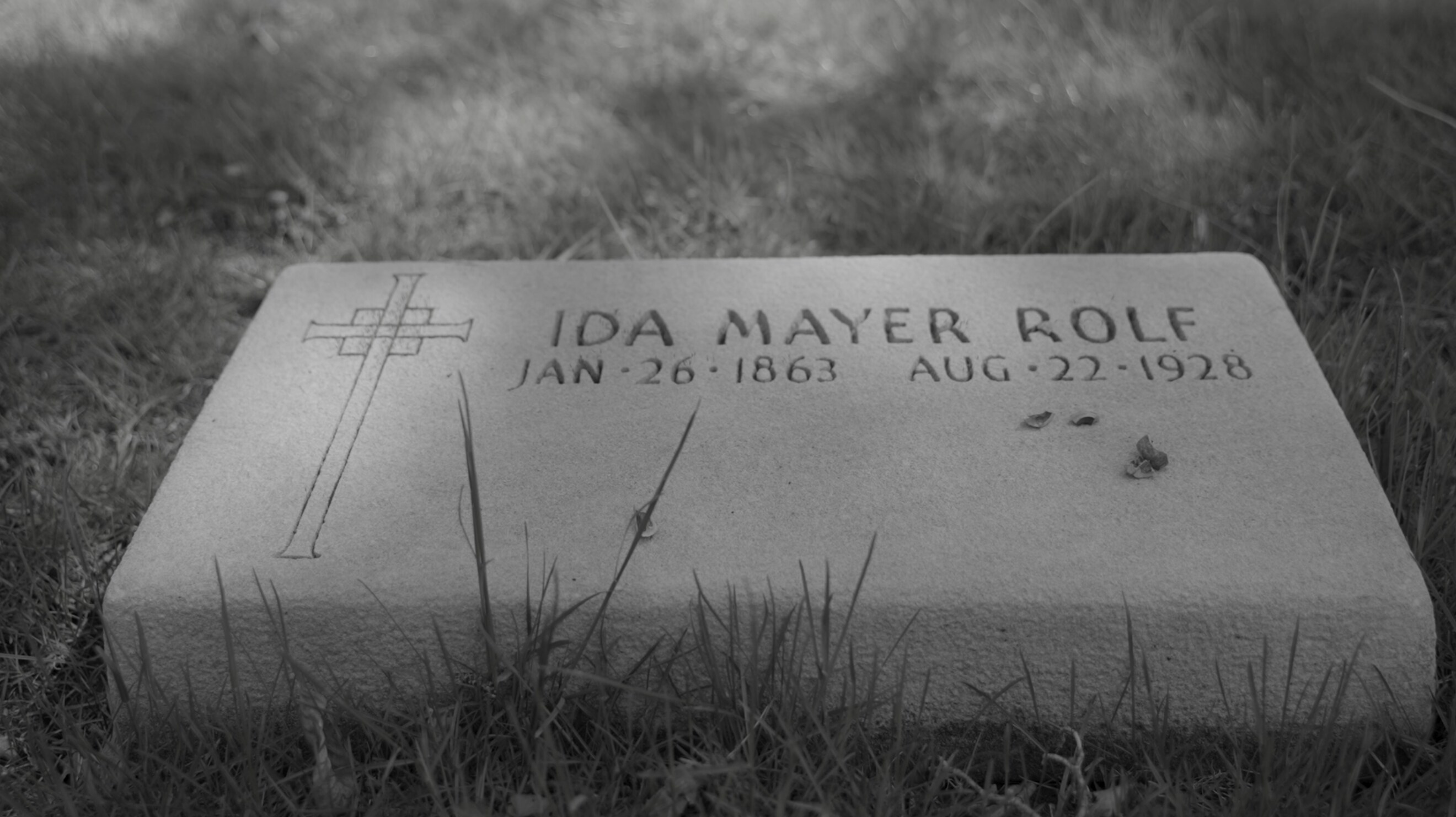
Inscriptions
[carved cross, a small square laced through its crossing]
BERNARD ROLF
NOV · 3 · 1866 JAN · 21 · 1928
[the same cross]
IDA MAYER ROLF
JAN · 26 · 1863 AUG · 22 · 1928
[cut in capitals, with dots between month, day and year]
Death notice, The New York Times, 28 August 1928
ROLF—Ida Pauline, widow of the late Bernard Rolf and mother of Mrs. Walter F. Demmerle. Services at her late residence, 710 Oakland Place, on Sunday, Aug. 26, at 8 P. M.
- Object
- Headstones of Bernard Rolf and Ida Mayer Rolf, Ida P. Rolf’s parentsTwo matching stones, set flat in the grass
- Place
- Woodlawn Cemetery, Bronx, New YorkSection 113, Holly plot, lot 10831: Bernard in grave 2, Ida in grave 3. The lot card names the owner as Mrs. Emelie D. Demmerle, deed no. 12575
- Burial records
- Woodlawn Cemetery, interment cards and lot cardBernard Rolf, 61, died 21 January 1928, late residence Jacksonville, Florida, interred 25 January 1928 (register no. 126731). Ida P. Rolf, 64, date of death given as 26 August 1928, late residence 192 Highland Boulevard, Brooklyn, interred 27 August 1928 (register no. 128708)
- Death notice
- The New York Times, 28 August 1928, p. 11Her mother’s paid notice; public domain in the United States since 2024. The service it names, on Sunday 26 August, came two days before this printing, so the notice most likely also ran earlier. The film shows it at 00:34:02
- Her account
- Why she left chemistry“An Interview with Ida Rolf. Rolfing: How It Started, How It Grew and Where It Is Now,” Somatics, Spring 1979, pp. 9–12; on her mother, interview by Sydney Claire Vilen, 26 November 1977
- Will
- Bernard Rolf left a will, with his daughter as executrixLegal notice of the Town of Greenburgh, Dobbs Ferry Register, 7 October 1949, p. 6
- Rights
- The inscriptions record names and dates, which copyright does not coverFrames from the film’s footage by Aleš Urbanczik and Grzegorz Oleksa. Please ask before reusing them.
Two low stones, cut as a pair. The same cross, a small square laced through its crossing, and the same plain capitals. Even the dots between the parts of each date match. Someone, it seems, ordered both together, after August. The dots return half a century later on the stone Ida shares with Walter.
Bernard’s stone settles one question on the family tree and leaves another open. It gives his birth as 3 November 1866, the date in the family book. Where he came into the world, Hanover or New Orleans, it keeps to itself. The census of 1900 says Louisiana and makes him a year younger, born in November 1867. Ida Mayer Rolf’s stone matches the tree to the day.
Her mother’s death notice adds what the stone leaves out. It calls her Ida Pauline, so the daughter carried both her mother’s names, not the first alone. The family held the service at home, at 710 Oakland Place, on a Sunday evening, in the house where Ida had grown up.
Woodlawn’s own cards add a few lines. Bernard died far from the Bronx: his card gives his late residence as Jacksonville, Florida, and the cemetery buried him on 25 January, four days after his death. His age there, sixty-one, sides with his stone against the census. The two graves lie in lot 10831, which the cemetery’s books list under Mrs. Emelie D. Demmerle, Walter’s mother and Ida’s aunt. She herself lies about a hundred feet away, beside her sons’ memorial, and the two plots face each other. Even in the ground the two families keep close.
Her mother’s card raises a question instead of settling one. It names an address in Brooklyn, 192 Highland Boulevard, and the 26th as the day of her death, the very Sunday of the service on Oakland Place. Woodlawn buried her the next day. Her stone says the 22nd, and only her death certificate can decide between them.
By then Ida had left the Rockefeller Institute, or would soon leave it. In the spring of 1979, the season of her death, a printed interview in Somatics gave her reason in her own words.
“I actually moved away from chemistry under the pressure of outer circumstances. My father was ill for a long time before his death and he had a big business, a construction business. Somebody had to take over supervision of it and so I left chemistry by virtue of just trying to get things straightened out in my own personal affairs.”
On her mother, in 1977: “She knew that her life was finished and she had done what she was required to do and she was going on, and she went.” Neither parent reached seventy, and Ida never expected to grow old herself. She lived to eighty-two.
Bernard Rolf, the man behind the bridge over Newtown Creek, left a will, and his daughter saw it through. In 1949, twenty-one years after his death, a legal notice in the Dobbs Ferry Register still named her “executrix of the last will and testament of Bernard Rolf”, over lots of his in Dobbs Ferry, above the Hudson.
Cite asHeadstones of Bernard Rolf and Ida Mayer Rolf, Woodlawn Cemetery, Bronx, New York. Frames from the footage of Ida Rolf – Mother of Fascia, Aleš Urbanczik and Grzegorz Oleksa, motheroffascia.com.
Legal notice, Town of Greenburgh, Dobbs Ferry Register, 7 October 1949, p. 6.
“An Interview with Ida Rolf. Rolfing: How It Started, How It Grew and Where It Is Now,” Somatics, Spring 1979, pp. 9–12.
Late 1930s
Saturday nights in Nyack
Every Saturday night, by her own account, Ida drove to Nyack on the Hudson, where Pierre Bernard lectured at his Clarkstown Country Club. Late in life she told it twice, once for print and once into a tape recorder.
“In the late thirties, I used to visit weekly a yoga group that worked up in Nyack, New York. It was under Pierre Bernard. Bernard was doing great work, because he was bringing in the thoughts which all of us now acknowledge as our present day philosophies but which were relatively unknown at that time.”
- In print
- “An Interview with Ida Rolf. Rolfing: How It Started, How It Grew and Where It Is Now”Somatics, Spring 1979, pp. 9–12
- On tape
- Ida Rolf, audio recording for Robert Toporek, late 1970sAbout 34 to 55 minutes into the recording; quoted from a transcript, on the leave Toporek gave the film
- A visit of 1938
- Ida, Walter and both sons at the club, August 1938Robert Love, The Great Oom (2010), p. 286, after a fragment of Blanche DeVries’s diary at the Historical Society of Rockland County, not yet seen
- Place
- Clarkstown Country Club, South Nyack, New York
- The club in 1938
- “Where Are They Now? Oom’s Guests”Signed J. B. C., The New Yorker, 16 July 1938, pp. 30–34; the Hippodrome elephants at the club since autumn 1937. No mention of Rolf
- Rights
- Quoted briefly, for documentationThe page removes the passages from the tapes should Robert Toporek or his family object
The tapes fill in the evenings. After the lecture “we all had fried egg sandwiches and proceeded on whatever way we proposed to go.” Her way led home to Long Island, some sixty miles, and she reached her door in the small hours. “It was a long, tough trip, but to me it was worth it.”
Often she came with the whole family: “my husband and my two sons, spent a lot of happy time in that center at Nyack for quite a long period of years.” One Easter turned cold and damp, and little Alan stayed cross that the weather kept him out of the short trousers she had promised him. She hid a mess of Easter eggs across the grounds anyway. Lions and tigers lived in the barns, with donkeys and peacocks. “What a gorgeous place.”
The barns held more than she listed. In the autumn of 1937 the four dancing elephants of the old Hippodrome, Lena, Jennie, Julia and Roxie, moved into half a barn at the club, beside Bernard’s own three young males. Their owner, Jeannette Power, at her wits’ end, had heard of him as “an almost rabid elephant fancier”, and his answer came at once: “Bring them right up, Madam. I’d be proud to have them as my guests.” Two keepers took turns sleeping in the hayloft, “so the elephants will never be alone at night.” The New Yorker told the story in July 1938 under the title “Oom’s Guests”. It names none of the club’s members, but it shows the grounds as the Demmerle family would have found them on those Saturdays.
What did she carry home? A view of the body she had never met at the Rockefeller Institute: “The body is the outward and visible sign of the spirit.” Yoga, as she saw it, joined body and spirit without ever thinking of the body upright in the field of the earth; that question she would make her own. Forty years on she called her work “the modern successor of the old ideas of Hatha Yoga”. And from Bernard himself, a freedom:
“The great contribution of this group and its teacher, Pierre Bernard, to me was the [freedom] from the bondage to the accepted ideas of the time. Bernard thought with incision and decision, and examined the notions, the current notions, pulling them apart, showing what were the contributing factors that made up some of these myths, though he would never have used that word.”
When did it begin? Robert Love’s biography of Bernard places her at the club in the 1920s. His notes lead to later retellings, Jeffrey Kripal’s history of Esalen and Rosemary Feitis’s book of Rolf’s talks, with an email from Don Hanlon Johnson; no record of the 1920s stands among them. Everything datable here points later: her own “late thirties”, the sons born from 1932 on, the family visit of August 1938, and Walter’s death at the club in March 1947. Until 1926 a full post at the Rockefeller Institute filled her weeks, and after her year in Europe her father’s business claimed her. A first meeting in the 1920s stays possible. The Saturday nights belong to the 1930s.
Cite as“An Interview with Ida Rolf. Rolfing: How It Started, How It Grew and Where It Is Now,” Somatics, Spring 1979, pp. 9–12.
Ida P. Rolf, audio recording for Robert Toporek, late 1970s.
Robert Love, The Great Oom: The Improbable Birth of Yoga in America (New York: Viking, 2010), pp. 286–287, with his notes to those pages.
J. B. C., “Where Are They Now? Oom’s Guests,” The New Yorker, 16 July 1938, pp. 30–34.
On the water with Richard and Alan
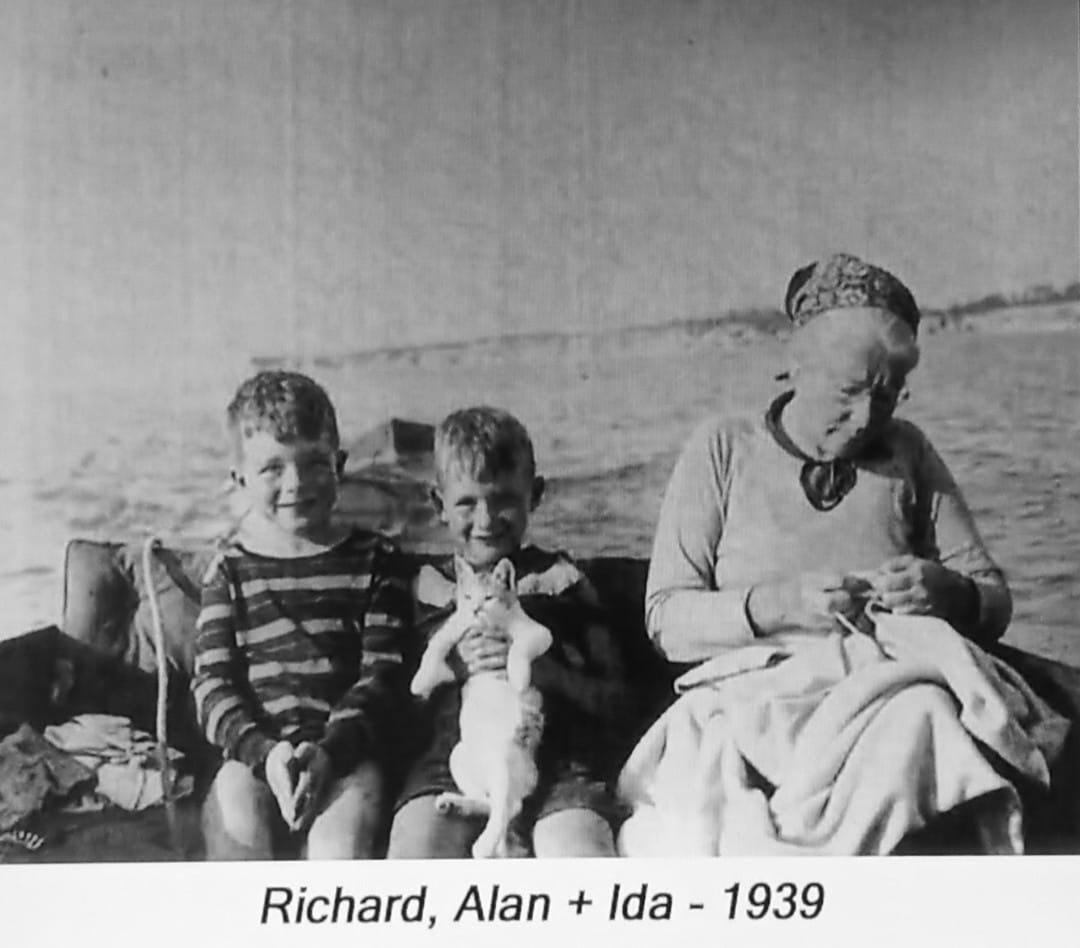
Caption
Richard, Alan + Ida - 1939 [printed below the picture on the family’s copy]
- Photograph
- Ida Rolf with her sons Richard and Alan in a boat
- Date
- 1939As the caption gives it; the picture names no place
- That summer
- “Dr. Ida Rolf of Munsey Park has opened her home at Stony Brook for the Summer months”“North Shore Personals,” Brooklyn Eagle, Sunday, 11 June 1939, p. 19
- Held by
- The family of Ida P. Rolf
- Rights
- Photographer unknownShown here with the permission of her grandson Jean-Pierre Demmerle. Please ask before reusing it.
A boat on open water, and a cat held up for the camera. Rolf sits a little apart from the boys, a scarf tied over her hair, her eyes on the knitting in her lap.
On 11 June 1939 the Brooklyn Eagle reported that “Dr. Ida Rolf of Munsey Park has opened her home at Stony Brook for the Summer months.” The picture names no place, yet a summer on Stony Brook Harbor would suit both the boat and the cat. Stony Brook had drawn her since the canoe of 1914.
Thirteen years after Paris, the chemist of the Flexner letters appears here as a mother.
Cite as“Richard, Alan + Ida, 1939,” photograph. Family of Ida P. Rolf; courtesy of Jean-Pierre Demmerle.
“North Shore Personals,” Brooklyn Eagle, 11 June 1939, p. 19. Brooklyn Public Library, Brooklyn Newsstand.
Walter with the boys
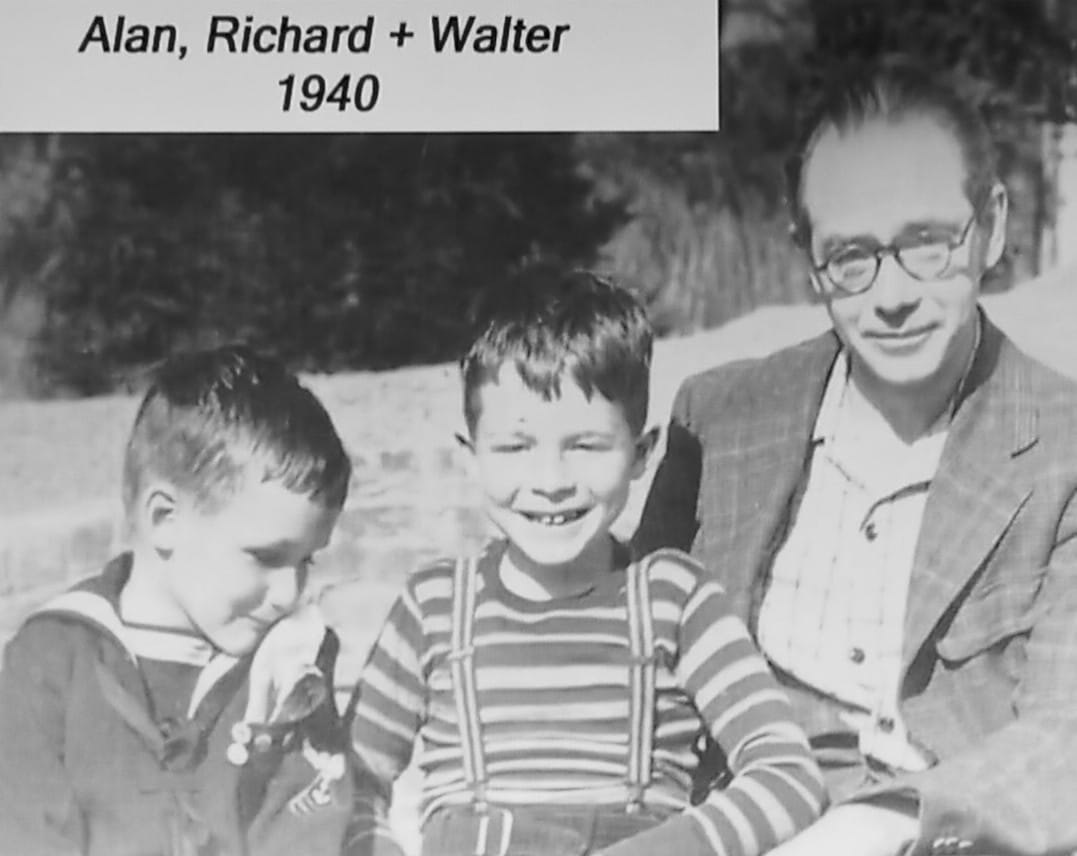
Caption
Alan, Richard + Walter 1940 [printed above the picture on the family’s copy]
- Photograph
- Walter F. Demmerle with his sons Alan and Richard
- Date
- 1940As the caption gives it; place unknown
- Held by
- The family of Ida P. Rolf
- Rights
- Photographer unknownShown here with the permission of her grandson Jean-Pierre Demmerle. Please ask before reusing it.
A year later the camera finds the boys with their father. Richard grins at the lens in the same striped jersey; Alan, in a sailor suit, looks down. Walter would live another seven years.
Cite as“Alan, Richard + Walter, 1940,” photograph. Family of Ida P. Rolf; courtesy of Jean-Pierre Demmerle.
Undated
With a dog in her arms
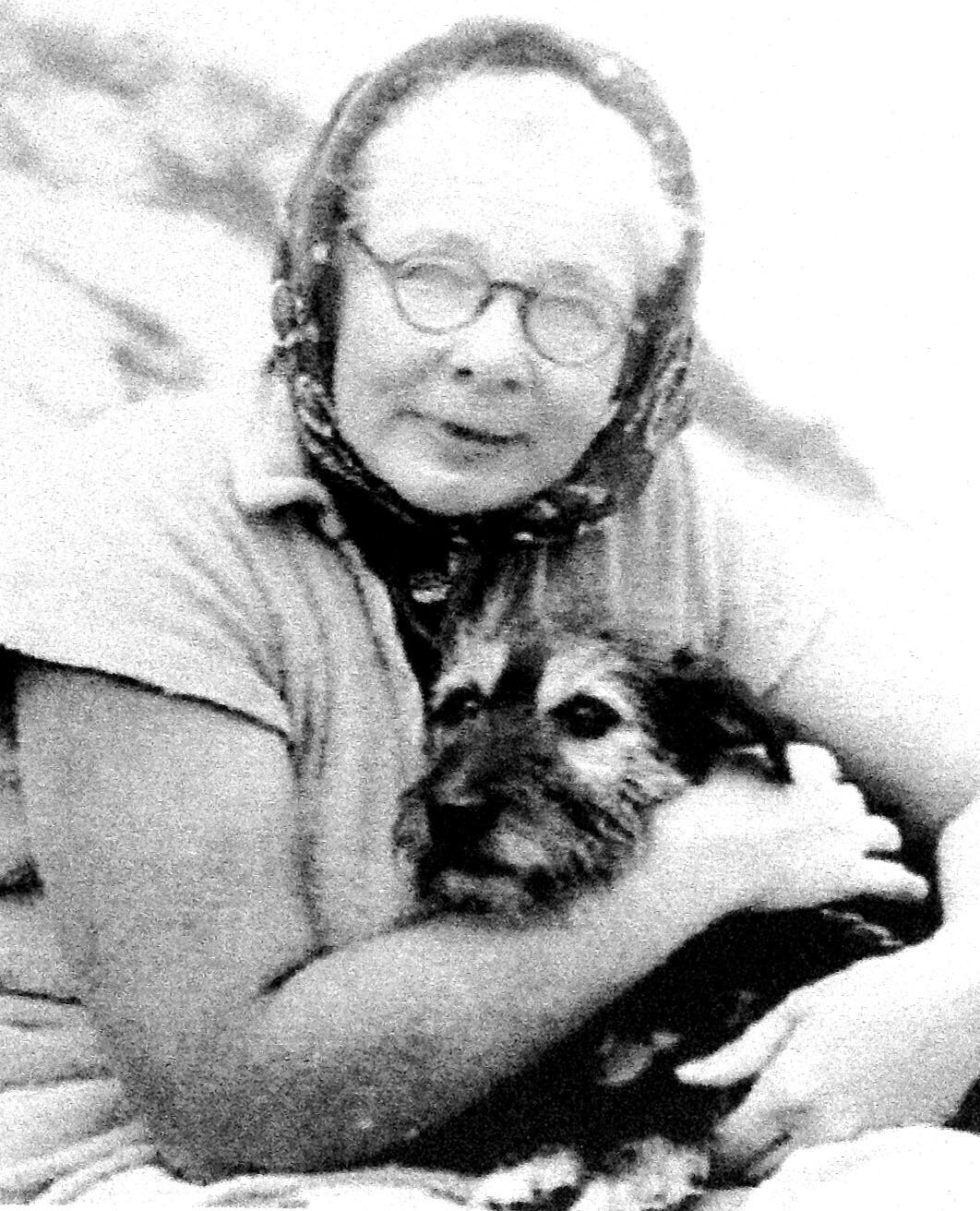
- Photograph
- Ida P. Rolf with a small dog
- Date
- Undated
- Held by
- The family of Ida P. Rolf
- Rights
- Photographer unknownShown here with the permission of her grandson Jean-Pierre Demmerle. Please ask before reusing it.
A picture without a pose. Headscarf and round glasses, as before. Held close against her, a shaggy little dog, as if the camera had caught her between two other things.
Cite asIda P. Rolf with a dog, photograph, undated. Family of Ida P. Rolf; courtesy of Jean-Pierre Demmerle.
The morning he did not wake
Nearly twenty-six years after the secret wedding, Walter Demmerle died suddenly, away from home. In the family’s memory Ida found him in the morning. Their grandson Jean-Pierre tells it as his father once told it to him.
“What I was told by my father is the fact that she woke up in the morning and she decided she was going out to the kitchen to make some tea or coffee. And when she came back to the room, she tried to wake up my grandfather. Opapa.
And he already had died in his sleep from a heart attack. And that completely devastated her.”
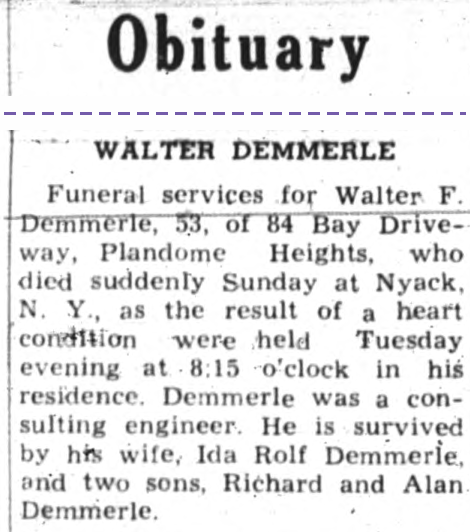
Transcription, Manhasset Press
Obituary [column heading, page 8]
[two notices on other residents, then:]
WALTER DEMMERLE
Funeral services for Walter F. Demmerle, 53, of 84 Bay Driveway, Plandome Heights, who died suddenly Sunday at Nyack, N. Y., as the result of a heart condition were held Tuesday evening at 8:15 o’clock in his residence. Demmerle was a consulting engineer. He is survived by his wife, Ida Rolf Demmerle, and two sons, Richard and Alan Demmerle.
Transcription, Manhasset Mail
W. F. DEMMERLE DIES SUDDENLY
Walter F. Demmerle, 53 of 84 Bay driveway, Manhasset, died suddenly last Sunday afternoon at the Clocktown [sic: Clarkstown] Country Club, Nyack, N. Y.
Mr. Demmerle, who was a research engineer, is survived by his wife, Mrs. Ida P. Rolf Demmerle, and two sons, Richard and Alan Demmerle.
Funeral services were held on Tuesday evening at the Demmerle home. Th[e] Rev. Roscoe M. Giles of the Manhasset Community Church officiated.
- Document
- Death notice in the “Obituary” column of the Manhasset Press, a weekly paper of Manhasset, Long Island
- Date
- Friday, 21 March 1947He died on Sunday, 16 March; the funeral took place at home on the evening of Tuesday, 18 March
- Held by
- Manhasset Public LibraryIts digitised run of the paper, from 1936 on, appears on NYS Historic Newspapers
- Reference
- Manhasset Press, 21 March 1947, p. 8
- Second notice
- “W. F. Demmerle Dies Suddenly,” Manhasset Mail, Thursday, 20 March 1947, p. 12On NYS Historic Newspapers; the paper prints “Clocktown” for Clarkstown
- Place of death
- Clarkstown Country Club, South Nyack, N.Y.The Mail names the club. The state’s death index for 1947 gives South Nyack (sheet 1401, certificate 17878), and the Nyack Journal-News of 22 June 1933 places the club there.
- Rights
- Probably in the public domain in the United StatesBoth papers appeared in 1947; a search of the copyright renewals of 1974 and 1975 still has to confirm that nobody renewed them. The death index, a bare list of facts, most likely carries no copyright at all.
- Memory
- Jean-Pierre Demmerle, interviewed for the documentary00:52:01 to 00:52:38, quoted above as its subtitles give it, with one repeated word left out
The address holds the first surprise. Number 84 Bay Driveway stands in Plandome Heights, a small village beside Manhasset on Long Island’s North Shore, and the house stayed hers after his death. Eight years later she typed her letter to Byron Gentry on paper printed with the same address and a new name above it: Physical Integration. The family home had turned into the address of her work.
Then his trade. “A consulting engineer,” says the notice, set in type while the neighbours still knew him; the Mail calls him a research engineer. Thirty-two years later the Times made him a building contractor, and the family remembers an electrical engineer with patents to his name. The paper of 1947 sides with the family, and so does his patent of 1922.
It also gives the sons their names, Richard and Alan, and calls their mother Ida Rolf Demmerle: her own name first, his after it, the order the stone at Woodlawn keeps for her.
The Manhasset Mail, out a day before the Press, names the place: “the Clocktown Country Club, Nyack”. The misprint stands in the paper itself. Pierre Bernard’s Clarkstown Country Club lay in South Nyack, above the Hudson, and the state’s death index for 1947 gives that village too, under certificate 17878. Walter died at the community where Ida, as she told it, had learned her yoga from Bernard. The family’s story, of a kitchen and a room, would fit a night spent there. Only the hour differs: the Mail speaks of Sunday afternoon, the family remembers a morning.

Ida Rolf turned fifty-one that May. On the stone they share, their two dates of death stand three days apart in March and thirty-two years apart in time. Between them lie the years in which Structural Integration found its name and its first pupils.
Cite as“Walter Demmerle,” Obituary column, Manhasset Press (Manhasset, N.Y.), 21 March 1947, p. 8. Manhasset Public Library; NYS Historic Newspapers.
“W. F. Demmerle Dies Suddenly,” Manhasset Mail (Manhasset, N.Y.), 20 March 1947, p. 12. NYS Historic Newspapers.
New York State Death Index, 1947, sheet 1401, certificate 17878. Reclaim The Records; Internet Archive.
“Nyacks Owe Much to Enterprise of Dr. Bernard,” The Journal-News (Nyack, N.Y.), 22 June 1933, supplement p. 4. NYS Historic Newspapers.
Jean-Pierre Demmerle, interview, in Ida Rolf – Mother of Fascia, dir. Aleš Urbanczik (2025), 00:52:01–00:52:38.
Chapter VI · 1940 to 1963
Developing the work
Before the work had a name, it had teachers. In the early 1940s, as the film has it, she studied with an osteopath, Amy Cochran. In the spring of 1954 she taught chiropractors and osteopaths for two weeks in Cedar Rapids, Iowa, and called her method Postural Integration; four years later the copyright office filed her drawings as Postural Release. A chiropractor in Oklahoma, Byron Gentry, became her friend and correspondent. In 1958 she joined Subud in Los Angeles and met a kindred spirit, Moshe Feldenkrais, at Coombe Springs in England; a year later a camera found her on its lawn. By 1963 the name had settled in her own print: Structural Integration. That autumn the hard work of a quarter century took its toll on her health, and her letters to Gentry tell of it.
Undated; the film places the meeting in the early 1940s
Amy Cochran’s exercises
Before Rolf had a method of her own, she learned from an osteopath. Six small prints show that teacher at work in her own body, and they reach us from a single family’s keeping.
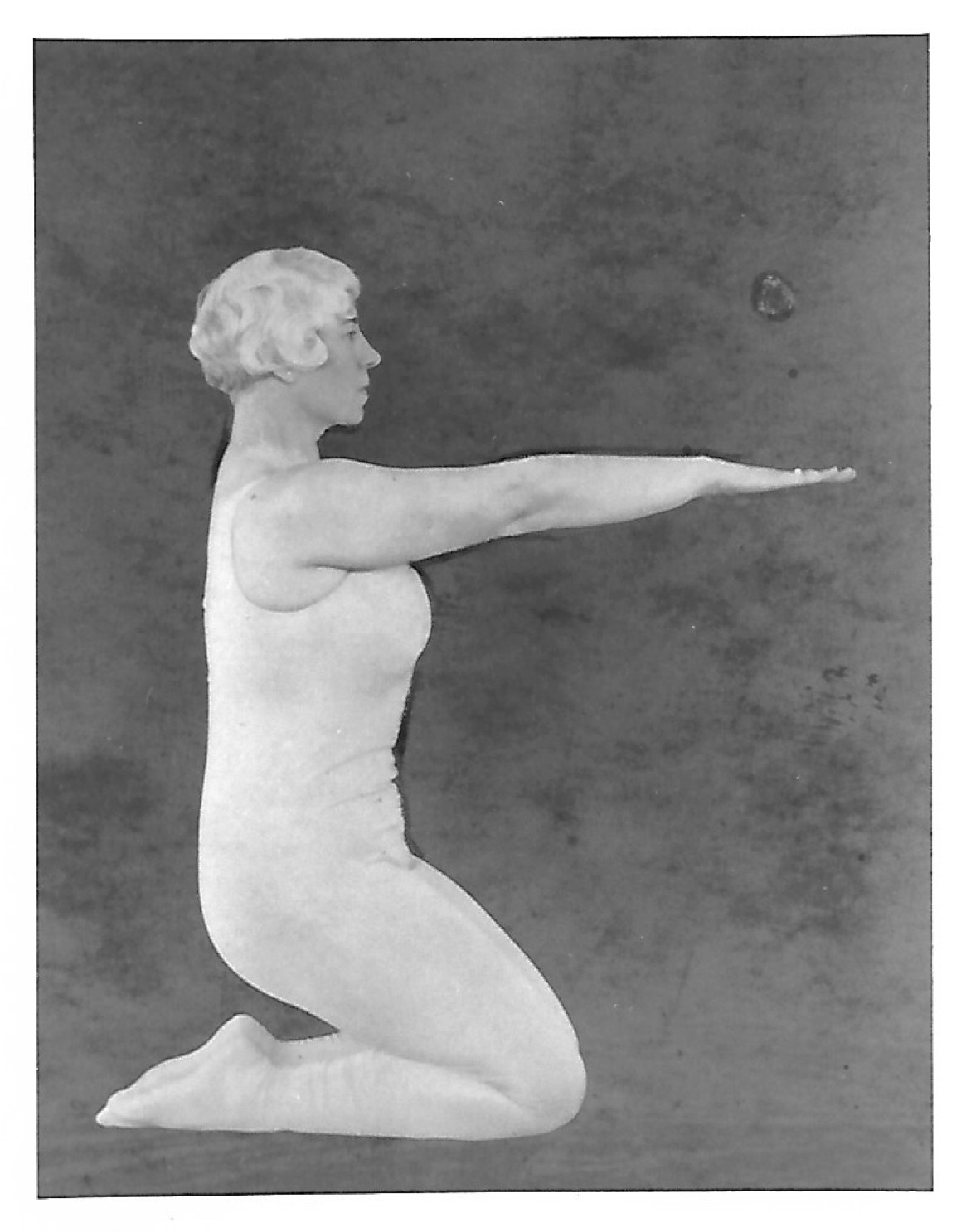
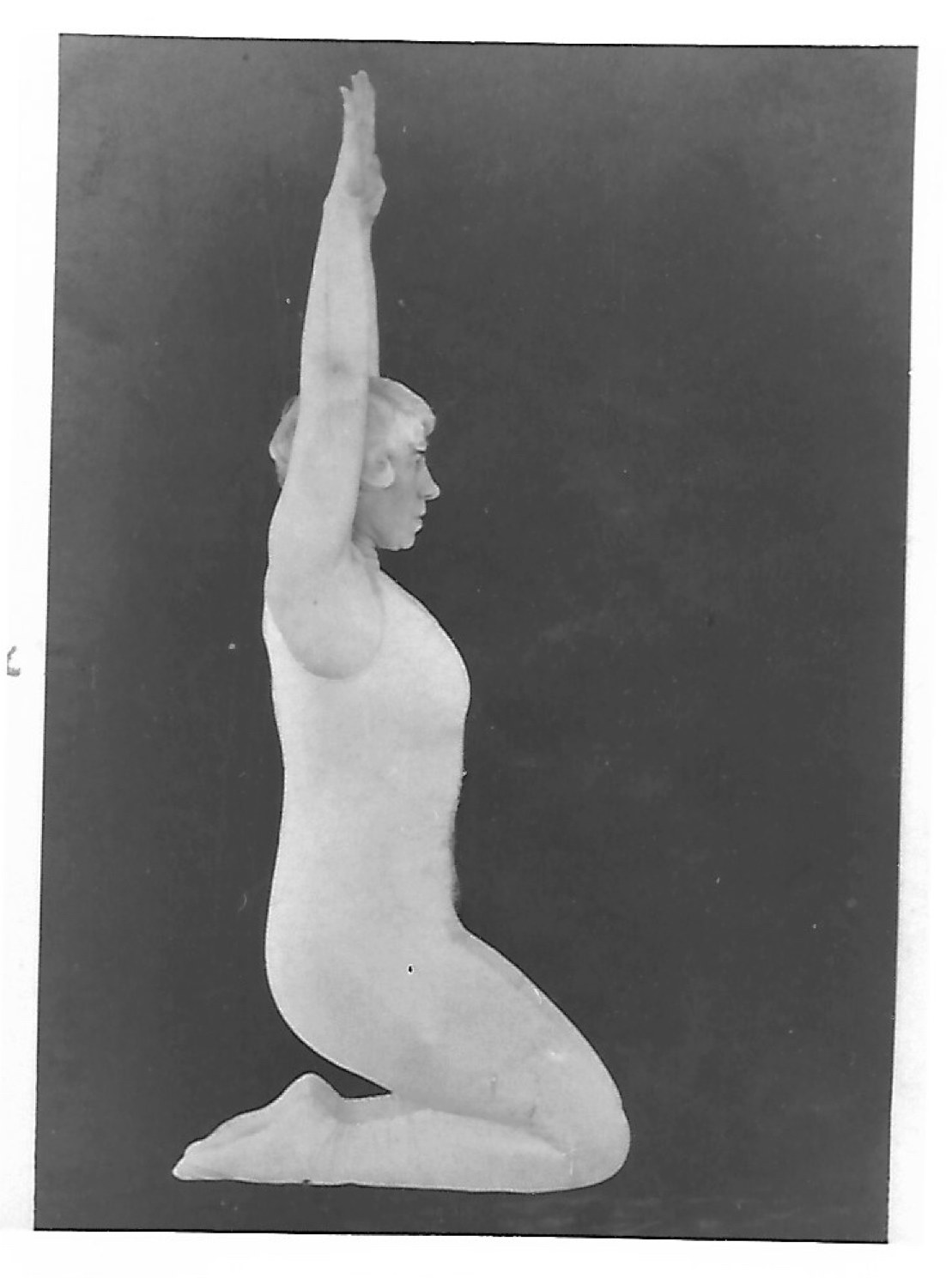
“This thing is called the pelvic lift. Naturally, that’s what it ain’t, so it really is a good name in the end. Actually, I pinched that name from somebody else who did a pelvic lift, and when I pinched the name, it seemed an appropriate name.”
- Photographs
- Six black-and-white prints with white bordersTwo carry numbers in pencil beside the image, “35” and “6”, as if from a longer series
- Shown
- Amy Cochran, D.O. (1882–1961), osteopathDates as the notes to Ida Rolf Talks in Class give them
- Date
- UndatedThe short waved hair suggests the late 1920s or early 1930s
- Held by
- Cathlyne TalevichFrom her mother’s keeping; “most likely the only copy”. She and her mother both taught Physio-Synthesis. Neither knew Cochran, but both stood close to Lucille Coughran, by Cathlyne’s account Cochran’s closest student, who lived with her for many years and taught for fifty-seven.
- Her method
- Physio-Synthesis, a system of “formulated movements” for the deep musclesTaught by Cochran from 1934, incorporated in 1936; about fifty teachers trained by 1961 (Ida M. Thomas, Physio-Synthesis: The Key to Structural Balance, revised edition, 1990, pp. 5–9)
- The name
- Suggested by Roberto Assagioli, founder of Psychosynthesis, during her European journey of 1932 and 1933Traced through the Assagioli Archives in Florence by Elena Graziadei, “At the Origins of Physio-Synthesis”, Psicosintesi 46, October 2026
- Rights
- Photographer unknownShown here by courtesy of Cathlyne Talevich, for documentation. Please ask before reusing them. The page will take them down at a rights holder’s request.
Rolf never hid the debt. Teaching her advanced classes in the 1970s, she told her students that she had “pinched” the name pelvic lift from somebody else. The notes to the transcripts name Amy Cochran, from whom she took the pelvic lift along with exercises for the feet and arms.
The prints show what such exercises asked of a body. Kneeling, Cochran holds her arms level, then lifts them overhead. On all fours she raises her head and lets the back grow long. Standing, she rises onto her toes with the arms up, and in the squat the arms stay up while the heels leave the floor. A single profile, without movement, lets the neck speak for itself.
The prints may come from a book that never reached the shops. Around 1933, as her student Ida M. Thomas tells it, Cochran visited the Imperial Treasury House in Nara and showed a guide “the book of cuts” she carried, the printing blocks for her book on Physio-Synthesis. He stopped at “a certain picture of her standing from a side view with the arms up over the head … lifted on the toes.” The print numbered 35 shows exactly that pose. The pencilled numbers, by the look of them, mark plates in that series, and the waved hair fits those years.
The name of her method came from Italy. On the same journey Cochran met Roberto Assagioli in Rome, and he told her: “Your work should be called Physio-Synthesis because it deals with the physical aspects of the person similar to the way my work deals with the psyche.” Elena Graziadei, a movement therapist training in Psychosynthesis, heard the word in this film and followed it back to a note in Assagioli’s own hand.
How and when Cochran and Rolf met, no record yet tells. The film places the meeting in the early 1940s. In 1937 Cochran and her assistant Lucille Coughran, a chiropractor, crossed the country by trailer and presented the system, among other places, “before a group of doctors in New York”, a city where Rolf then lived among osteopaths. Thomas never names Rolf, so the tour offers a possible first meeting, not a proven one. If you know more about Amy Cochran or these photographs, please write to us.
Cite asAmy Cochran, six exercise photographs, undated, photographer unknown. Courtesy of Cathlyne Talevich.
Ida M. Thomas, Physio-Synthesis: The Key to Structural Balance, rev. ed. (Verdugo City, CA: Thomas Publishing, 1990), 5–9.
Elena Graziadei, “At the Origins of Physio-Synthesis: Where Roberto Assagioli Meets Amy Cochran,” Psicosintesi 46 (October 2026).
Ida P. Rolf, advanced class, 1974–1976, in Ida Rolf Talks in Class: Advanced Classes 1974–1976, ed. Aleš Urbanczik (2026), 164.
to
A class in Cedar Rapids
In the spring of 1954 Ida Rolf travelled to Cedar Rapids, Iowa, to teach chiropractors and osteopaths for two weeks. Ahead of the class she sent them an essay and a short “Posture Quiz”. She hadn’t yet named her method Structural Integration. Here she calls it Postural Integration.
“Personally I understand posture as the dynamic balance of the parts of the body, in space, in relation to the force of gravity, at any given moment, and for any given position.”
“In practically all bodies which have not been subjected to drastic trauma, automobile accidents, polio, etc., the tenth hour of processing shows a fundamental change in the muscle tone of the body.”
“Like many of the richer and more rewarding aspects of life, this technique is essentially non-verbal and requires experiencing.”
- Document
- Essay with “A Posture Quiz”, written for her class“These will be the subjects of discussion at the meetings to be held at Cedar Rapids, Iowa – April 26th to May 10th, 1954.”
- Date
- Spring 1954, before the class
- Printed in
- Structure, Function, Integration 47, no. 2, June 2019, pp. 86–88The journal of the Dr. Ida Rolf Institute, with an abstract and an editor’s note: “We have made minor edits for clarity.”
- Rights
- Her words belong to her heirs; the printing, to the Dr. Ida Rolf InstituteQuoted briefly, for documentation; removed at once should the Institute object
The essay already holds the core of what she would teach for the next quarter century. Where older techniques set individual vertebrae, she wants the “stacking” of the body’s great weights: head, thorax, pelvis, legs. Once the parts stand stacked, she argues, the spine finds its own order “without outside interference or specific correction”. The ten sessions appear too, more than twenty years before her book, and she asks that the client understand from the start that “a ten-hour processing is essential”.
The name opens a row she would turn over for the rest of the decade. The Gentry letter further down follows it to the one that lasted. The pair she wrote in Iowa came back years afterwards on her letter paper for 11 Riverside Drive.
Cite asIda P. Rolf, essay and “A Posture Quiz” for the class at Cedar Rapids, Iowa, 26 April to 10 May 1954, Structure, Function, Integration 47, no. 2 (June 2019): 86–88.
Lecturing to physicians
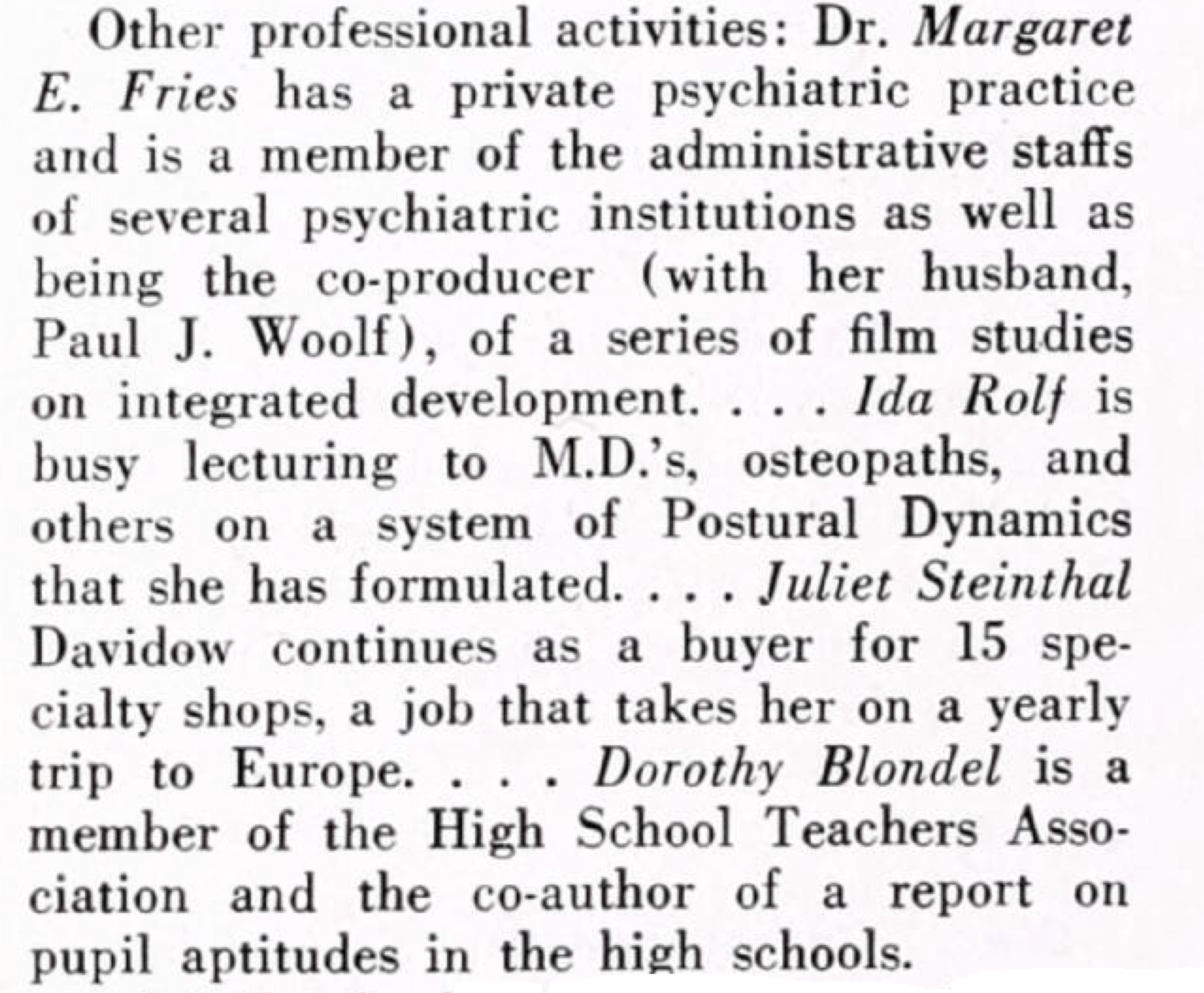
Transcription, in part
• ’16
Class Correspondent: Evelyn Haring Blanchard (Mrs. Donald D.), 86 Mountain Ave., New Rochelle, N. Y.
[a note on Margaret King Eddy, then:]
Other professional activities: Dr. Margaret E. Fries has a private psychiatric practice […] . . . Ida Rolf is busy lecturing to M.D.’s, osteopaths, and others on a system of Postural Dynamics that she has formulated. . . .
- Document
- Class notes for 1916, in The Barnard Alumnae Magazine
- Date
- March 1955The page announces a class party for Saturday, 19 March, and looks back to “our January issue”
- Held by
- Barnard Archives and Special Collections, New York
- Reference
- The Barnard Alumnae Magazine, vol. XLIV, no. 3, March 1955, printed page 20
- Digital copy
- Barnard Digital Collections
- Rights
- Public domain in the United States: copyright not renewedThe issue carries the notice “Copyright 1955 by the Associate Alumnae of Barnard College”, but the Copyright Office’s records hold no renewal from 1982 or 1983, so its protection ran out at the end of 1983
Thirty-nine years after graduation, Rolf turns up in her class notes between a psychiatrist and a buyer for specialty shops. The note fixes two things. By early 1955 she taught physicians and osteopaths, years before Esalen. And it calls her method Postural Dynamics, where Eric Jacobson gives Structural Dynamics for those years. Did a classmate garble the name? A letter of hers from that September, in the next entry, answers.
Two classmates named in the same column, Margaret King and Dorothy Blondel, stand beside her on the Phi Beta Kappa roll of 1917.
Cite asEvelyn Haring Blanchard, class correspondent, “’16,” The Barnard Alumnae Magazine 44, no. 3 (March 1955): 20. Barnard Archives and Special Collections.
Summer 1955 and
“Friend Gentry”
In 1955 an Oklahoma chiropractor named Byron Gentry carried her method onto the programme of a state convention in Iowa. That September Rolf wrote to him as one colleague to another, trading news of students and meetings, and gave her work a name of her own choosing.
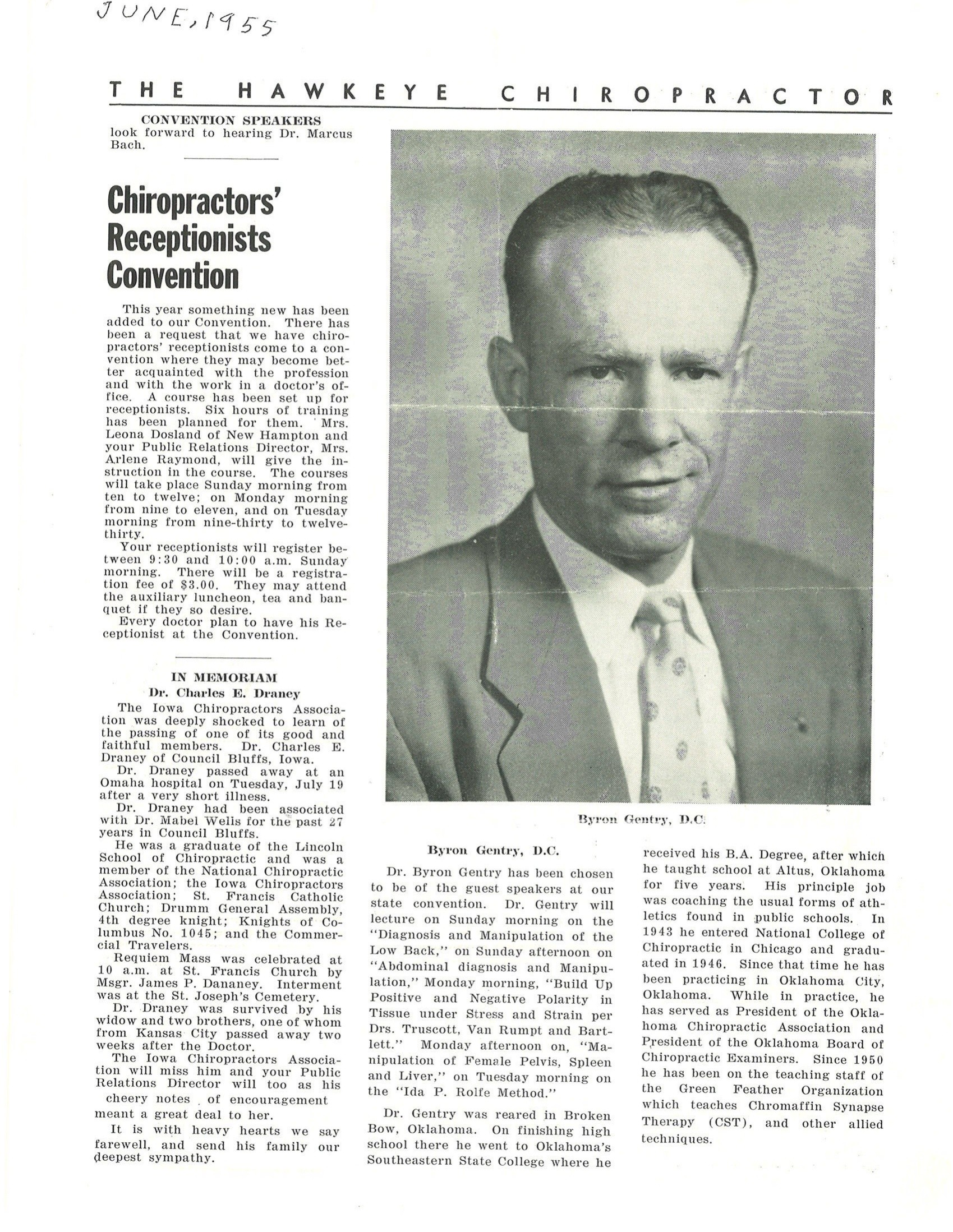
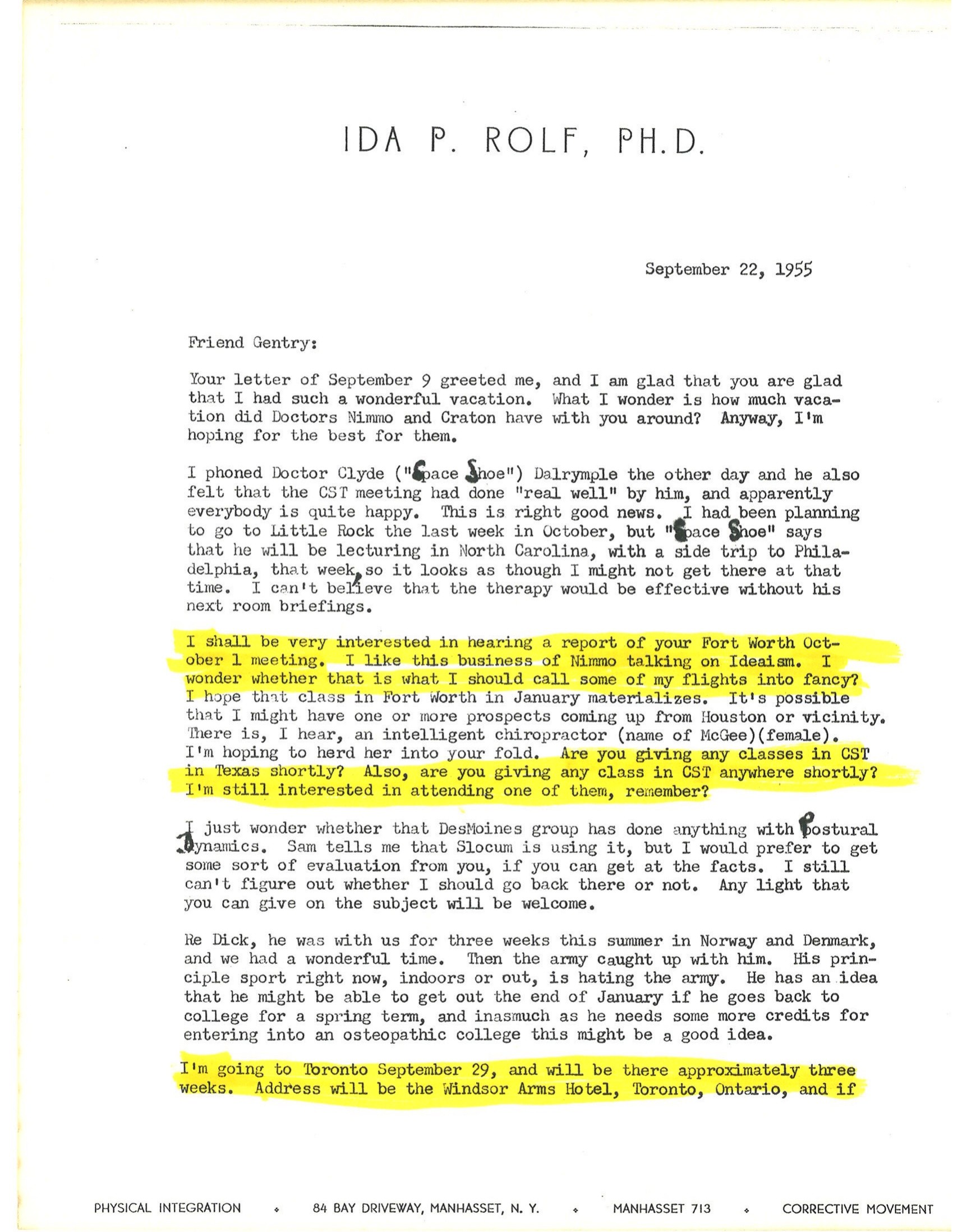
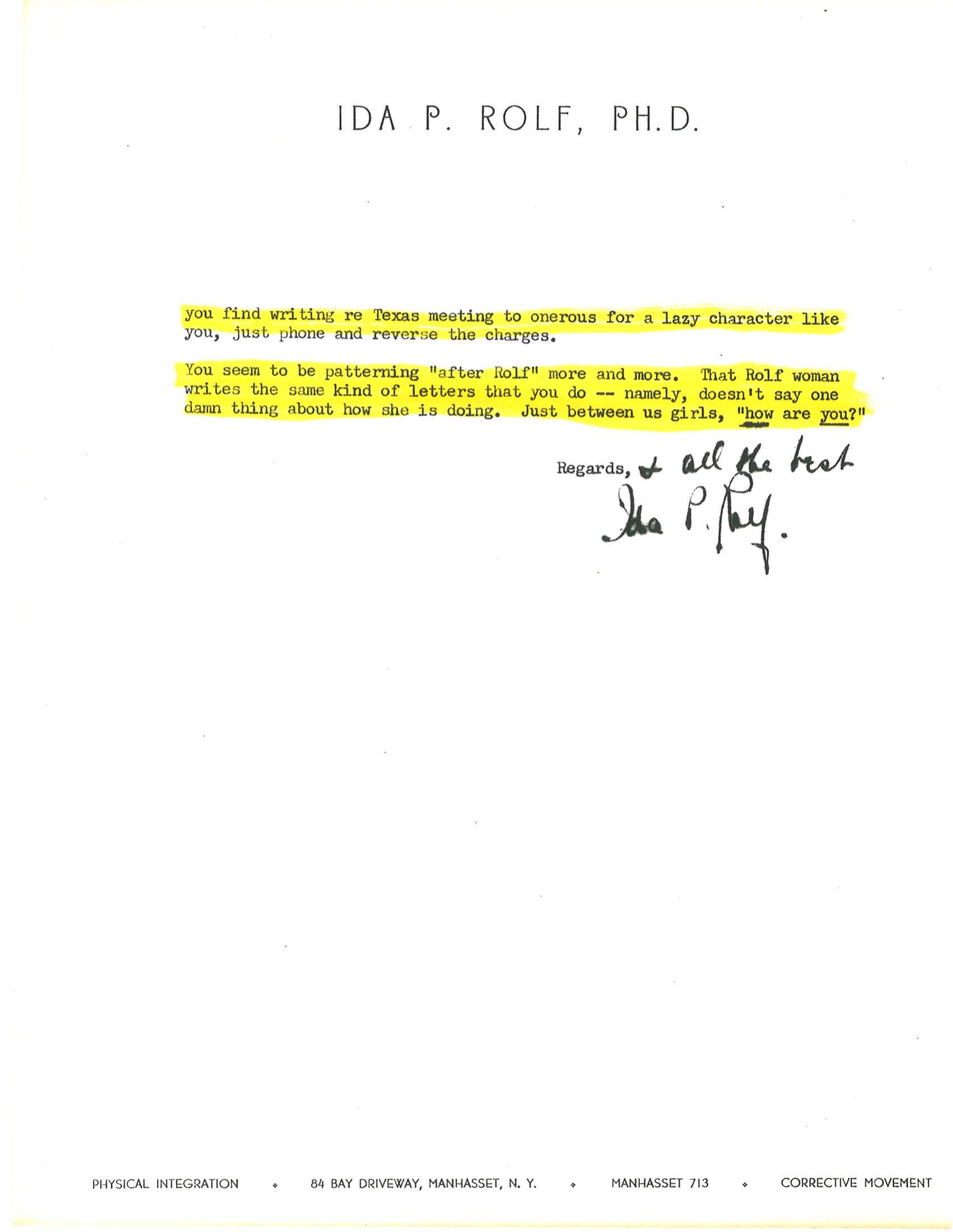
Transcription of the magazine, in part
[at the head, by hand:] June, 1955
THE HAWKEYE CHIROPRACTOR
[beneath the portrait:] Byron Gentry, D.C.
Byron Gentry, D.C.
Dr. Byron Gentry has been chosen to be of the guest speakers at our state convention. Dr. Gentry will lecture on Sunday morning on the “Diagnosis and Manipulation of the Low Back,” on Sunday afternoon on “Abdominal diagnosis and Manipulation,” Monday morning, “Build Up Positive and Negative Polarity in Tissue under Stress and Strain per Drs. Truscott, Van Rumpt and Bartlett.” Monday afternoon on, “Manipulation of Female Pelvis, Spleen and Liver,” on Tuesday morning on the “Ida P. Rolfe Method.”
Dr. Gentry was reared in Broken Bow, Oklahoma. On finishing high school there he went to Oklahoma’s Southeastern State College where he received his B.A. Degree, after which he taught school at Altus, Oklahoma for five years. His principle job was coaching the usual forms of athletics found in public schools. In 1943 he entered National College of Chiropractic in Chicago and graduated in 1946. Since that time he has been practicing in Oklahoma City, Oklahoma. While in practice, he has served as President of the Oklahoma Chiropractic Association and President of the Oklahoma Board of Chiropractic Examiners. Since 1950 he has been on the teaching staff of the Green Feather Organization which teaches Chromaffin Synapse Therapy (CST), and other allied techniques.
[In the left column: a course for chiropractors’ receptionists at the convention, and a notice on the death of Dr. Charles E. Draney of Council Bluffs, Iowa, “on Tuesday, July 19”.]
Transcription of the letter
IDA P. ROLF, PH.D. [printed letterhead]
September 22, 1955
Friend Gentry:
Your letter of September 9 greeted me, and I am glad that you are glad that I had such a wonderful vacation. What I wonder is how much vacation did Doctors Nimmo and Craton have with you around? Anyway, I’m hoping for the best for them.
I phoned Doctor Clyde (“Space Shoe”) Dalrymple the other day and he also felt that the CST meeting had done “real well” by him, and apparently everybody is quite happy. This is right good news. I had been planning to go to Little Rock the last week in October, but “Space Shoe” says that he will be lecturing in North Carolina, with a side trip to Philadelphia, that week, so it looks as though I might not get there at that time. I can’t believe that the therapy would be effective without his next room briefings. [the capitals of Space Shoe added by hand, both times]
I shall be very interested in hearing a report of your Fort Worth October 1 meeting. I like this business of Nimmo talking on Ideaism. I wonder whether that is what I should call some of my flights into fancy? I hope that class in Fort Worth in January materializes. It’s possible that I might have one or more prospects coming up from Houston or vicinity. There is, I hear, an intelligent chiropractor (name of McGee)(female). I’m hoping to herd her into your fold. Are you giving any classes in CST in Texas shortly? Also, are you giving any class in CST anywhere shortly? I’m still interested in attending one of them, remember?
I just wonder whether that DesMoines group has done anything with Postural Dynamics. Sam tells me that Slocum is using it, but I would prefer to get some sort of evaluation from you, if you can get at the facts. I still can’t figure out whether I should go back there or not. Any light that you can give on the subject will be welcome. [both capitals written over the typed small letters by hand]
Re Dick, he was with us for three weeks this summer in Norway and Denmark, and we had a wonderful time. Then the army caught up with him. His principle sport right now, indoors or out, is hating the army. He has an idea that he might be able to get out the end of January if he goes back to college for a spring term, and inasmuch as he needs some more credits for entering into an osteopathic college this might be a good idea.
I’m going to Toronto September 29, and will be there approximately three weeks. Address will be the Windsor Arms Hotel, Toronto, Ontario, and if [page 2] you find writing re Texas meeting to onerous for a lazy character like you, just phone and reverse the charges.
You seem to be patterning “after Rolf” more and more. That Rolf woman writes the same kind of letters that you do -- namely, doesn’t say one damn thing about how she is doing. Just between us girls, “how are you?”
Regards, & all the best
Ida P. Rolf.
[printed at the foot of both pages:] PHYSICAL INTEGRATION · 84 BAY DRIVEWAY, MANHASSET, N. Y. · MANHASSET 713 · CORRECTIVE MOVEMENT



- Magazine
- The Hawkeye Chiropractor, page with Gentry’s portrait and his programme for the state conventionDated June 1955 by hand on the copy. The page reports a death on “Tuesday, July 19”, a weekday that fits 1955, so the issue most likely appeared later that summer.
- Letter
- Ida P. Rolf to Byron Gentry, D.C., typed, two pages, signedOn her letter paper of 84 Bay Driveway, Manhasset, Long Island, the family home, the address Walter’s death notice gives in 1947
- Date
- 22 September 1955Answering his letter of 9 September
- Held by
- Originals in private hands, still to traceThe production holds scans of copies lent for the film. The yellow highlighting on the letter came later.
- Rights
- Copyright in the letter rests with the heirs of Ida P. Rolf (1896–1979)Shown here for research and documentation. The page will take the scans down at a rights holder’s request. The magazine appeared in 1955; its status in the United States turns on a renewal, a check still open.
Gentry grew up in Broken Bow, Oklahoma, and coached school sports before he trained as a chiropractor in Chicago. By 1955 he had presided over the Oklahoma Chiropractic Association and over the state’s board of examiners. Iowa’s chiropractors invited him to speak from Sunday to Tuesday, and his last morning carried her name, misspelt: the “Ida P. Rolfe Method”.
Her letter reads like a note between colleagues who trade students. She hopes to herd a chiropractor from Houston “into your fold”, and she asks twice when he will next teach CST, the Chromaffin Synapse Therapy of his biography, because she wants to attend. The Nimmo of her second paragraph probably means Raymond L. Nimmo, the Texas chiropractor remembered for his receptor-tonus technique, an early form of trigger-point work.
One question in the letter clears a doubt raised further up this page. She asks whether “that DesMoines group” has done anything with Postural Dynamics, and she turns both small letters into capitals by hand, as a writer marks a name. Six months earlier her classmates had reported her lecturing on Postural Dynamics. The name came from Rolf herself.
Her letter paper adds two more: Physical Integration and Corrective Movement. Nine years later, on paper printed for 11 Riverside Drive, the work goes by Structural Dynamics and Postural Integration. Between the two stands the brochure of about 1958 with the pair that lasted, Structural Integration. For a decade she turned the same few words over in her hands, the way a sculptor circles a block of stone before the first cut. Later paper from the same building, the flat now 14J West, lets the two second words trade places: Structural Integration on the left, and on the right Postural Dynamics, the name she had capitalised by hand in 1955.
“Dick”, who spent three weeks with her in Norway and Denmark that summer before the army claimed him, means her son Richard. He hoped to enter an osteopathic college. By 1963 a Richard R. Demmerle, D.C., shares her return address, on an envelope further down.
She closes by teasing him for the very thing her own letters do: “That Rolf woman writes the same kind of letters that you do.” Eight years later, writing to the same man, she would report on her health line by line.
Cite asIda P. Rolf to Byron Gentry, Manhasset, N.Y., 22 September 1955, 2 pp. Copy, research files of Ida Rolf – Mother of Fascia.
“Byron Gentry, D.C.,” The Hawkeye Chiropractor, [summer] 1955.
Undated, most likely the later 1950s
Side by side
A studio portrait of Ida Rolf with Byron Gentry, the Oklahoma chiropractor who carried her method to Iowa in 1955. His son Dan Gentry gave it to this archive.
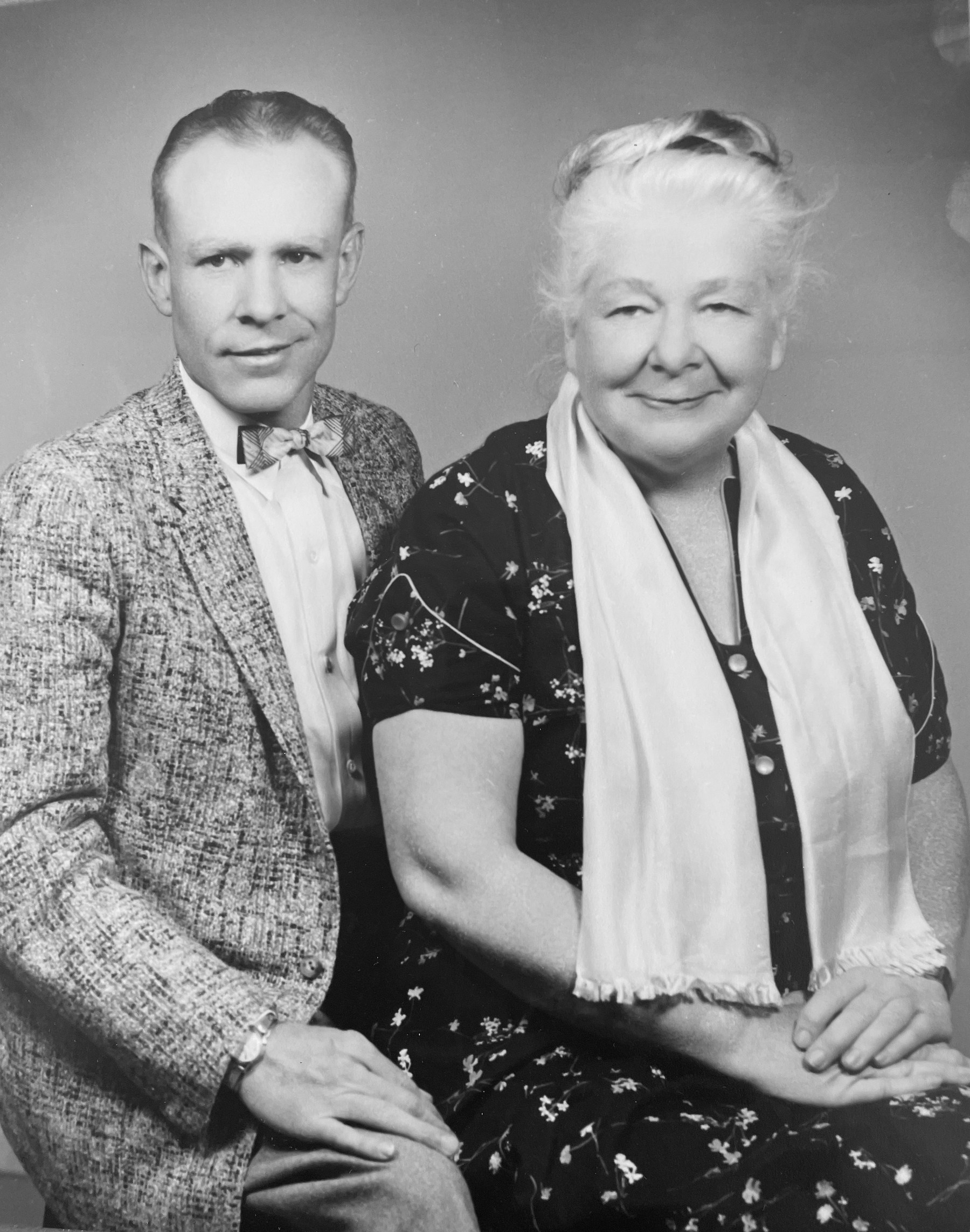
- Photograph
- Byron Gentry, D.C., and Ida P. Rolf, studio portrait, black and white
- Date
- UndatedMost likely the later 1950s: Gentry looks much as he does in his portrait of 1955
- Held by
- Archive of Ida Rolf – Mother of FasciaDonated by Dan Gentry, Byron Gentry’s son, November 2026. Shown from a photograph of the print, cropped at the foot and set in greyscale.
- Rights
- Photographer unknownShown here with the kind permission of Dan Gentry. Please ask before reusing it.
A plain grey backdrop, two people seated close. Gentry wears a flecked tweed jacket and a bow tie. A watch shows on the wrist of the hand that rests on his knee. Rolf has pinned her white hair up and laid a fringed silk scarf over a dark summer dress full of small flowers. Both sit tall without strain, and both smile as if the photographer had just said something worth smiling at.
No date and no name of a studio came with the picture. Gentry’s face matches the one in The Hawkeye Chiropractor closely, the same high hairline and the same narrow smile, which places the sitting in the second half of the 1950s. Rolf, born in 1896, would then have reached her early sixties.
Her letters to him sound like this picture looks. In 1955 she greets him as “Friend Gentry” and asks when he will next teach, so she can sit in his class. Eight years later she writes to him about her health, question after question, and trusts him with the answers. Esalen still lay years ahead, and so did the classes that would carry her work around the world.
Cite asByron Gentry and Ida P. Rolf, photograph, undated [later 1950s], photographer unknown. Archive of Ida Rolf – Mother of Fascia, donated by Dan Gentry.
and winter 1969
An itinerant teacher
Transcription, in part: April 1958
’16 Evelyn Haring Blanchard, 22 Lotus Rd., New Rochelle, N. Y.
[after a note on Gladys Pearson Feer:]
Ida Rolf Demmerle, Ph.D., is “an itinerant teacher of physical integration and corrective body movement.” She “never has trouble finding bodies which have departed from appropriate spatial relationships.”
Transcription, in part: winter 1969
16 Emma Seipp, 140 West 57 Street, New York, N. Y. 10019
[after notes on other classmates:]
Some classmates are retiring, but several are more active than ever, such as Ida Rolf Demmerle. Dr. Rolf (her professional name) is a pioneer in the development of a system of body structure alignment; she has devoted herself to the establishment of nationwide centers of teaching and practising, and is currently preparing material on the background philosophy of her work for publication.
- Document
- Class notes for 1916, in the Barnard alumnae magazine
- Dates
- April 1958; winter 1969The later issue’s notes mention the elections of the fall and the death of Arthur Hays Sulzberger, which fall in late 1968
- Reference
- The Barnard Alumnae Magazine, April 1958, p. 23; Barnard Alumnae, Winter 1969, p. 30
- Held by
- Barnard Archives and Special Collections, New York
- Digital copy
- Barnard Digital Collections
- Rights
- Quoted for documentationRenewal searches still to run before any scan goes up
Three years after the note on her lectures to physicians, the class correspondent let Rolf speak, or nearly. The quotation marks suggest her own words, and the second sentence carries her humour: she never runs short of bodies out of line. She called herself an itinerant teacher, and the year bears her out. That spring J. G. Bennett heard her account of the work in Los Angeles, and by summer she had crossed to England.
Eleven years later a new correspondent looked at the same classmate. Others had begun to retire. Rolf, seventy-two, had schools on her mind and a book in hand, and the note explains, for readers who knew her as Demmerle, that she worked under her own name. The “material on the background philosophy of her work” most likely grew into her book of 1977, Rolfing: The Integration of Human Structures.
Her classmates had watched an itinerant teacher become, in their words, a pioneer.
Cite asEvelyn Haring Blanchard, class correspondent, “’16,” The Barnard Alumnae Magazine (April 1958): 23.
Emma Seipp, class correspondent, “16,” Barnard Alumnae (Winter 1969): 30. Barnard Archives and Special Collections.
, printed
“Among those opened”
In March 1958 Pak Subuh, the Indonesian founder of Subud, travelled through California with his family, and J. G. Bennett had gone ahead to prepare the way. The Subud Chronicle followed the journey in instalments. In Los Angeles, among the newcomers, it names Ida Rolf.
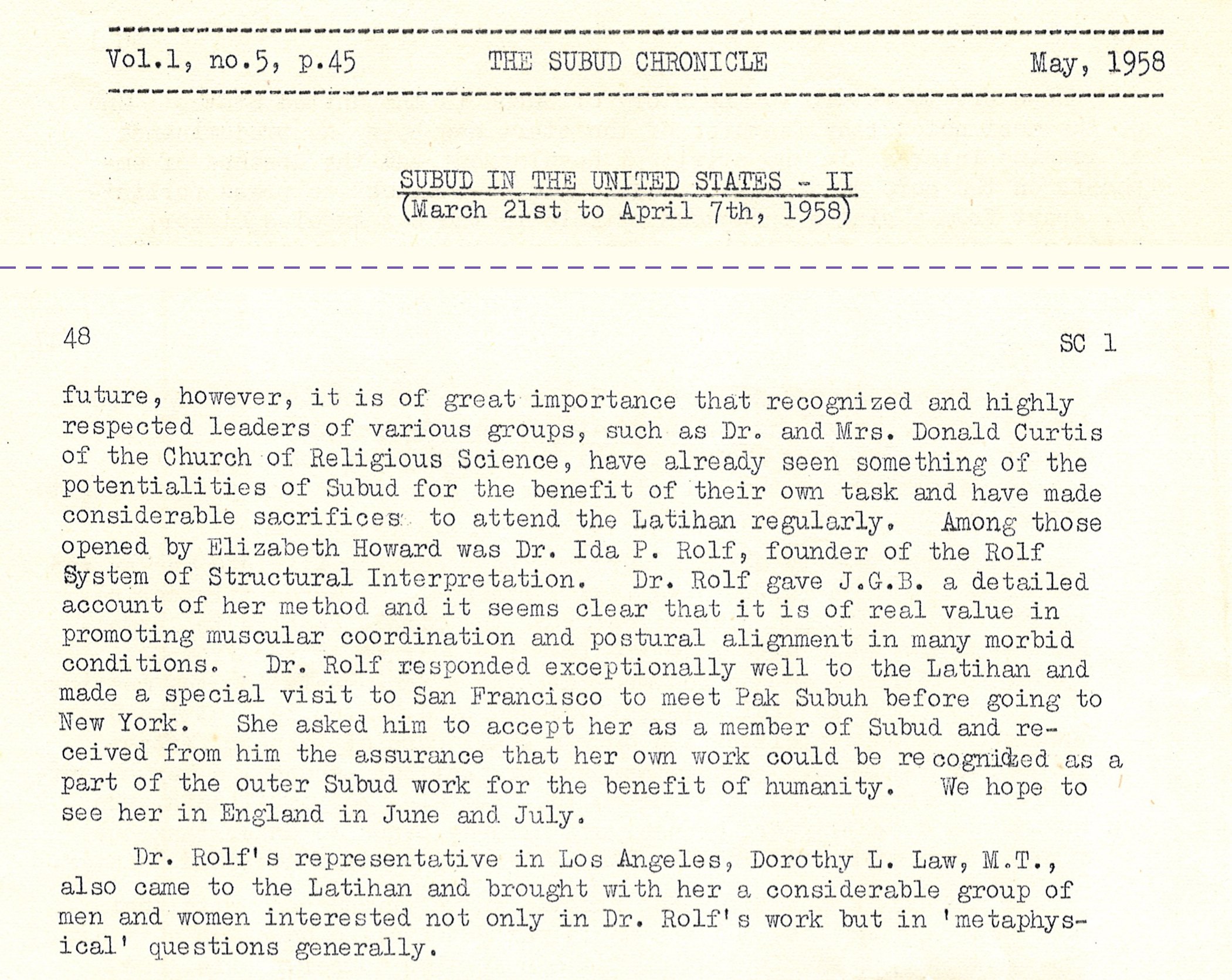
Transcription, in part
Vol.1, no.5, p.45 THE SUBUD CHRONICLE May, 1958
SUBUD IN THE UNITED STATES - II
(March 21st to April 7th, 1958)
[pages 45 to 47 on San Francisco, Carmel and the first days in Los Angeles; then, on page 48, in mid-paragraph:]
Among those opened by Elizabeth Howard was Dr. Ida P. Rolf, founder of the Rolf System of Structural Interpretation. Dr. Rolf gave J.G.B. a detailed account of her method and it seems clear that it is of real value in promoting muscular coordination and postural alignment in many morbid conditions. Dr. Rolf responded exceptionally well to the Latihan and made a special visit to San Francisco to meet Pak Subuh before going to New York. She asked him to accept her as a member of Subud and received from him the assurance that her own work could be recognized [the z typed over another letter] as a part of the outer Subud work for the benefit of humanity. We hope to see her in England in June and July.
Dr. Rolf’s representative in Los Angeles, Dorothy L. Law, M.T., also came to the Latihan and brought with her a considerable group of men and women interested not only in Dr. Rolf’s work but in ‘metaphysical’ questions generally.
- Document
- Report “Subud in the United States – II (March 21st to April 7th, 1958)”, in The Subud ChronicleTyped and duplicated, punched for a binder, unsigned on these pages. Its writer travelled with the party from England and calls J. G. Bennett “J.G.B.”
- Date
- May 1958The report covers 21 March to 7 April 1958, from the party’s arrival in New York to its return to San Francisco
- Reference
- The Subud Chronicle, vol. 1, no. 5, May 1958, pp. 45–49, here p. 48Each page carries the mark “SC 1”. Page 49 ends “Please turn to page 56”, where the report goes on.
- This copy
- Scans of pages 45 to 50 rest with the productionMade at 300 dpi in May 2023; the copy behind them still to name
- Rights
- Published in 1958 and still under copyrightRights holder still to confirm. Shown here for research and documentation; the page will take the scan down at a rights holder’s request.
Subud calls a newcomer’s first latihan, the spiritual exercise at the heart of the movement, the opening, and experienced members stand by to pass it on. In Los Angeles Elizabeth Howard did that for Rolf. Howard had reached California two weeks ahead of Pak Subuh, together with Bennett.
Rolf “responded exceptionally well” and soon travelled up to San Francisco to meet Pak Subuh himself. She asked him to accept her as a member of Subud, and she came away with more than a yes: his assurance that her own work could count as “a part of the outer Subud work for the benefit of humanity”.
The same paragraph shows Bennett taking her method seriously. She gave him “a detailed account”, and the report judges the work “of real value in promoting muscular coordination and postural alignment”. Five years later the first issue of his institute’s journal, Systematics, printed her essay on Structural Integration.
Here the method carries a name found nowhere else so far: the Rolf System of Structural Interpretation. Did Rolf still try out that word in the spring of 1958, or did the reporter’s ear turn Integration into Interpretation? The page cannot tell. It joins the row of names she turned over in the 1950s, from Postural Dynamics onward, until her brochure settled on the one that lasted.
She already had a representative in Los Angeles. Dorothy L. Law, M.T., came to the latihan too and brought a whole group with her, drawn to Rolf’s work and to “‘metaphysical’ questions generally”. Six years before the California lecture she mentions to Byron Gentry in 1964, and years before Esalen, her method already had friends on the West Coast.
The paragraph closes on a hope: “We hope to see her in England in June and July.” A photograph and a film from Coombe Springs, further down, show her there in 1959.
Cite as“Subud in the United States – II (March 21st to April 7th, 1958),” The Subud Chronicle 1, no. 5 (May 1958): 45–49, here 48.
Postural Release, on record
That autumn Rolf sent two drawings to the Copyright Office in Washington. The office’s printed catalog, which listed every registration, describes them in a single bracket.
Transcription
[running head:] 222 WORKS OF ART, REPRODUCTIONS, PRINTS, ETC. July-Dec.
[third column:]
ROLF, IDA P.
Postural release, 1-2. [Boy in relaxed pose; standing erect] Drawings. © Ida P. Rolf; 10Oct58; GU29941, GU29940.
- Document
- Entry in the Catalog of Copyright Entries, the Copyright Office’s printed register of copyright claims
- Works
- “Postural release, 1-2”, two drawings by Ida P. Rolf, registered on 10 October 1958Numbers GU29941 and GU29940. In this series of the catalog, GU marks an unpublished work of art and GP a published one.
- Reference
- Catalog of Copyright Entries, Third Series, vol. 12, parts 7–11A, no. 2: Works of Art … Prints and Pictorial Illustrations, July–December 1958, p. 222The scan comes bound with the title page of no. 1 (January–June 1958); the page’s running head and the date of the entry place it in no. 2
- Publisher
- Copyright Office, The Library of Congress, Washington
- This copy
- From a Google Books scan, saved by the production in August 2023
- Rights
- Public domain: a publication of the United States government
- The figure
- Registered as a trademark of the Rolf Institute of Structural Integration in the United States, no. 1229620Filed on 12 June 1979, registered on 8 March 1983, with 1958 given as the year of first use on instructional booklets
A boy “in relaxed pose” and a boy “standing erect”: the catalog’s clerk needed only a few words for the pair that still stands for her work. One child sags like a stack of misplaced blocks. The other rises, block upon block, along a plumb line. Rolf called the pair Postural Release.
The prefix GU says more than the date. In this series it marks an unpublished work of art, so on 10 October 1958 the drawings had not yet appeared in print. The brochure that carries them on its cover, marked “©1958 Ida P. Rolf”, most likely went to press after that day.
So the year 1958 brackets a name as well as a picture. In the spring a Subud report still wrote of the Rolf System of Structural Interpretation. Some months later, on the brochure, the two boys stand beneath the words Structural Integration.
In time the drawings came to mean more than illustration. In June 1979, three months after her death, the Rolf Institute filed the figure as a trademark in the United States. The registration of 1983 gives 1958 as the year of first use on instructional booklets, which fits the brochure.
Cite asCatalog of Copyright Entries, Third Series, vol. 12, pts. 7–11A, no. 2, Works of Art, July–December 1958 (Washington: Library of Congress, Copyright Office), p. 222, s.v. “Rolf, Ida P.”
Late or after; in Systematics
Structural Integration, in her own print
Rolf first printed this essay herself, as a slim brochure in a blue cover, and set out her method there under the name it carries to this day. In June 1963 the same text appeared in the first issue of Systematics, the journal of J. G. Bennett’s institute in England, whose editors probably gave it the spellings specialisation and materialisations.
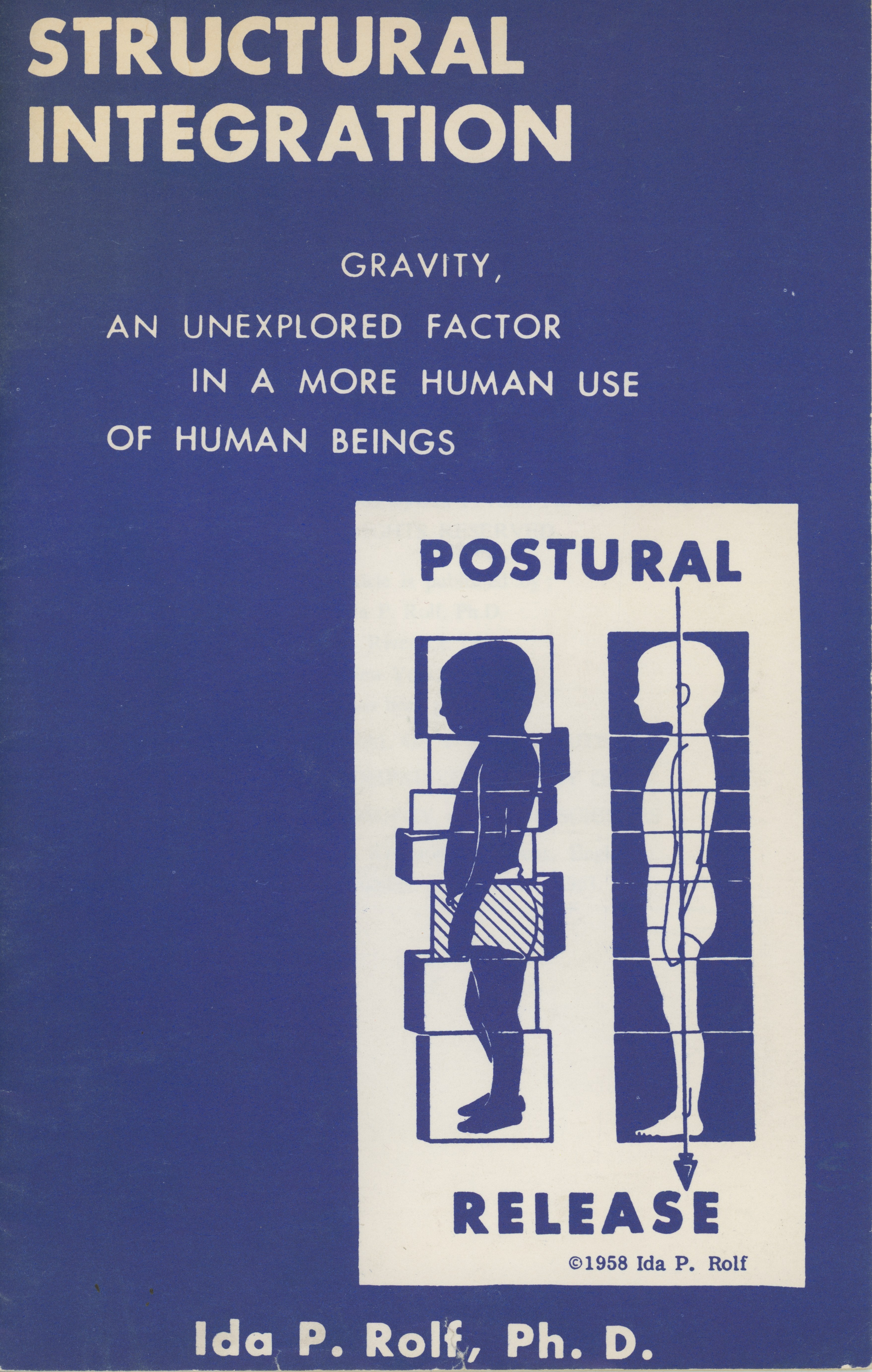
Transcription of page 3
STRUCTURAL INTEGRATION
Gravity, an Unexplored Factor in a More Human use of Human Beings
Ida P. Rolf, Ph. D.
The century just passed may well be examined by future historians as a period during which humans explored their world with a tool, or if you will, a microscope, of specialisation: as a period when people thought that by increasing the detail known about the enveloping universe, they could have their world under control. The fallacy of this is now increasingly apparent. Even specialists in a field sense that they are becoming fixed in a limited area, and that they have lost not only the sense of movement, but that of perspective and orientation. Consequently many thinkers are now spending time and effort to understand and lessen this cultural imbalance.
However, these attempts have laid an increasing emphasis on education as an answer, as if the solution lay in integration within the educational approach. But is there a fundamental fallacy, or an oversight, in this thinking? Is it perhaps neglecting a profound truth?
From time to time thinkers ranging from ancient philosophers to modern psychotherapists have expressed their conviction that man projects into his creations only that which is within himself. The key words of this premise are “within himself”. Men, facing words like these, are apt to see them as metaphors, pointing to some tenuous, spiritual, wraith-like self. To only a few has it occurred that such words pertain to a tangible flesh and a material blood; and to these few has come the recognition that man has quite literally projected into a physical world that he himself has created externally, the mechanical world in which he lives unconsciously; that from this universe which exists within his own skin he has derived the prototype for the levers, the wheels, the communicating mechanisms which now constitute his material world. Even the most recent electronic systems have come into being in man’s outer world as projections of the patterns which exist within his material body in a 3-dimensional form. It is beside the point to argue that the man who first created a well-functioning door-hinge knew nothing of the fact that in structural essence and in function this hinge was similar and subject to the same physical laws as some of the joints in his own body—the ankle and knee, for example. Such unconscious projections have always been at work. Fortunately now, thanks to a greater understanding of the human psyche resulting from the efforts of psychological schools, we are more willing to accept them as materialisations of a more tenuous essence.
[page number, lower right:] 3
- Document
- Brochure and article by Ida P. Rolf, “Structural Integration: Gravity, an Unexplored Factor in a More Human use of Human Beings”
- Brochure
- Self-published, late 1958 or afterThe cover drawing carries “©1958 Ida P. Rolf” and still counted as unpublished when Rolf registered it on 10 October 1958 (see the entry above). The text ends with a note on the class of 1957 (28 March to 13 April).
- Journal
- Systematics, vol. 1, no. 1, June 1963, pp. 67–84The journal of the Institute for the Comparative Study of History, Philosophy and the Sciences, founded by J. G. Bennett. Page numbers as the Rolf Research Foundation and Eric Jacobson give them.
- This copy
- Scans of the cover and page 3 of the brochure rest with the productionThe brochure’s own pagination; the journal printed the text on pages 67 to 84
- Full text
- Rolf Research FoundationA retyped copy of the whole article, without the photographs it mentions
- Rights
- Copyright in the article rests with the heirs of Ida P. Rolf (1896–1979)Shown here for research and documentation. The page will take the scan down at a rights holder’s request.
In late 1958 or soon after, the name on her own cover reads Structural Integration. No printed text of hers found so far carries the name sooner, and the journal followed five years later. The cover drawing keeps the older vocabulary alive: a child stacked like crooked blocks, another aligned on a plumb line, and between them the words Postural Release, the title under which she had registered the drawings that October.
The journal came from J. G. Bennett’s institute at Coombe Springs in Surrey, and so, very likely, did the brochure’s first readers. Bennett had heard her account of the method in Los Angeles in the spring of 1958, as the Subud Chronicle reports. Eric Jacobson places her summer courses of the 1950s at an institute in Surrey devoted to Gurdjieff’s teachings, which fits Coombe Springs, and a photograph and a film of 1959 show her there. There too, by his own memory, Moshe Feldenkrais first watched her work.
Her subtitle answers a famous book title, Norbert Wiener’s The Human Use of Human Beings of 1950. Wiener wrote of machines and communication; Rolf asks for a more human use and names the factor she found missing: gravity. On this first page she sets out toward it by way of the door-hinge, which its inventor built without knowing that his own ankle and knee obey the same laws.
Cite asIda P. Rolf, Structural Integration: Gravity, an Unexplored Factor in a More Human Use of Human Beings (self-published brochure, [late 1958 or after]). Reprinted as: Ida P. Rolf, “Structural Integration: Gravity, an Unexplored Factor in a More Human Use of Human Beings,” Systematics 1, no. 1 (June 1963): 67–84.
On the lawn at Coombe Springs
Coombe Springs, J. G. Bennett’s house and grounds at Kingston upon Thames in Surrey, became the first home of Subud in England after Pak Subuh arrived there in 1957. In 1959, with Pak Subuh at Coombe Springs once more, a great gathering lined up on the lawn for a photograph, and Ronimund von Bissing filmed in the garden. Rolf turns up in both.
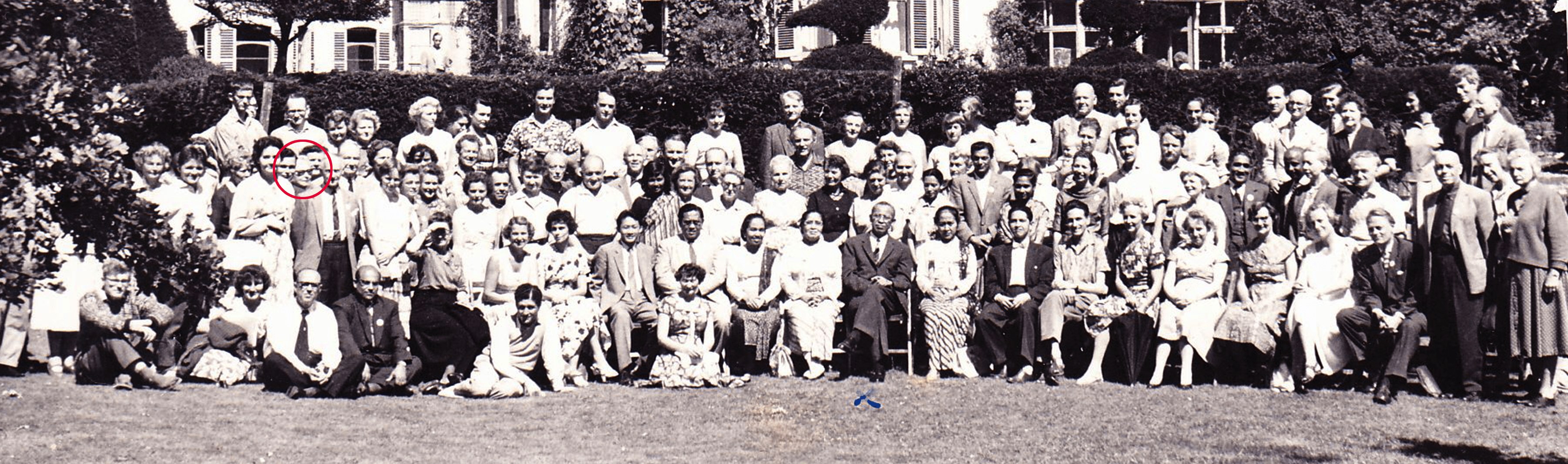
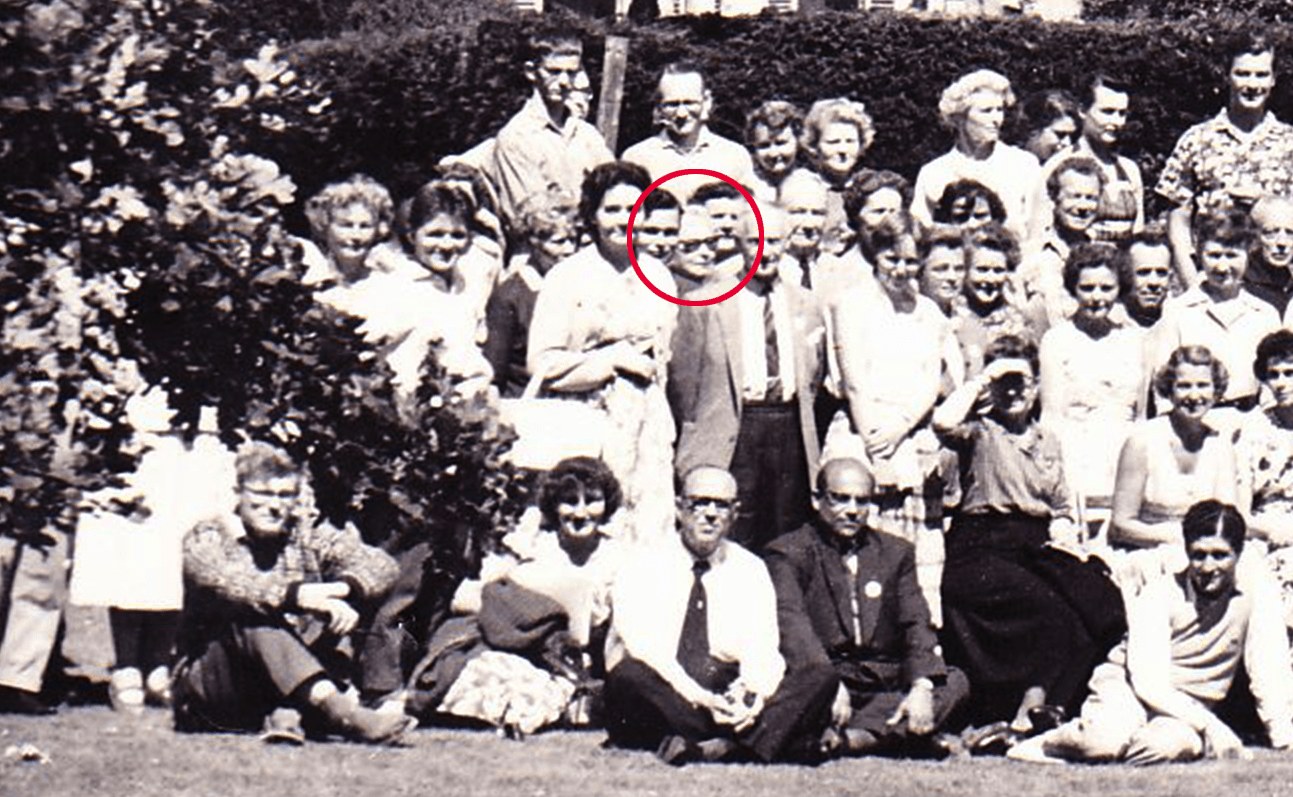
- Photograph
- Group photograph on the lawn at Coombe Springs, Kingston upon Thames, SurreyPhotographer unknown. The red circle around Rolf came later, drawn on this copy; a small cross in blue ink marks the grass below the centre of the front row.
- Film
- Ronimund von Bissing, “Bapak Subuh in Coombe Springs 1959”, first part, colour, silentAn excerpt of 15 seconds, as used in the documentary. Rolf identified as in the film’s research.
- Date
- 1959The film’s title gives the year, and the production’s records file the photograph with it. Month and day unknown.
- Held by
- Subud ArchivesSupplied for the documentary; the archive’s references still to note
- Rights
- Still to confirm with the Subud ArchivesThe archive allowed their use in the film. Shown here for research and documentation; the page will take both down at a rights holder’s request.
Both pictures put firm ground under an old memory. Writing in 1976, Moshe Feldenkrais placed his first meeting with Rolf at Coombe Springs “when Pat Subud came to England”, and recalled that she rolfed “Mrs. Subud”, Pak Subuh’s wife. The Chronicle shows Rolf joining Subud in the spring of 1958, expected in England that summer.
The photographer stood far back to fit everyone in, rows rising from the grass to the hedge. At the centre of the front row sits a man in a dark suit, most likely Pak Subuh, among women in Indonesian dress. Far to the left Rolf looks out from behind her neighbours, her glasses catching the light. She turned sixty-three that year.
The Subud Chronicle of May 1958 names “the Bissings” among those who met Pak Subuh’s party in New York that spring, perhaps the filmmaker and his wife.
Von Bissing’s camera comes closer. It waits at the top of a path between hedges, and Rolf climbs toward it, white hair pinned up and a brooch at the neck of her violet coat. She smiles at someone just out of frame and leans into the last step. No letter on this page shows her moving. These few seconds do.
Cite asGroup photograph, Coombe Springs, Kingston upon Thames, 1959. Subud Archives.
Ronimund von Bissing, “Bapak Subuh in Coombe Springs 1959,” part 1, colour film, 1959. Subud Archives.
to
“That well known ‘ME’”
In the autumn of 1963 Rolf, sixty-seven years old, wrote to Byron Gentry every week or two. Her letters read like a clinic’s daybook, patient after patient, each with questions she would put to him by telephone late at night. Somewhere in every letter she reaches the patient she found hardest to report on: herself.
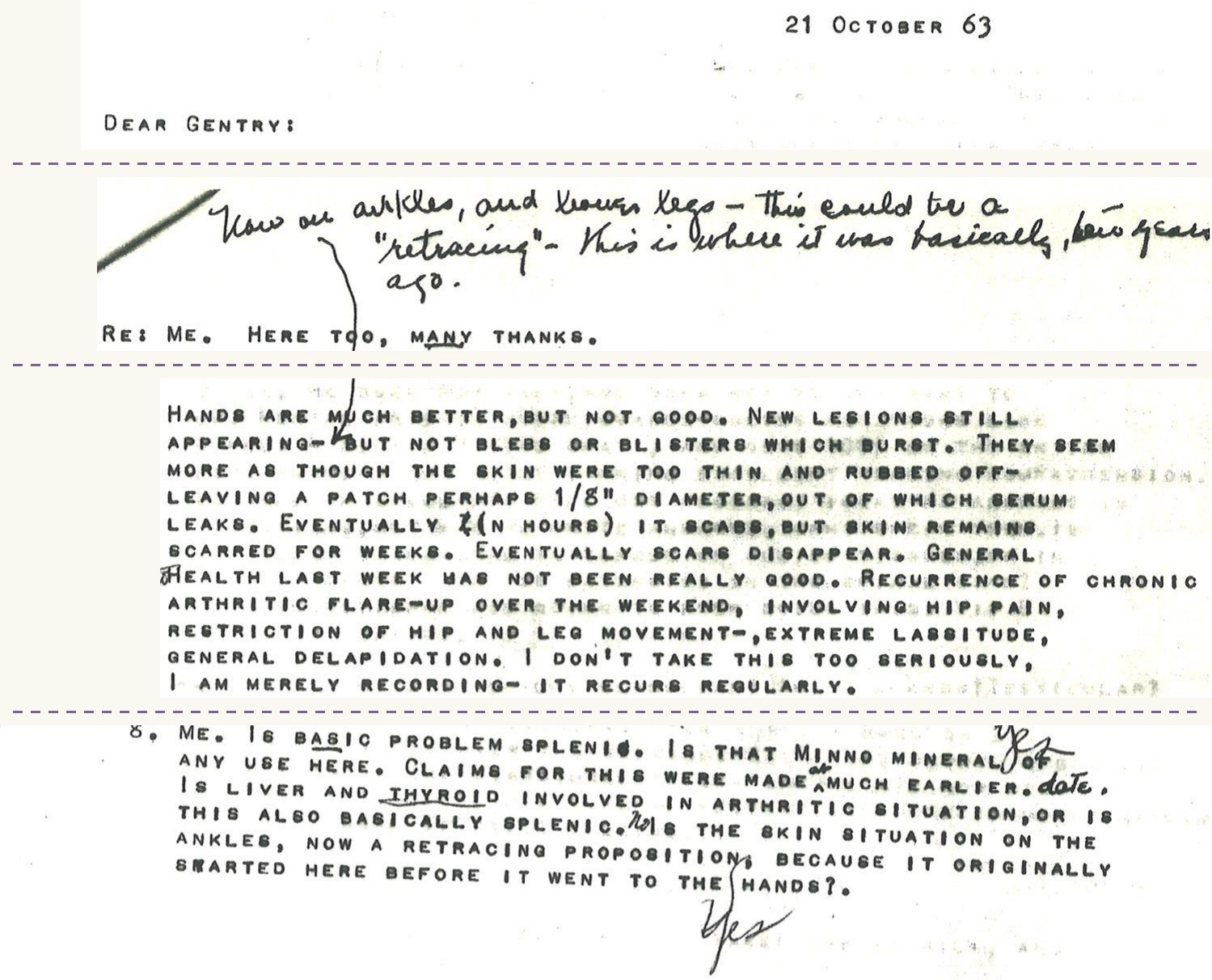
Transcription of the excerpts
21 October 63
Dear Gentry:
[passages on patients, left out; then, on page 2, with a note added by hand above it:] Now on ankles, and lower legs – this could be a “retracing” – this is where it was basically, two years ago.
Re: Me. Here too, many thanks.
Hands are much better, but not good. New lesions still appearing- but not blebs or blisters which burst. They seem more as though the skin were too thin and rubbed off- leaving a patch perhaps 1/8" diameter, out of which serum leaks. Eventually (in hours) it scabs, but skin remains scarred for weeks. Eventually scars disappear. General health last week has not been really good. Recurrence of chronic arthritic flare-up over the weekend, involving hip pain, restriction of hip and leg movement-, extreme lassitude, general delapidation. I don’t take this too seriously, I am merely recording- it recurs regularly.
[from her questions on page 3:] 8. Me. Is basic problem splenic. [above the line, by hand:] Yes Is that Minno mineral of any use here. Claims for this were made at much earlier date. Is liver and thyroid involved in arthritic situation, or is this also basically splenic. No Is the skin situation on the ankles, now a retracing proposition, because it originally started here before it went to the hands? [below, by hand:] Yes
4 November 63
Dear Gentry,
A brief report:
Re: Me. I’m feeling alive again. It was a rough voyage. Many thanks for your help. Hands not really clearing, though much better. Ankles are better stillk scabbing rather than healing. In general I’m still somewhat delapidated. Trouble seems “in my head.” literally
[passages on patients, left out]
[at the head of page 1, by hand:] Will call Wed Eve – Nov. 27
21 Nov. 63
Dear Gentry,
Report herewith:
[passages on patients, left out; then, on page 2:]
That well known “ME”: Really the least satisfactory of the lot. My skin really much improved. All breaking out around ankle [typed over another word] healed. 85% of lesions on hands healed (and I don’t mean scabbed) Occasional new patches break out but relatively minor. Have removed gold ring because it seem to b[reak] out under or near ring. Have been having quite a bad time with heart situation up until Wed. 11/2[0]. Symptoms included great anxiety -feeling of end-of-life and end-of-activity. A profound something very wrong. This ended in a tachycardia and finall[y] seemed to lift quite suddenly, and apparently entirely one morning. However, I do feel that there is till no improvement in the picture of fluid retention in the tissues and a great unreliability and unpredictability of kidney function. It is this general cyclic malfunction and alternation of malfunction in the significant organs that makes me label the situation as still hazardous. [letters lost at the right edge of the copy appear in square brackets]
January 23, 1964
Dear Gentry:
[items 1 to 11, on patients, left out; then, on page 2:]
12. Me: On the whole better. No zip. Want to get out of work. I think there is still a heart inadequacy which seems to me to have settled in for more or less keeps. [in the margin, a handwritten word, unread, with an arrow to this line]
Re: Trip West
Am due in California on February 16 to lecture in afternoon. I think I’d better try to visit with you in Okla. City, afternoon of Saturday and Sunday Feb. 7 & 8. I imagine you are bretty busy except Sunday. By any chance do you take a day off during the week.
Will discuss this with you when I phone- 11:00 P.M. our time Tuesday Jan. 28th.
I.P.R.
- Document
- Excerpts from four typed letters by Ida P. Rolf to Byron Gentry, D.C., with an envelopeOnly her passages on her own health and travel appear here. The rest of each letter concerns patients and stays private.
- Dates
- 21 October, 4 November and 21 November 1963; 23 January 1964The envelope carries “11-25-63” by hand beside the postmark. Her “Saturday and Sunday Feb. 7 & 8” fell, in 1964, on a Friday and a Saturday.
- Sender
- Ida P. Rolf, 11 Riverside Drive, New YorkThe envelope adds Richard R. Demmerle, D.C., to her return address
- Held by
- Originals in private hands, still to traceThe production holds scans of copies lent for the film
- Rights
- Copyright in the letters rests with the heirs of Ida P. Rolf (1896–1979)Shown here for research and documentation. The page will take the scans down at a rights holder’s request.
Her skin trouble had started about two years before, on the ankles, and moved to the hands. She describes it with a chemist’s eye: no blisters, but patches an eighth of an inch across where the skin seemed too thin and rubbed away, patches that wept serum for hours and then left scars for weeks. In October the trouble came back to the ankles, and she asked whether that marked a “retracing”, an illness running back along the road it came by. On 21 November she counted 85 per cent of the patches on her hands healed, “and I don’t mean scabbed”. She had taken off her gold ring, because the skin broke out beneath it.
“I’m feeling alive again,” she wrote on 4 November. “It was a rough voyage.” Whether she meant the illness or a sea crossing, the letter leaves open.
The heart frightened her more. For days in November she lived with “great anxiety”, a “feeling of end-of-life and end-of-activity”, until a racing pulse gave way one morning and the dread lifted all at once. She still called her situation hazardous. By January she felt better on the whole, with “no zip”, and suspected a weakness of the heart that had “settled in for more or less keeps”.
Gentry practised in Oklahoma City, half a continent away. The letters show him working at a distance: Rolf posts reports and lists of questions, then telephones for his answers, which someone noted by hand on the sheets. What he did, they never describe. She thanked him plainly: “Many thanks for your help.”
Most of every letter concerns patients, children among them, and members of her own family. Those passages stay private, so this entry shows only what Rolf wrote about herself.
Her return address in November carries a second name, Richard R. Demmerle, D.C. Every sign points to her son, the “Dick” who in 1955 had hoped for an osteopathic college. He now practised as a chiropractor from her address at 11 Riverside Drive.
Ill as she felt, she kept her calendar full. The January letter books a lecture in California for 16 February 1964, with a stop in Oklahoma City on the way to see Gentry in person. Within a few years California would hold the centre of her teaching, at Esalen above all, and fifteen working years still lay ahead of her.
Cite asIda P. Rolf to Byron Gentry, New York, 21 October 1963, 4 November 1963, 21 November 1963 and 23 January 1964, typed letters, excerpts. Copies, research files of Ida Rolf – Mother of Fascia.
Chapter VII · 1964 to 1977
Teaching the work
At Esalen, from the mid-1960s, Fritz Perls carried her work from coast to coast, and a first class of four met in a motel room in San Francisco. In 1971 the University of Miami took her class under its wing, and a newspaper there showed her son Richard at work. A psychiatric journal printed her case for fascia as the organ of support, and to her Guild she spoke of medicine men and shamans. In the osteopath Isabell Biddle she found a friend who dreamed of the fascial web, and Moshe Feldenkrais, a friend since Coombe Springs, wrote to her at eighty. Her book waited at Viking through four postponements, its first working title taken from Genesis. When it appeared in 1977, it opened on a stone Buddha who warns against believing anything on authority alone.
From the mid-1960s
The talk of the Esalen baths
On the cliffs of Big Sur, above the hot springs of the Esalen Institute, her method found the audience it had lacked for decades. Rolf knew whom to thank, and said so with a smile.
“Without the opportunity of showing our wares to a very widely distributed segment of interested and investigative people at Esalen, we might very well have disappeared, unhonored and unsung.
When the news finally reached me that as a topic of discussion in the Esalen baths, Structural Integration had displaced sex, then I knew we had it made.
Fritz Perls crotchety, temperamental, unpredictable, illogical was, to me at least, the investing spirit of Esalen, and he was generous enough and articulate enough to spread this knowledge about Structural Integration from coast to coast.
As Structural Integration practitioners we shall not soon outlive our indebtedness to that extraordinary genius, Fritz Perls.”
- Words
- Ida P. Rolf on Esalen and Fritz PerlsAs the documentary quotes them, 01:20:49 to 01:21:41, with the punctuation of its subtitles. Their printed or recorded source still to name.
- Place
- Esalen Institute, Big Sur, California
- Footage
- Grzegorz Oleksa, director of photography, filmed at Esalen for the documentary in 2024The door belongs to a house where Esalen lodges its guests, named after her
- Music
- Mirjam Skal, main theme of Ida Rolf – Mother of Fascia
- Years
- From the mid-1960s into the early 1970sEsalen’s own history has her arrive with Perls in 1964; other accounts, this site’s biography among them, give 1967
- Her voice
- Lecture and demonstration at Esalen, 1967A recording from Esalen’s archive, published in its podcast Voices of Esalen on 31 March 2025; 1 hour 20 minutes
- Alan Watts
- Esalen’s faculty “has included such strong and persuasive personalities as … Ida Rolfe”Alan Watts, In My Own Way: An Autobiography (New York: Pantheon, 1972), chapter 12, “Other Selves”
- An outside view
- “Soon came to Esalen at Perls’ invitation and became a part-time resident”Calvin Tomkins, “Profiles: New Paradigms,” The New Yorker, 5 January 1976, p. 43
- Her account
- Ida P. Rolf to a class, 1970, on audio tapeThe tapes came to the production through Emmett Hutchins. The same recordings belong to Joel Gheiler’s Ida Rolf Archive of her teaching tapes, 1966 to 1976. Quoted from a transcript; Dorothy Nolte named as Rolf names her.
- Rights
- Copyright in her words rests with the heirs of Ida P. Rolf (1896–1979)Quoted here for research and documentation
Esalen opened in 1962, and within a few years it drew the seekers of a whole generation to its cliffs. Fritz Perls, the founder of Gestalt therapy, arrived in 1964 and soon became its most famous resident. By Esalen’s own account, Rolf came with him. She stayed for about six months of each year into the early 1970s and trained around a hundred practitioners there.
Perls had reason to champion her. He suffered from angina, and as Walter Truett Anderson tells it in The Upstart Spring, Rolf worked on him daily for a week. In the seventh session, on his neck, he lost consciousness for a moment and woke with a long-buried memory of an old injury to his neck under anaesthesia. From then on he spoke for her wherever he went.
Rolf told the story herself to a class in 1970, to set right the “myths” that had grown around it. Some five or six years before, Perls gave a seminar in a private house in Laguna Beach, so racked by angina that he said he felt ready to die. Dorothy Nolte, who knew the work, took him upstairs and gave him a first hour, and the pain left him for weeks. When it came back she would not go on without a licence, and told him: “If you can get Ida out here, I bet she can do something for you.” Rolf flew west and, in eight or nine days, gave him six more hours.
“I gave him a 7th hour of work, and right under my hands the man went unconscious. Needless to say my knees were shaking … And along about that moment, I stopped panicking and started looking, and I said, ‘Yeah, but this isn’t the picture of a man dying of a heart attack. This is the picture of a man on anesthesia.’”
“From that day,” she said, “he never had another intense angina attack.” Her count of the years places that week around 1964, the year Esalen itself gives for her arrival with Perls.
Her thanks carry the dry wit of a scientist who had waited a long time for listeners. The baths of Esalen, where guests soaked together above the Pacific, kept the institute’s rumour mill turning. When her method replaced sex as their favourite topic, she knew the work would last. And she gives the credit not to herself but to a difficult, brilliant man: “that extraordinary genius, Fritz Perls.” Perls died in March 1970; her words of gratitude outlived him.
The same history adds that before Esalen she had trained only one person, her son (a Miami newspaper of 1971 shows Richard at work). The records further up this page soften that claim: a class of sixteen days ran in the spring of 1957, and by 1958 she had a representative in Los Angeles. Esalen gave her what those years lacked: a stage, and a crowd that carried her name home.
Esalen still remembers her: one of the houses where its guests sleep bears her name. Her voice from those years survives too. Esalen keeps a recording of a lecture and demonstration she gave there in 1967, and in 2025 it opened that tape to everyone.
The press noticed. In April 1970 Esalen took its show to New York, where more than two thousand people paid to sample it in the ballroom of the Hotel Diplomat; a reporter listed among its offerings “the techniques developed by Dr. Ida Rolf to reorient the psyche by altering the posture and structure of the body”. A year later the columnist Max Lerner wrote from Big Sur: “If there are two prevailing influences at Esalen today, aside from Murphy’s, they are Schutz’s and Rolfe’s.” [sic] William Schutz gave him his first hour on the table, and Lerner admitted: “I am unlikely ever to forget my initial Rolfing.”
Alan Watts, who taught there from the start, described Esalen in 1972 as “education for its own sake, beyond school, without diplomas”, a place that managed “to remain open to astonishingly diverse points of view, despite the fact that its faculty has included such strong and persuasive personalities as Fritz Perls, Abraham Maslow, Carl Rogers, Virginia Satir, and Ida Rolfe [sic], to mention but a few.”
In January 1976 The New Yorker told the story in a long profile of Esalen’s founder Michael Murphy. Calvin Tomkins wrote that “Ida Rolf, a therapist who had developed her own theory and method of ‘structural integration’ of the body through deep massage (called ‘Rolfing’), soon came to Esalen at Perls’ invitation and became a part-time resident.” Her own name for the work comes first, in quotation marks; the popular one follows in brackets.
Cite asIda P. Rolf on Esalen and Fritz Perls, as quoted in Ida Rolf – Mother of Fascia, dir. Aleš Urbanczik (2025), 01:20:49–01:21:41.
Ida P. Rolf, lecture and demonstration at Esalen, 1967, audio recording, Esalen archive; Voices of Esalen, 31 March 2025.
Kevin Lahart, “Esalen East,” 20 April 1970, p. 3A.
Max Lerner, “The Lure of Esalen,” syndicated column (Los Angeles Times, 1971); The Citizen-Advertiser, Auburn, N.Y., 30 June 1971, p. 4.
Alan Watts, In My Own Way: An Autobiography, 1915–1965 (New York: Pantheon, 1972), chapter 12, “Other Selves.”
Calvin Tomkins, “Profiles: New Paradigms,” The New Yorker, 5 January 1976, p. 43.
Before the Esalen summers; told in
Four people in a motel room
In August 1976, at the annual meeting of the Rolf Institute in Mill Valley, across the Golden Gate from San Francisco, she sat down before a full hall and looked back to the days when the work had “one pair of hands and one pair of elbows”.
“Rosemary and I were the people who got together and organized Rolfing as you know it now. … We had to plan and write books which are still not published.”
“And then there was Dick Demmerle, and Dick Demmerle managed to get himself licensed in some seven or eight different states so that he could go into those states demonstrating Rolfing, letting people know what it was about.”
“And when the day came when I heard a rumor, well-authenticated rumor, to the effect that in the bath the subject of conversation now was Rolfing and not sex, then I knew we had it made.”
“The first class incidentally was given here in the city of San Francisco. We had four people in it. Carolyn Widmer is here and she was an auditor there. Jack Downing was in that class. Bernie Gunther was in that class. … And it was given in a tiny little room in a motel in San Francisco. And from there we grew.”
- Her account
- Address to the annual meeting of the Rolf Institute, Mill Valley, California, August 1976Audio recording in the Ida Rolf Archive at bostonrolf.com, tape IPRCON1; the passage runs from about 3:45 to 15:00. Dated by her own words, “the events of the year 1975, 76”.
- In print
- The same opening, revised, in “Dr. Ida P. Rolf’s 1976 Annual Meeting Message”The printed text names the meeting’s place and dates, 13 to 16 August 1976, and leaves out the first class
- The class
- San Francisco, in a motel, before the summers at EsalenFour people: Jack Downing and Bernie Gunther among the students, Carolyn Widmer as auditor. She gives no year.
- Esalen
- Her base “during the summer months” for “five or six or maybe even seven” yearsShe dates her arrival at Big Sur to “perhaps the year 1965”
- Rights
- Her words belong to her heirsQuoted briefly, for documentation
She named the people who carried the work before it had a school. Rosemary Feitis worked beside her, six days of treatment and a seventh for planning and writing; the book they planned then still had not appeared by 1976, two years after Viking’s letters of 1974. Her son Richard took licences in seven or eight states to demonstrate the work. Bill Williams carried it to Florida, and Julian Silverman, fresh from Washington, talked it up at meetings there.
Esalen gave the work a home and, better still, hot springs full of talk. Dick Price offered the baths for the sessions, and guests from all over the world went home having heard of it. Fritz Perls she remembered as “irascible, temperamental, illogical”, and over all of it she wrote “the word kindly”.
The first class, though, met in neither place: four people in a small motel room in San Francisco. Among them sat Bernie Gunther, who taught sensory awareness at Esalen, and Jack Downing. Carolyn Widmer, there as an auditor, sat in the hall in 1976 as she told it.
Cite asIda P. Rolf, address to the annual meeting of the Rolf Institute, Mill Valley, California, August 1976, audio recording; Ida Rolf Archive, bostonrolf.com, tape IPRCON1.
A class in Miami, and a son at work
In October 1971 Rolf opened a class in Structural Integration under the auspices of the University of Miami, and The Miami Herald gave her the front of its section for family life and women’s news.
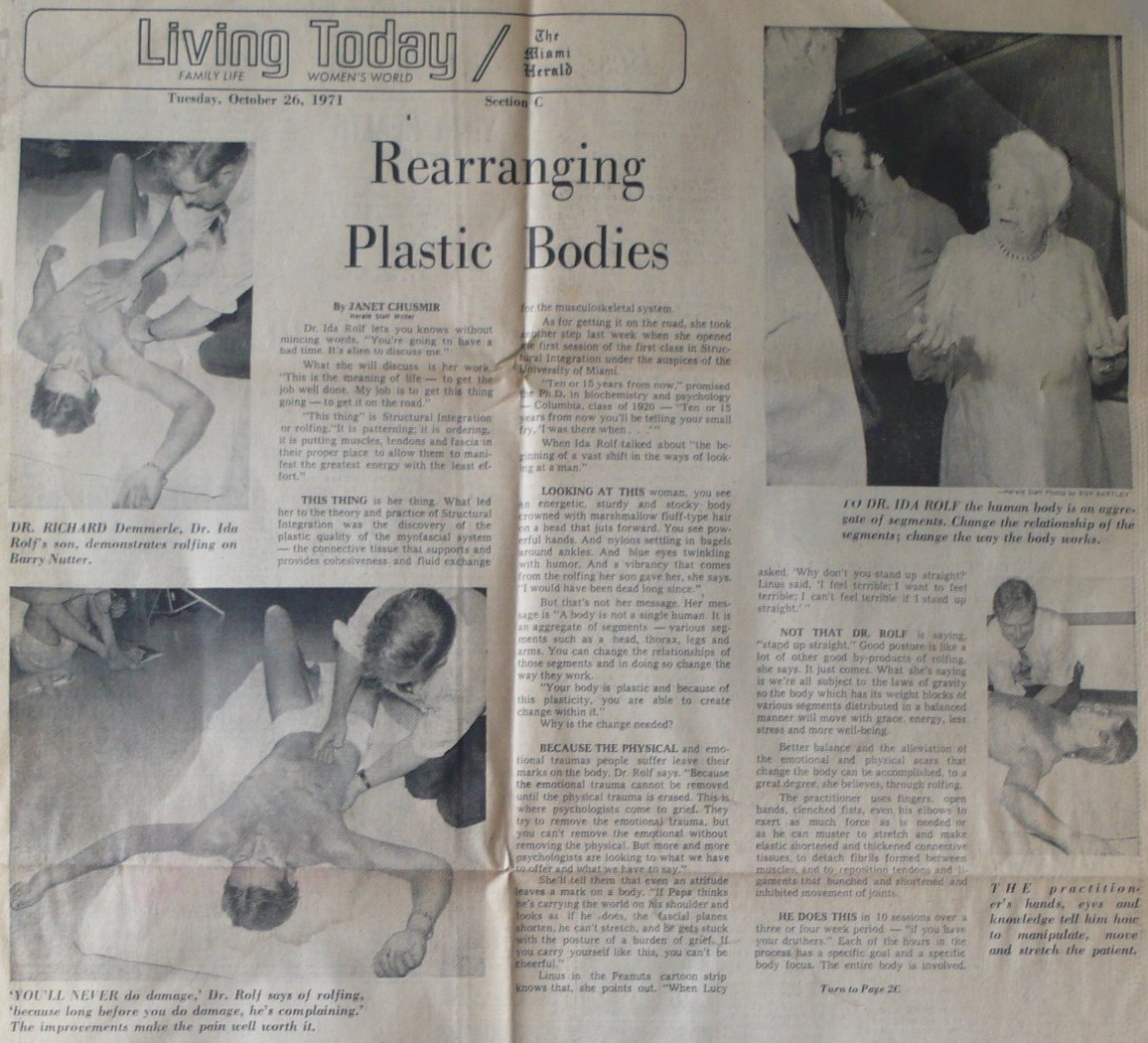
Transcription of page 1C
Living Today / Family Life · Women’s World / The Miami Herald
Tuesday, October 26, 1971 Section C
Rearranging Plastic Bodies
By JANET CHUSMIR
Herald Staff Writer
Dr. Ida Rolf lets you knows [sic] without mincing words, “You’re going to have a bad time. It’s alien to discuss me.”
What she will discuss is her work. “This is the meaning of life — to get the job well done. My job is to get this thing going — to get it on the road.”
“This thing” is Structural Integration or rolfing. “It is patterning; it is ordering, it is putting muscles, tendons and fascia in their proper place to allow them to manifest the greatest energy with the least effort.”
THIS THING is her thing. What led her to the theory and practice of Structural Integration was the discovery of the plastic quality of the myofascial system — the connective tissue that supports and provides cohesiveness and fluid exchange for the musculoskeletal system.
As for getting it on the road, she took another step last week when she opened the first session of the first class in Structural Integration under the auspices of the University of Miami.
“Ten or 15 years from now,” promised the Ph.D. in biochemistry and psychology — Columbia, class of 1920 — “Ten or 15 years from now you’ll be telling your small fry, ‘I was there when . . .’ ”
When Ida Rolf talked about “the beginning of a vast shift in the ways of looking at a man.”
LOOKING AT THIS woman, you see an energetic, sturdy and stocky body crowned with marshmallow fluff-type hair on a head that juts forward. You see powerful hands. And nylons settling in bagels around ankles. And blue eyes twinkling with humor. And a vibrancy that comes from the rolfing her son gave her, she says. “I would have been dead long since.”
But that’s not her message. Her message is “A body is not a single human. It is an aggregate of segments — various segments such as a head, thorax, legs and arms. You can change the relationships of those segments and in doing so change the way they work.
“Your body is plastic and because of this plasticity, you are able to create change within it.”
Why is the change needed?
BECAUSE THE PHYSICAL and emotional traumas people suffer leave their marks on the body, Dr. Rolf says. “Because the emotional trauma cannot be removed until the physical trauma is erased. This is where psychologists come to grief. They try to remove the emotional trauma, but you can’t remove the emotional without removing the physical. But more and more psychologists are looking to what we have to offer and what we have to say.”
She’ll tell them that even an attitude leaves a mark on a body. “If Papa thinks he’s carrying the world on his shoulder and looks as if he does, the fascial planes shorten, he can’t stretch, and he gets stuck with the posture of a burden of grief. If you carry yourself like this, you can’t be cheerful.”
Linus in the Peanuts cartoon strip knows that, she points out. “When Lucy asked, ‘Why don’t you stand up straight?’ Linus said, ‘I feel terrible; I want to feel terrible; I can’t feel terrible if I stand up straight.’ ”
NOT THAT DR. ROLF is saying, “stand up straight.” Good posture is like a lot of other good by-products of rolfing, she says. It just comes. What she’s saying is we’re all subject to the laws of gravity so the body which has its weight blocks of various segments distributed in a balanced manner will move with grace, energy, less stress and more well-being.
Better balance and the alleviation of the emotional and physical scars that change the body can be accomplished, to a great degree, she believes, through rolfing.
The practitioner uses fingers, open hands, clenched fists, even his elbows to exert as much force as is needed or as he can muster to stretch and make elastic shortened and thickened connective tissues, to detach fibrils formed between muscles, and to reposition tendons and ligaments that bunched and shortened and inhibited movement of joints.
HE DOES THIS in 10 sessions over a three or four week period — “if you have your druthers.” Each of the hours in the process has a specific goal and a specific body focus. The entire body is involved.
Turn to Page 2C
[captions, top left, bottom left, top right and lower right:]
DR. RICHARD Demmerle, Dr. Ida Rolf’s son, demonstrates rolfing on Barry Nutter.
‘YOU’LL NEVER do damage,’ Dr. Rolf says of rolfing, ‘because long before you do damage, he’s complaining.’ The improvements make the pain well worth it.
—Herald Staff Photo by ROY BARTLEY [the small print reads so at this resolution]
TO DR. IDA ROLF the human body is an aggregate of segments. Change the relationship of the segments; change the way the body works.
THE practitioner’s hands, eyes and knowledge tell him how to manipulate, move and stretch the patient.
- Document
- Feature article “Rearranging Plastic Bodies” by Janet Chusmir, Herald staff writer, with four photographsThe captions name Dr. Richard Demmerle and Barry Nutter. The portrait of Rolf carries the credit “Herald Staff Photo by Roy Bartley”, as far as the small print allows a reading.
- Published
- The Miami Herald, Tuesday, 26 October 1971, section C, “Living Today”, page 1CContinued on page 2C, which the clipping lacks
- Copy
- A clipping kept with the original drawings of John Lodge, illustrator of her book Rolfing (1977)Both came to the European Guild for Structural Integration as a gift. Photographed for this page on 20 October 2026 and cropped to the article.
- Course
- The first class in Structural Integration under the auspices of the University of MiamiOpened in the week before the article appeared. The university’s own record of the course still needs finding.
- Rights
- Copyright The Miami Herald, 1971Published with a notice, so protected in the United States until the end of 2066. Shown here for research and documentation; the page will take the scan down at the rights holder’s request.
Two of the captions carry news. One names the man at the table: “Dr. Richard Demmerle, Dr. Ida Rolf’s son”, at work on a man named Barry Nutter. Esalen’s history recalls her son as the one person she had trained before Esalen. Here the boy in the striped jersey of 1939 appears in print as a practitioner, and the article puts his mother’s vibrancy down to “the rolfing her son gave her”, quoting her: “I would have been dead long since.”
The other piece of news concerns the university. “Last week”, the reporter, Janet Chusmir, writes, Rolf “opened the first session of the first class in Structural Integration under the auspices of the University of Miami.” No earlier record on this page shows a university taking her course under its wing. Her forecast to that first class sounds like a woman who knew her moment: “Ten or 15 years from now you’ll be telling your small fry, ‘I was there when . . .’ ”
Chusmir also sets down the work as Rolf taught it then: ten sessions over three or four weeks, each hour with “a specific goal and a specific body focus”, the practitioner using fingers, open hands, fists and even elbows to lengthen shortened connective tissue. By now the paper writes “rolfing” as an everyday verb. Feldenkrais remembered a time, at Coombe Springs, when it “was not yet a verb”.
One line asks for caution. It calls her a “Ph.D. in biochemistry and psychology” from “Columbia, class of 1920”. Her title page names three papers in biological chemistry and the Faculty of Pure Science, and no record so far ties her degree to psychology. The year 1920 holds. Columbia’s own list of degrees names her among the doctors of 1919–20.
Only page 1C survives, kept in the box that holds John Lodge’s original drawings for her book of 1977. The continuation on page 2C still waits in the Herald’s files and on library microfilm. Lodge’s papers also keep a sheet of her letter paper from those years, printed for 11 Riverside Drive, Apt 14J West, New York; its foot stands beside her earlier ones under the Gentry letter.
Cite asJanet Chusmir, “Rearranging Plastic Bodies,” The Miami Herald, 26 October 1971, p. 1C, continued on p. 2C. Clipping, European Guild for Structural Integration, with the drawings of John Lodge.
Talk of the town
On 5 October 1972 two friends gave a Libra birthday party in a twenty-room penthouse on the Upper East Side: black tie, a Rubens in the ballroom, a Hungarian band and a waltz every half hour. The New Yorker had a guest there, and its “Talk of the Town” reported what the young people talked about.
“Everyone under twenty-five discussed Rolfing and Zone Therapy. Rolfing is a system of deep massage that stretches and rearranges the tissue surrounding the muscles so that the body becomes supple, loses its tensions, and moves freely in the gravitational field. Rolfing was invented by a woman named Dr. Ida Rolf. Zone Therapy is deep pressure massage of the feet. Everyone under twenty-five had been through one or the other, or both. There was considerable enthusiasm for both methods, and everyone agreed that Rolfing hurt a whole lot more than Zone Therapy.”
- Document
- “Libra Birthday Party,” in The Talk of the TownThe New Yorker, 21 October 1972, p. 34; unsigned
- Occasion
- A party at the Kress apartment, Upper East Side, 5 October 1972
- Rights
- Under copyrightQuoted for documentation
Ten years after Esalen opened, her method had reached a Manhattan ballroom as small talk. The magazine’s one sentence of explanation gets the essentials right, down to the gravitational field. The pain travels with it as part of the legend. In 1979, in Somatics, she answered that charge herself: screaming she would not call necessary, “but I would say that use of the voice is highly probable.”
Cite as“Libra Birthday Party,” The Talk of the Town, The New Yorker, 21 October 1972, p. 34.
, written in
The organ of support
In 1973 a journal of psychiatry in Basel printed a paper by Ida Rolf, “Structural Integration: A Contribution to the Understanding of Stress”. She had written it in 1969, and publication had waited four years. No other paper of hers reached a medical journal; her article of 1963 had gone to J. G. Bennett’s Systematics.
“If the myofascial system is considered as a functional whole rather than as a merely additive complex of tissue, it becomes apparent that this is the organ of support — a resilient unitary fascial framework which initiates, transmits, and determines movement, as well as ensheathing and supporting all individual parts.”
“Instead, obvious clues indicating the significance of fascia in personal well-being have been ignored.”
“Actual manipulative work with fascia calls to mind the lowly onion. Layer lies within layer.”
“The negative burden of gravity seems transformed to a supportive lift. The individual subjectively expresses a joyous recognition of the direction man calls ‘up’.”
- Paper
- “Structural Integration: A Contribution to the Understanding of Stress”With an abstract and eleven references, from Selye’s The Stress of Life (1956) to the osteopathic yearbooks
- Printed in
- Confinia Psychiatrica 16, no. 2 (1973), pp. 69–79“Borderland of Psychiatry”, S. Karger, Basel
- Written
- 1969, by her own postscript“During the intervening period, its publication has been delayed”
- Companion paper
- Julian Silverman and others, “Stress, stimulus intensity control, and the structural integration technique”Confinia Psychiatrica 16, no. 3 (1973), pp. 201–219
- Copy used
- A later reprintIts closing line: “This article first published in Confinia Psychiatrica in 1973”
- Rights
- Her words belong to her heirs; the first printing, to KargerQuoted briefly, for documentation
She starts from Hans Selye, who had named stress as a nonspecific part of disease and had pointed to connective tissue as part of the stress syndrome. Then she adds gravity, the force she felt his picture lacked. A body out of line spends its energy holding itself up, and the strain spreads through the fascial planes far from the first injury. Fascia thickens to brace the strain, and the thickening stays. Her answer reverses the process. Move the fascia in the direction its design asks for and call for movement along clean lines, and the great weights of the body come toward one vertical. The flexors flex while the extensors lengthen, the same law she would repeat to her students in 1976.
The paper came paired with an experimental one by Julian Silverman and his colleagues, printed in the next issue. Three years later she would credit Silverman with an interest “in some Establishment circles” of prime importance to the work. In her postscript she points ahead to Valerie Hunt’s electromyographic study at the University of California, Los Angeles.
Here, in print, fascia becomes the organ of support, and its neglect a thing she names outright. Anatomy took decades more to look again; another page of this site follows how it overlooked fascia for a century.
Cite asIda P. Rolf, “Structural Integration: A Contribution to the Understanding of Stress,” Confinia Psychiatrica 16, no. 2 (1973): 69–79.
and
The Re-Creation of Adam and Eve
In the summer of 1974 her book had a publisher in New York and rough page layouts, yet no settled name and no firm date. Two letters from one week in July show Viking Press and her side weighing both. They lay among John Lodge’s papers.
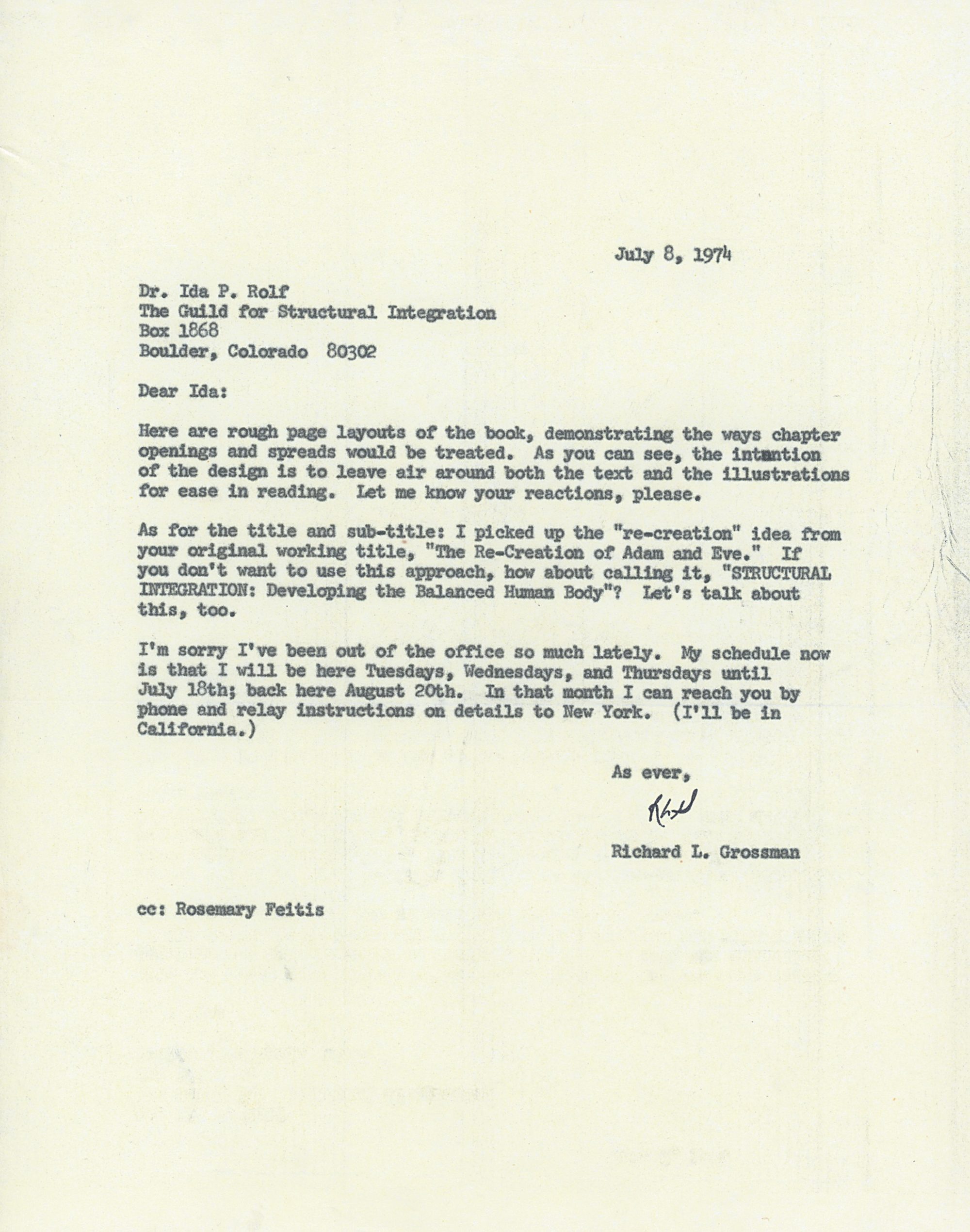
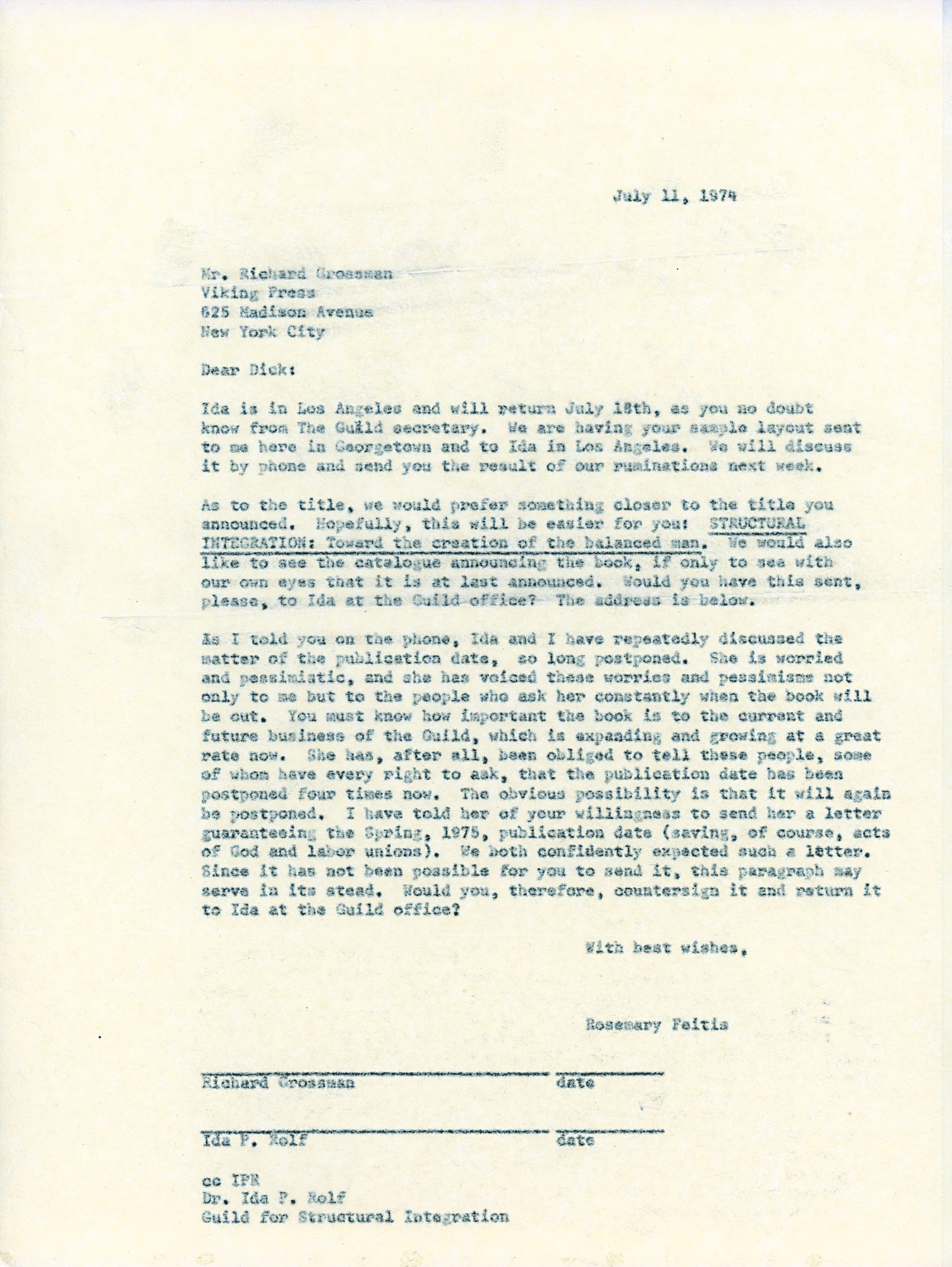
Transcription of Grossman’s letter
July 8, 1974
Dr. Ida P. Rolf
The Guild for Structural Integration
Box 1868
Boulder, Colorado 80302
Dear Ida:
Here are rough page layouts of the book, demonstrating the ways chapter openings and spreads would be treated. As you can see, the intention [the e typed over another letter] of the design is to leave air around both the text and the illustrations for ease in reading. Let me know your reactions, please.
As for the title and sub-title: I picked up the “re-creation” idea from your original working title, “The Re-Creation of Adam and Eve.” If you don’t want to use this approach, how about calling it, “STRUCTURAL INTEGRATION: Developing the Balanced Human Body”? Let’s talk about this, too.
I’m sorry I’ve been out of the office so much lately. My schedule now is that I will be here Tuesdays, Wednesdays, and Thursdays until July 18th; back here August 20th. In that month I can reach you by phone and relay instructions on details to New York. (I’ll be in California.)
As ever,
[signed by hand]
Richard L. Grossman
cc: Rosemary Feitis
Transcription of Feitis’s letter
July 11, 1974
Mr. Richard Grossman
Viking Press
625 Madison Avenue
New York City
Dear Dick:
Ida is in Los Angeles and will return July 18th, as you no doubt know from The Guild secretary. We are having your sample layout sent to me here in Georgetown and to Ida in Los Angeles. We will discuss it by phone and send you the result of our ruminations next week.
As to the title, we would prefer something closer to the title you announced. Hopefully, this will be easier for you: STRUCTURAL INTEGRATION: Toward the creation of the balanced man. We would also like to see the catalogue announcing the book, if only to see with our own eyes that it is at last announced. Would you have this sent, please, to Ida at the Guild office? The address is below.
As I told you on the phone, Ida and I have repeatedly discussed the matter of the publication date, so long postponed. She is worried and pessimistic, and she has voiced these worries and pessimisms not only to me but to the people who ask her constantly when the book will be out. You must know how important the book is to the current and future business of the Guild, which is expanding and growing at a great rate now. She has, after all, been obliged to tell these people, some of whom have every right to ask, that the publication date has been postponed four times now. The obvious possibility is that it will again be postponed. I have told her of your willingness to send her a letter guaranteeing the Spring, 1975, publication date (saving, of course, acts of God and labor unions). We both confidently expected such a letter. Since it has not been possible for you to send it, this paragraph may serve in its stead. Would you, therefore, countersign it and return it to Ida at the Guild office?
With best wishes,
Rosemary Feitis
[two ruled lines, left empty:] Richard Grossman [and] date; Ida P. Rolf [and] date
cc IPR
Dr. Ida P. Rolf
Guild for Structural Integration
- Documents
- Two typed letters: Richard L. Grossman of Viking Press to Ida P. Rolf, signed; Rosemary Feitis to Grossman, in the copy marked for RolfFeitis’s copy carries her typed name without a signature, and its two lines for the countersignatures of Grossman and Rolf stand empty
- Dates
- Monday, 8 July, and Thursday, 11 July 1974Rolf, in Los Angeles, expected back on 18 July. Grossman planned to spend the weeks from 18 July to 20 August in California.
- Held by
- European Guild for Structural Integration, among John Lodge’s papersLodge drew the illustrations for her book of 1977; his drawings and papers came to the Guild as a gift. How the letters reached him, nothing on them says.
- Publisher
- Viking Press, 625 Madison Avenue, New YorkGrossman founded Grossman Publishers, which brought out Ralph Nader’s Unsafe at Any Speed in 1965 and joined Viking in 1968. As a vice president of Viking he formed a publishing alliance with the Esalen Institute, after his obituary. Viking’s books marked “An Esalen book” include Abraham Maslow’s The Farther Reaches of Human Nature (1971).
- Working title
- “The Re-Creation of Adam and Eve”, hers from the startGrossman built on its idea of “re-creation”
- Proposals
- Grossman: “STRUCTURAL INTEGRATION: Developing the Balanced Human Body”. Feitis, for Rolf: “STRUCTURAL INTEGRATION: Toward the creation of the balanced man”Feitis wanted something “closer to the title you announced”. Neither letter quotes that announced title.
- Published as
- Ida P. Rolf, Rolfing: The Integration of Human Structures (Santa Monica: Dennis-Landman, 1977)Healing Arts Press reissued it in 1989 as Rolfing: Reestablishing the Natural Alignment and Structural Integration of the Human Body for Vitality and Well-Being
- Rights
- Grossman’s letter belongs to the heirs of Richard L. Grossman (1921–2014), Feitis’s letter to Rosemary FeitisShown here for research and documentation. The page will take either scan down at a rights holder’s request.
Grossman writes as a publisher with a design in hand. His layouts leave “air around both the text and the illustrations”, and the illustrations mattered: John Lodge drew them for the book of 1977. That may explain how these two letters came to rest among Lodge’s papers.
For a name, Grossman reached back to her own first idea. Her working title borrows from Genesis. Adam and Eve stand for humankind as first made, so “re-creation” promised nothing less than a second making of the human body, this time at home in gravity. Neither proposal of that July lets the thought go. Grossman offers “the Balanced Human Body”, and Feitis, writing for Rolf, keeps the act of creation itself: “Toward the creation of the balanced man”.
Both proposals open with STRUCTURAL INTEGRATION in capitals, the name of her method and of her Guild. The book came out in 1977 under another word, Rolfing, with “The Integration of Human Structures” beneath it. Structural Integration returned in 1989, inside the long subtitle of the Healing Arts Press edition.
Feitis writes with less patience. Viking had postponed the date four times, and Rolf had to explain each delay to people who, in Feitis’s words, “have every right to ask”. The Guild, “expanding and growing at a great rate”, needed the book. So Feitis turned a paragraph of her own letter into the guarantee Grossman had offered by phone: publication in the spring of 1975, “saving, of course, acts of God and labor unions”, with lines for his signature and Rolf’s. On this copy both lines stay empty.
Spring 1975 came and went without the book. By then Grossman had left publishing. In his own later words: “in 1974 I decided to leave publishing and learn the pragmatic stuff.” He went on to teach humanistic psychology at New York University and later directed the Center for Health in Medicine at Montefiore. When and why her book left Viking, the papers in hand do not tell. The first edition came out in 1977 from Dennis-Landman in Santa Monica.
The two letters also date another one on this page. Feitis’s letter to the Sackler Collection about the stele for the frontispiece answers a letter “of July 8th”. In it she offers Viking’s layout and warns that “the editor will be out of town for a month”. Both details fit July 1974: Grossman’s layouts went out on 8 July, and he planned his month in California from 18 July. So the stone Buddha of 1977 probably found its place in the book three years before the book itself appeared.
Cite asRichard L. Grossman to Ida P. Rolf, [New York], 8 July 1974; Rosemary Feitis to Richard Grossman, Georgetown, 11 July 1974, copy for Ida P. Rolf. John Lodge’s papers, European Guild for Structural Integration.
Adam Bernstein, “Richard L. Grossman, 92, publisher of Nader’s ‘Unsafe at Any Speed’,” boston.com, 1 February 2014.
A medicine man, a shaman
In 1974 the members of the Guild for Structural Integration gathered for their annual meeting, and Ida Rolf, seventy-eight, opened it with a speech. It went into print as “Ida Rolf on Rolfing”, with drawings by John Lodge, the artist who would draw the plates for her book three years later.
“Have you ever realized that man is the only animal — the only animal — whose face is invisible as you look down directly on the top of his head.”
“Our job becomes to instigate personal evolution in humans, to further individual differentiations (psychological as well as physical) in mankind.”
“I said, ‘Well, you [go] back there now and tell them that you are a medicine man, a shaman, and they’ll look you over and admit you.’ … If I had given John a million dollars he couldn’t have had a broader smile.”
“The 1974 Institute and Guild deliberate and supplement their plans on higher, more efficient levels.”
- Document
- “Ida Rolf on Rolfing”, by Dr. Ida P. Rolf, illustrations by John LodgeEditor’s note: “The following article is taken from a speech Dr. Rolf made at the Annual Meeting of the Guild for Structural Integration.”
- Date
- 1974, by her own words“The experience in 1974 was entirely different from earlier selections”; she also mentions a John Denver concert at Red Rocks, most likely the one of the same summer
- Printed in
- Pages 5 to 15 of a publication not yet identifiedThe scan carries no masthead
- Drawings
- John Lodge, four skulls seen from aboveLodge’s drawings and papers came to the European Guild for Structural Integration as a gift; nobody has yet looked for the originals of these four among them
- Rights
- Her words belong to her heirs; the drawings, to Lodge’s heirsQuoted and shown for documentation; removed at once on a rights holder’s request
The Guild for Structural Integration carried the name under which Rolf had incorporated her teaching in 1967. In 1989 her first instructors gave that name a second life. The European Guild for Structural Integration, which this film’s director co-founded, still trains under it and passes on her work as she taught it, unaltered (see the disclosure).
She begins with the people who carried the Guild that year: a “very devoted corps of workers” who had “transformed the Guild Image”, and a Selection Committee whose choices of 1974 she found unlike any before. Yet even the Steering Committee troubled her. Its members knew Rolfing by feel, “somebody’s elbow told them that”, but not where it led. So she gave them the words.
The words centre on the vertical line. Lodge’s four skulls carry the argument: seen from above, the mandrill shows its whole muzzle, the gorilla less, the Neanderthal of La Chapelle less again, and modern man none at all. The nervous system grew along with that line, she says. A Structural Integration practitioner’s real work therefore lies beyond the backache, in a nervous system free to work more economically, and she would like each Structural Integration practitioner to refuse the $35 fee until the client sees it too.
From there she turns to energy fields. She tells of Marjorie, twenty-eight years in a wheelchair, who stood up and walked after a week of work and went on to Valerie Hunt’s laboratory for measurements. She recommends Harold Saxton Burr’s Fields of Life. And she passes on what Sandy, fresh from weeks in a rolfing class, said at the Red Rocks concert: “people look so funny.”
The story of the medicine men belongs to Lodge. Driving with her a couple of weeks before the meeting, he complained that the medicine men of a mesa in southern Colorado had kept him from their ceremonies. Her advice made him a shaman, someone who works with “the finer energy levels”, and she told the hall she meant it for every Structural Integration practitioner present. She closed with a wish: “may we end by all going out and seeing auras.”
Cite asIda P. Rolf, “Ida Rolf on Rolfing,” illustrations by John Lodge, speech to the annual meeting of the Guild for Structural Integration, 1974, printed pp. 5–15 (publication not yet identified).
Big Sur, 1972, and a lecture in San Francisco
A Marin County weekly profiled a San Francisco lawyer who had become, in its words, Rolfing’s most enthusiastic spokesman. Jerry A. Green, born with cerebral palsy, credited eighteen hours of the work with losing his limp. Along the way the article records two things about Rolf herself.
“Then, in the summer of 1972, Green audited an intensive six-week training session at Big Sur taught personally by Ida Rolf.”
“His involvement with Rolfing has also brought him the responsibilities for scheduling appearances by Dr. Rolf, a Boulder, Colo., resident, when she makes a scheduled visit to Northern California in February, to be highlighted by a public appearance Feb. 10 at 8 p.m. in San Francisco’s Veterans Auditorium.”
- Document
- Feature in Marin Magazine, the weekly supplement of the Independent-Journal, San Rafael, California
- Date
- Saturday, 30 November 1974The lecture it announces fell on 10 February 1975
- Reference
- Page M1, continued on M3
- Rights
- Quoted here for research and documentationThe page also carries a portrait of Rolf captioned “Dr. Ida Rolf, The developer of Rolfing”; this page will show it once its rights clear
In the summer of 1972 she still taught at Big Sur, home of Esalen, a training of six weeks that she led in person. And by late 1974 she gave Boulder as her home, where the Rolf Institute had its seat; a public lecture in one of San Francisco’s large halls shows how far her name had travelled since the baths of Big Sur.
The article also names Devta, “a center for the body and health” at 122 Ward Street in Larkspur, where two Structural Integration practitioners, Ed Taylor and Norman Cohn, worked, and it repeats her teaching in her own terms: connective tissue as “the organ of structure in the body”.
Cite asDon Keown, “Rolfing Has an Enthusiastic Spokesman in Jerry Green,” Marin Magazine (Independent-Journal, San Rafael), 30 November 1974, pp. M1, M3.
About
A ten-fingered osteopath
Four years after her friend died, Rolf wrote a farewell in print to Isabell Biddle, an osteopath of Los Angeles. It introduces five short papers Biddle wrote in her last years, all circling one subject: the fascial web.
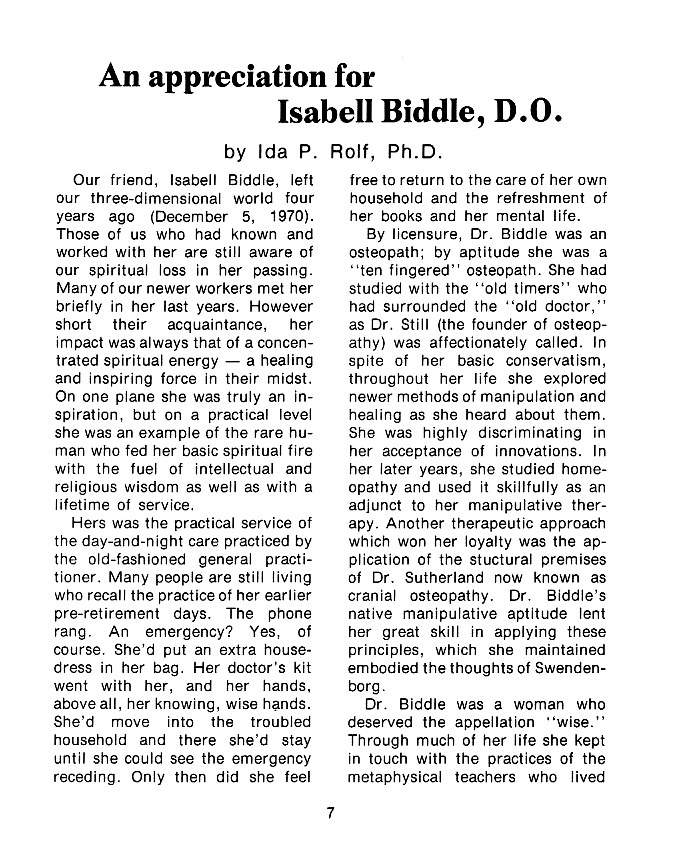
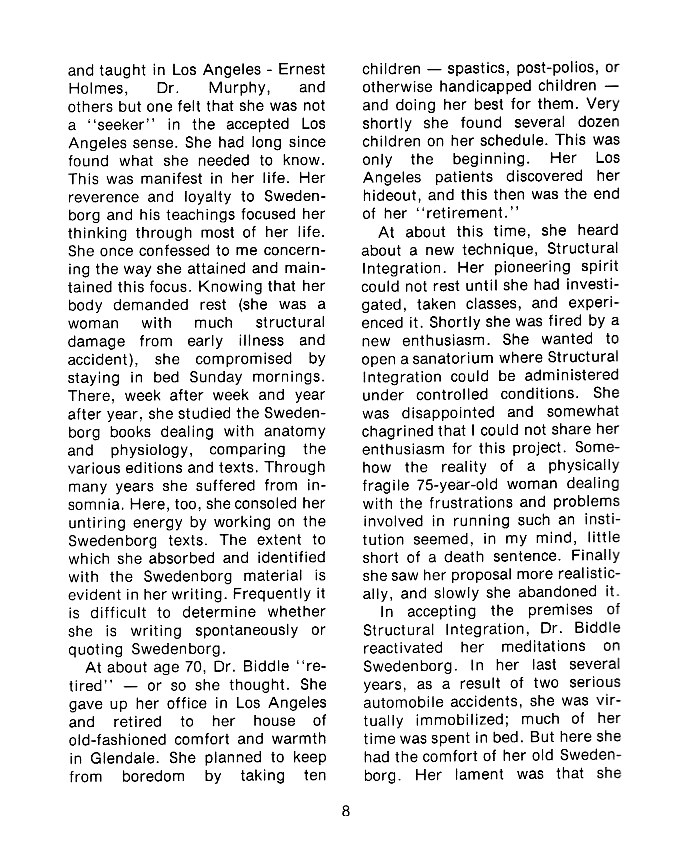
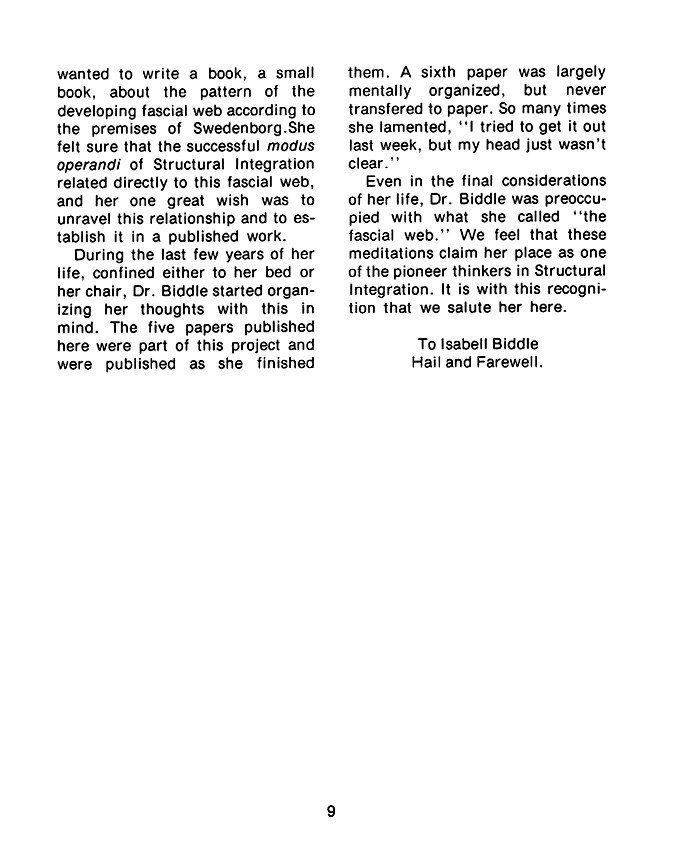
Transcription, in part
An appreciation for Isabell Biddle, D.O.
by Ida P. Rolf, Ph.D.
Our friend, Isabell Biddle, left our three-dimensional world four years ago (December 5, 1970). […]
Hers was the practical service of the day-and-night care practiced by the old-fashioned general practitioner. […] The phone rang. An emergency? Yes, of course. She’d put an extra housedress in her bag. Her doctor’s kit went with her, and her hands, above all, her knowing, wise hands.
By licensure, Dr. Biddle was an osteopath; by aptitude she was a “ten fingered” osteopath. She had studied with the “old timers” who had surrounded the “old doctor,” as Dr. Still (the founder of osteopathy) was affectionately called. […] Another therapeutic approach which won her loyalty was the application of the stuctural [sic] premises of Dr. Sutherland now known as cranial osteopathy.
[page 8, on her retirement to Glendale at about seventy:]
At about this time, she heard about a new technique, Structural Integration. Her pioneering spirit could not rest until she had investigated, taken classes, and experienced it. Shortly she was fired by a new enthusiasm. She wanted to open a sanatorium where Structural Integration could be administered under controlled conditions. She was disappointed and somewhat chagrined that I could not share her enthusiasm for this project. […]
[…] Her lament was that she wanted to write a book, a small book, about the pattern of the developing fascial web according to the premises of Swedenborg. She felt sure that the successful modus operandi of Structural Integration related directly to this fascial web, and her one great wish was to unravel this relationship and to establish it in a published work.
[…] Even in the final considerations of her life, Dr. Biddle was preoccupied with what she called “the fascial web.” We feel that these meditations claim her place as one of the pioneer thinkers in Structural Integration. It is with this recognition that we salute her here.
To Isabell Biddle
Hail and Farewell.
- Document
- “An appreciation for Isabell Biddle, D.O.”, by Ida P. Rolf, Ph.D., printed pages 7 to 9It introduces “the five papers published here”, Biddle’s own; a sixth never reached paper
- Date
- About 1975Rolf writes that Biddle died “four years ago (December 5, 1970)”
- Publication
- Not yet identifiedMost likely a publication of the Rolf Institute, perhaps the Bulletin of Structural Integration
- This copy
- Scans of the three pages rest with the productionTheir source still to name
- Rights
- Copyright in the text rests with the heirs of Ida P. Rolf (1896–1979)Shown here for research and documentation. The page will take the scans down at a rights holder’s request.
Biddle had studied with the “old timers” around Andrew Taylor Still, the founder of osteopathy. Rolf remembers her as a doctor of the old school, ready for the night call with an extra housedress in her bag, so she could stay with a family until the emergency receded. Later she took up the cranial work of William Garner Sutherland, and Rolf credits her with “great skill” in it.
Eric Jacobson’s history of the method remembers the bond in a single line: Rolf “maintained a long friendship with the cranial osteopath Isabel Biddle”. Osteopaths had stood among her first listeners, as the alumnae notes of 1955 already show.
Retirement to Glendale at about seventy lasted only until her Los Angeles patients found her. Then Structural Integration caught her. She took classes, and at seventy-five she dreamed of a sanatorium devoted to the method. Rolf could not share that dream, and says so plainly; slowly Biddle let it go.
The heart of the piece lies in its last column. Confined to bed and chair after two car accidents, Biddle worked on a small book about “the pattern of the developing fascial web”, sure that Structural Integration did its work through that web. She read the web through Emanuel Swedenborg’s anatomical writings, which she had studied for years on Sunday mornings in bed. Rolf closes by naming her “one of the pioneer thinkers in Structural Integration”.
Cite asIda P. Rolf, “An appreciation for Isabell Biddle, D.O.,” [publication unidentified, about 1975], 7–9. Copy, research files of Ida Rolf – Mother of Fascia.
A birthday letter from Moshe Feldenkrais
Some seven weeks after Rolf turned eighty, Moshe Feldenkrais wrote to her from San Francisco. Between the birthday wishes he recalled where they first met.
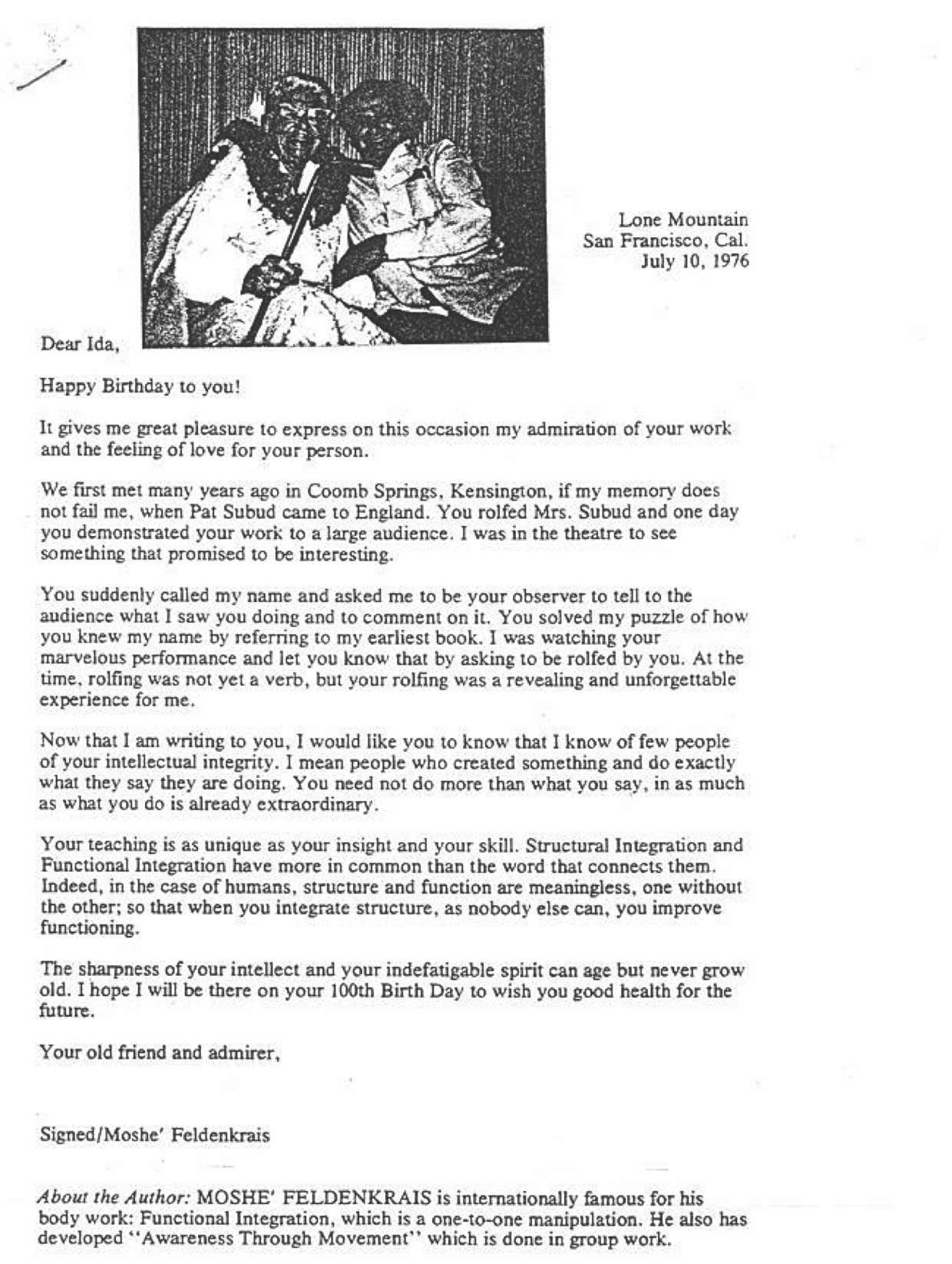
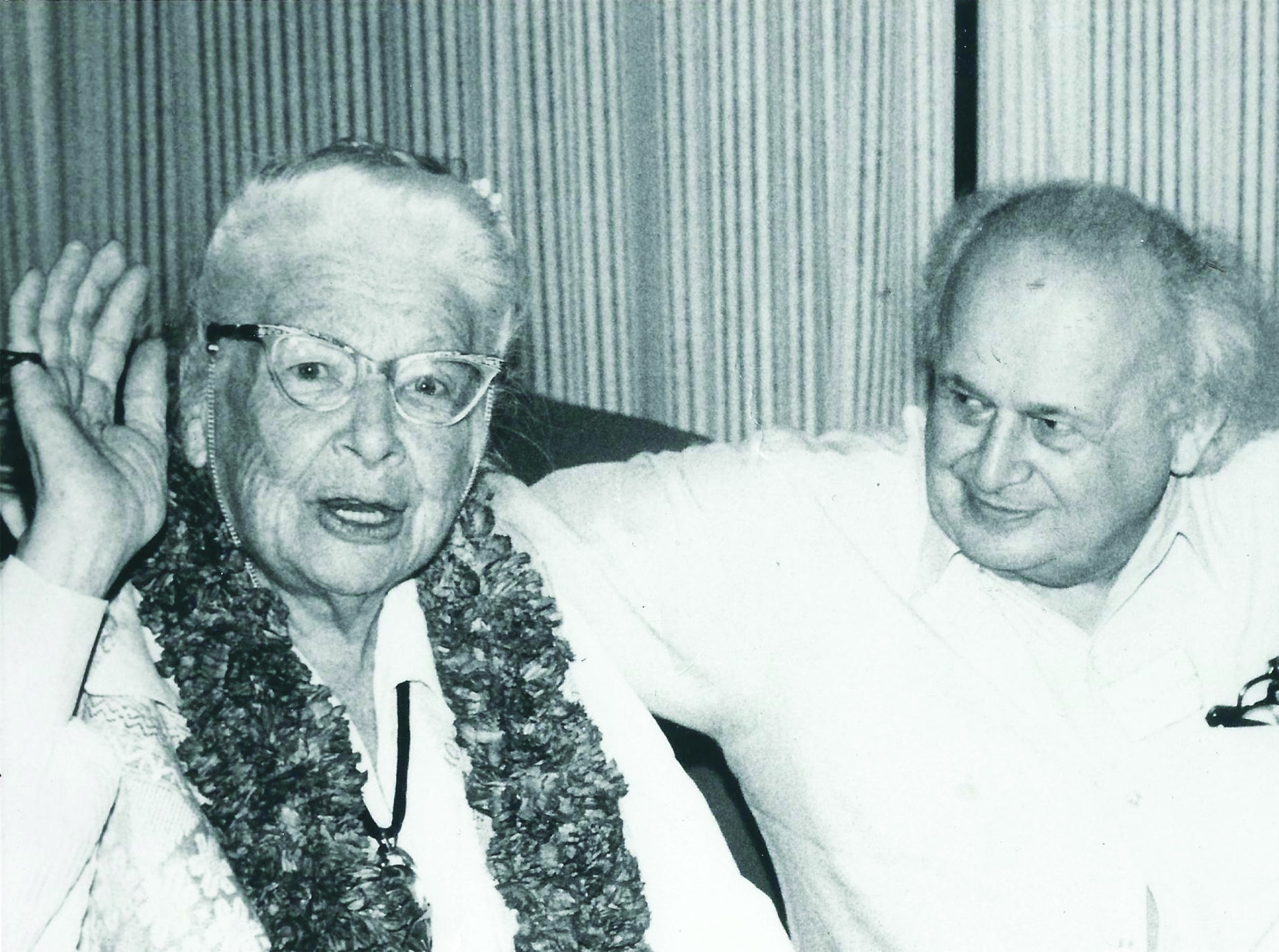
- Para. 3
“We first met many years ago in Coomb Springs, Kensington, if my memory does not fail me, when Pat Subud came to England. You rolfed Mrs. Subud and one day you demonstrated your work to a large audience. I was in the theatre to see something that promised to be interesting.”
- Para. 4
[She called on him by name to observe and comment for the audience, and told him she knew him from his earliest book. He answered by asking her to rolf him. Then:]
“At the time, rolfing was not yet a verb, but your rolfing was a revealing and unforgettable experience for me.”
- Para. 6
“Structural Integration and Functional Integration have more in common than the word that connects them.”
- Document
- Letter from Moshe Feldenkrais to Ida P. Rolf, headed “Lone Mountain, San Francisco, Cal.”A retyped copy: the closing reads “Signed/Moshe’ Feldenkrais”, and a printed note “About the Author” follows the text
- Date
- 10 July 1976Rolf turned eighty on 19 May 1976. Feldenkrais spent that summer at Lone Mountain College, teaching the second year of his first American training.
- Photograph
- A halftone above the greeting: Rolf in a garland, with Feldenkrais beside herA fuller print of the same scene, shown above, identifies him. Photographer, date and place unknown.
- Copy
- An image copy rests with the productionNobody has yet traced the signed original or the publication that printed the letter. A scan also appears on feldenkraismethod.com, a tribute site.
- Rights
- Copyright in the letter rests with the heirs of Moshe Feldenkrais (1904–1984)Shown here for research and documentation. The page will take the scan down at the rights holder’s request.
Feldenkrais wrote from memory and says so. Coombe Springs, the estate of J. G. Bennett, lay in Kingston upon Thames in Surrey, not in Kensington, and Bennett’s institute there taught the ideas of G. I. Gurdjieff. “Pat Subud” stands for Muhammad Subuh Sumohadiwidjojo, known as Pak Subuh, who founded the Subud movement and first came to Coombe Springs in 1957. His wife, Ibu Siti Sumari, travelled with him, so “Mrs. Subud” most likely means her.
The letter thus dates the first meeting of Rolf and Feldenkrais to 1957 or later, and two more records narrow the window. In the spring of 1958 Rolf joined Subud in Los Angeles, as the Subud Chronicle reports, and in 1959 a photograph and a film place her at Coombe Springs. In 1970 she settled the question herself: “I worked with him in England 12 years ago,” which points to the summer of 1958.
The letter also fits Eric Jacobson’s history of her method, which has her teaching summer courses in England in the late 1940s and 1950s, latterly at an institute in Surrey devoted to Gurdjieff, and names Feldenkrais among her influences. Which “earliest book” Rolf meant, the letter leaves open. Jacobson cites Body and Mature Behavior (1949).
She remembered the meeting as a bargain, and told it more than once; in a class of the mid-1970s the twelve days became fourteen, and she added that for years afterwards he sent her a great many patients. It began when he saw her demonstrate and came to her: “I have got to have this work … You’re doing what I always wanted to do.” He had twelve days in England and money from Israel for just that long, so she gave him the ten hours in twelve days. At the parting, tears stood in his eyes: “You do in 10 hours what I try to do in 200.”
Cite asMoshe Feldenkrais to Ida P. Rolf, Lone Mountain, San Francisco, 10 July 1976. Retyped copy, research files of Ida Rolf – Mother of Fascia.
Ida P. Rolf, class, 1970, audio tape (via Emmett Hutchins), on Feldenkrais.
Ida P. Rolf, advanced class, 1974–1976, in Ida Rolf Talks in Class, ed. Aleš Urbanczik (2026), 216.
and
An admonition for 1977
Her book opens on a stone Buddha. On page 8 of the first edition, a saying attributed to the Buddha runs across a photograph of a Chinese stele, under the heading “Admonition for 1977”. The same words close the book on its last page.
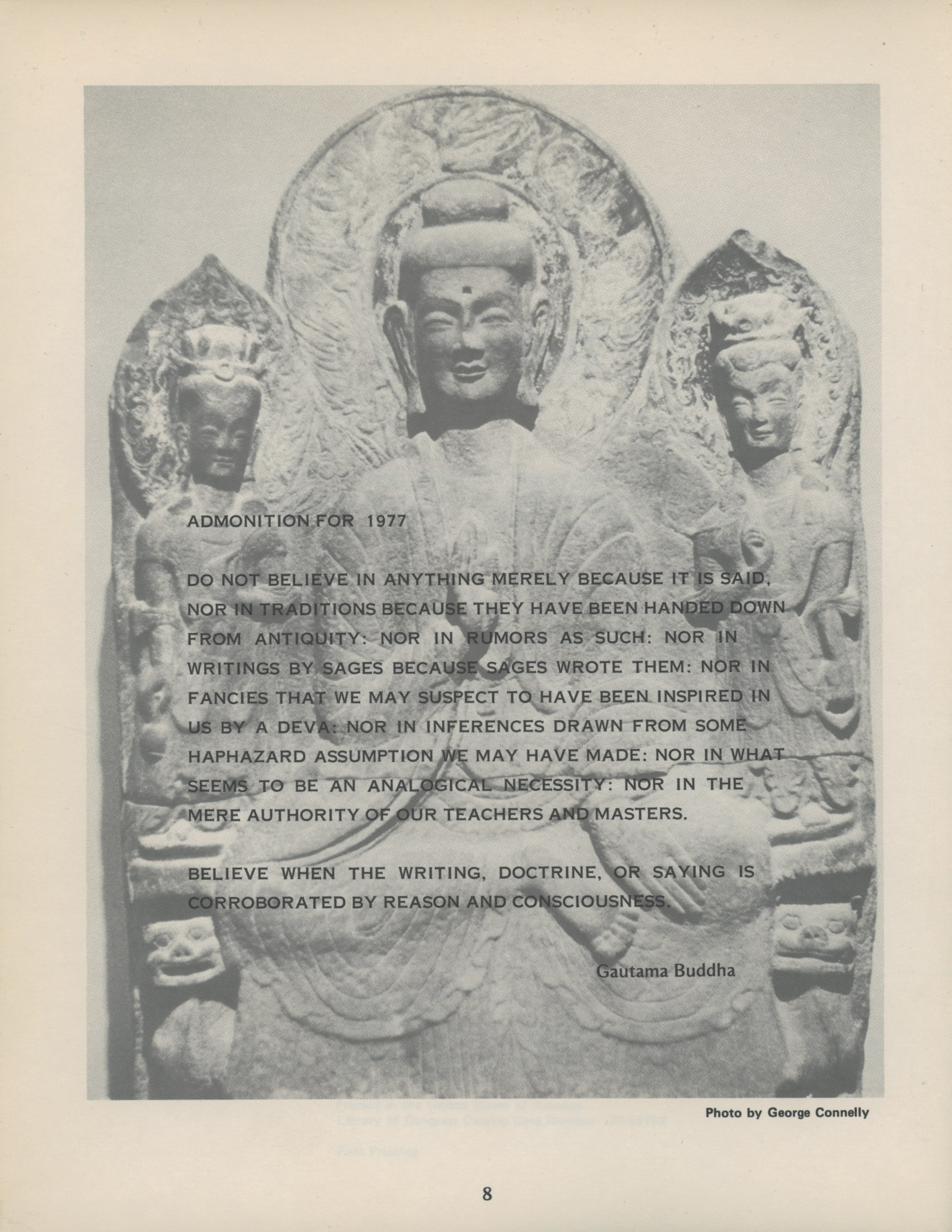
Transcription of page 8
ADMONITION FOR 1977
DO NOT BELIEVE IN ANYTHING MERELY BECAUSE IT IS SAID, NOR IN TRADITIONS BECAUSE THEY HAVE BEEN HANDED DOWN FROM ANTIQUITY: NOR IN RUMORS AS SUCH: NOR IN WRITINGS BY SAGES BECAUSE SAGES WROTE THEM: NOR IN FANCIES THAT WE MAY SUSPECT TO HAVE BEEN INSPIRED IN US BY A DEVA: NOR IN INFERENCES DRAWN FROM SOME HAPHAZARD ASSUMPTION WE MAY HAVE MADE: NOR IN WHAT SEEMS TO BE AN ANALOGICAL NECESSITY: NOR IN THE MERE AUTHORITY OF OUR TEACHERS AND MASTERS.
BELIEVE WHEN THE WRITING, DOCTRINE, OR SAYING IS CORROBORATED BY REASON AND CONSCIOUSNESS.
Gautama Buddha
[below the photograph, right:] Photo by George Connelly [foot of the page:] 8
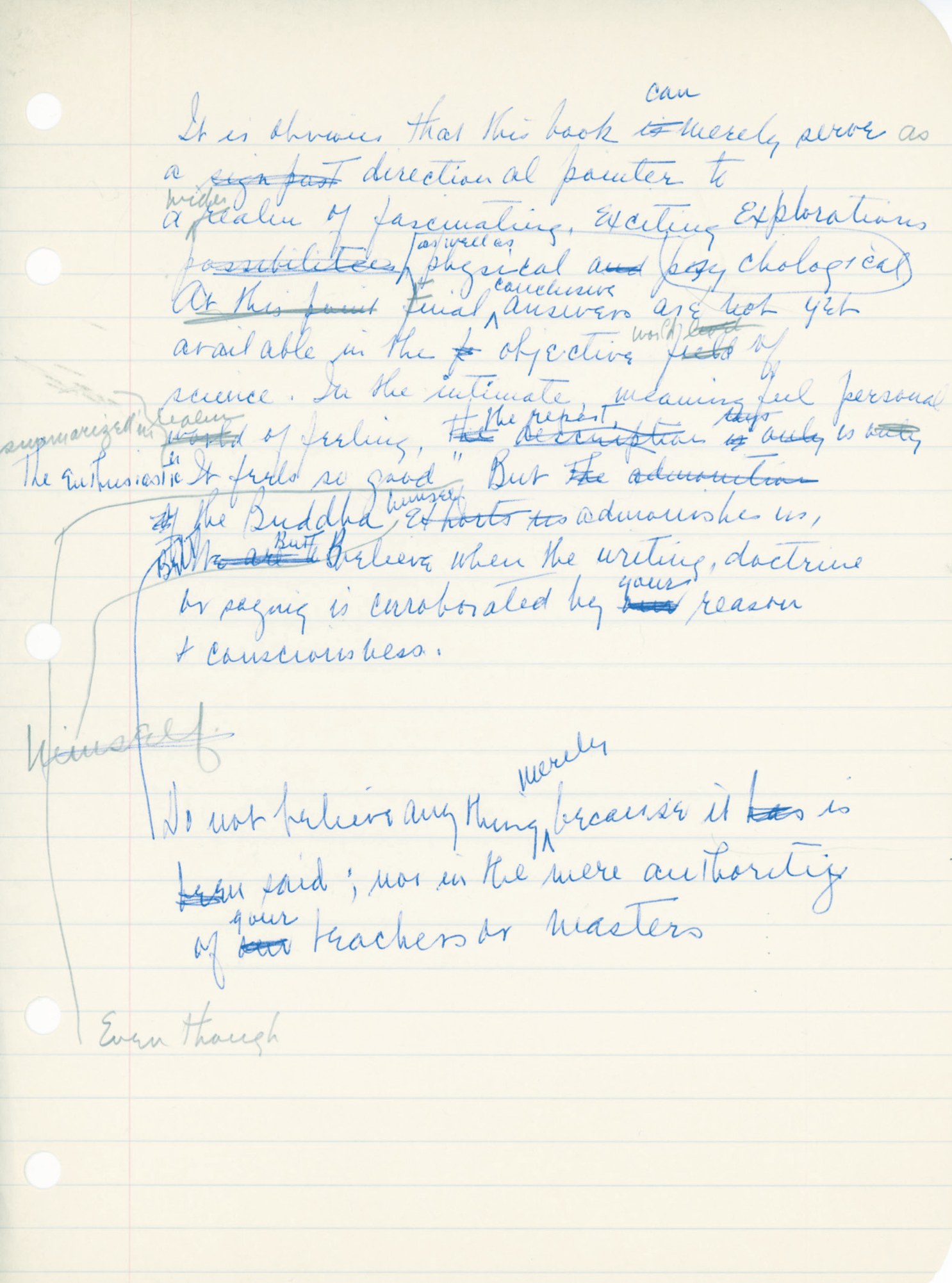
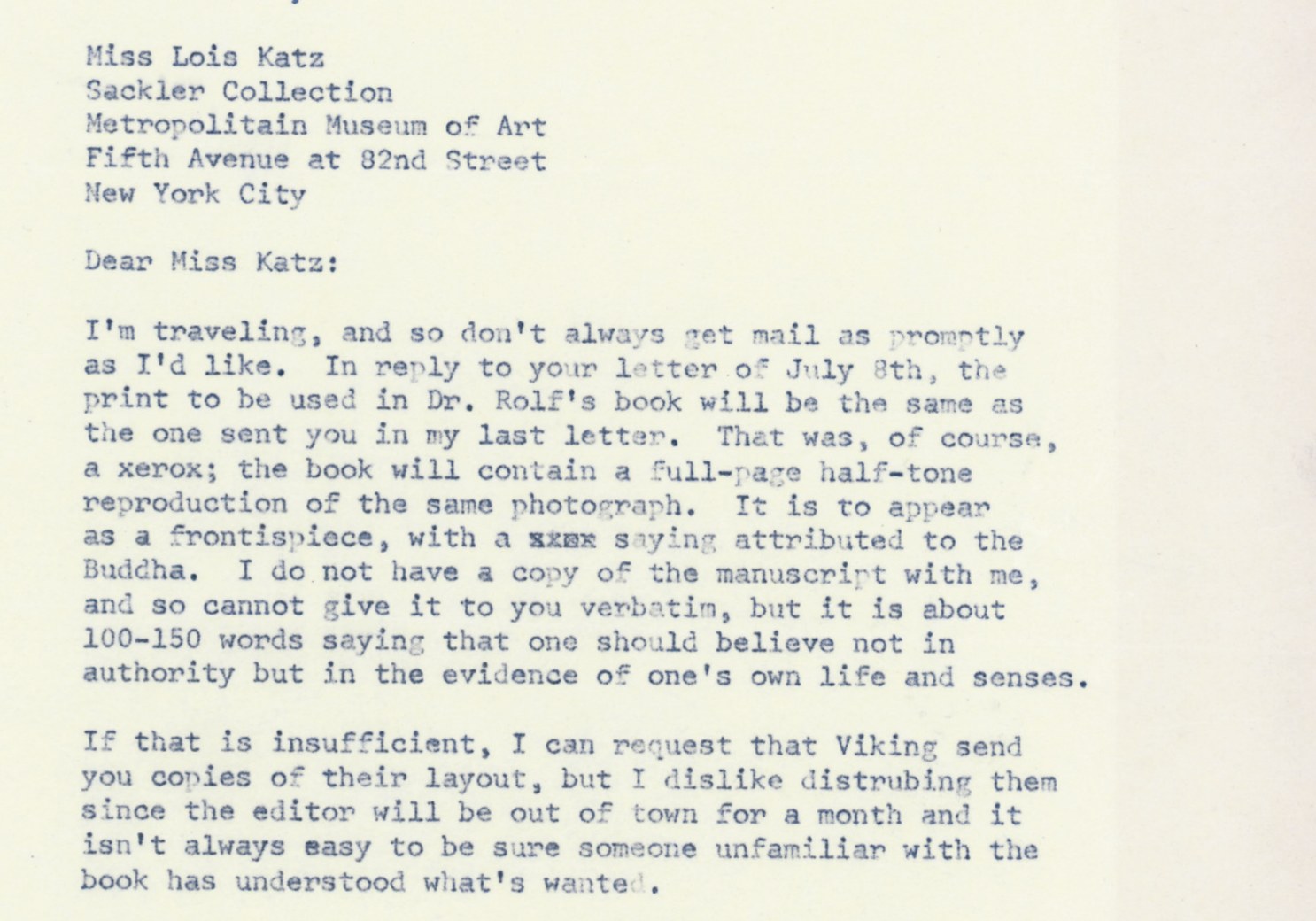
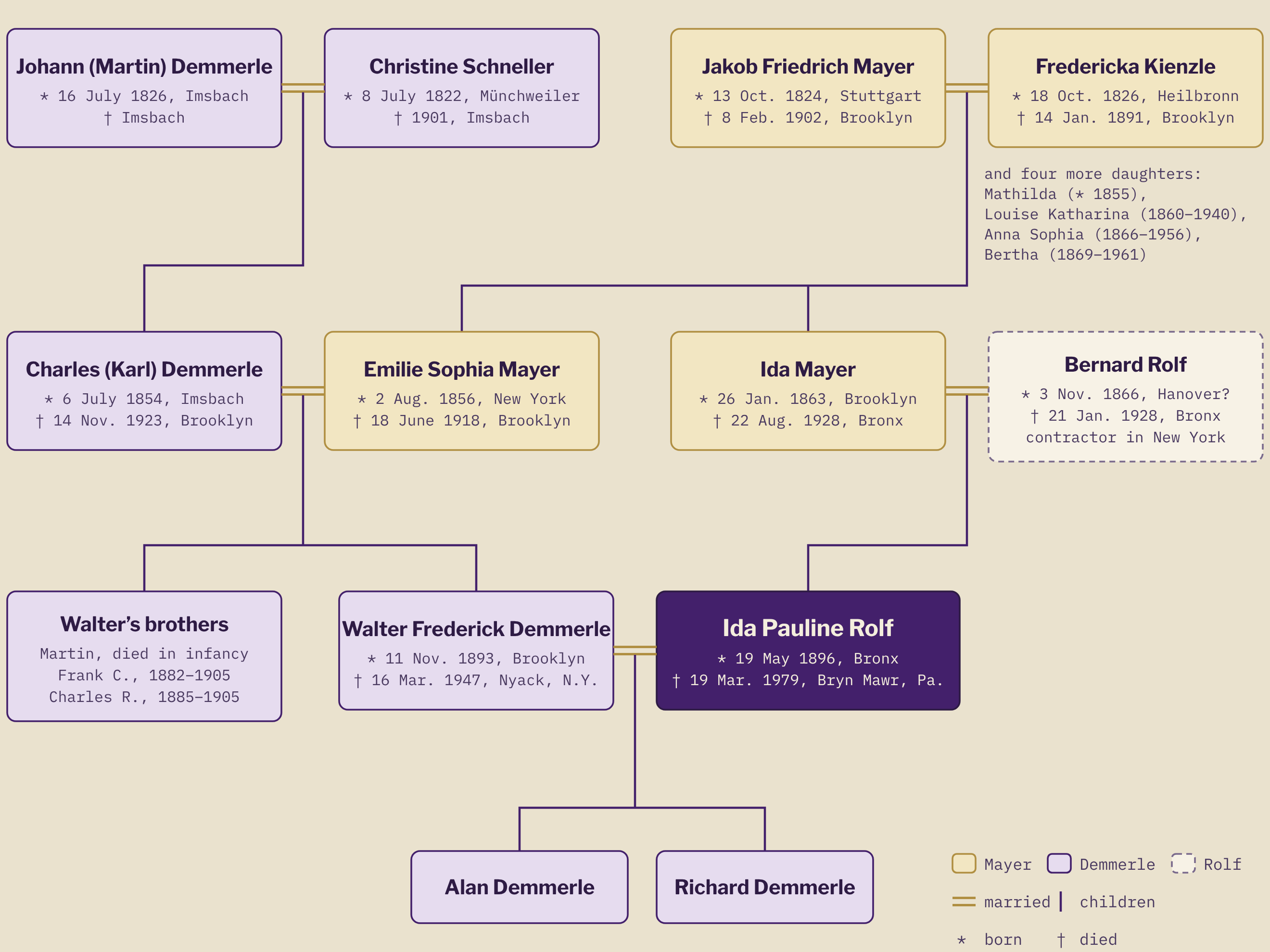
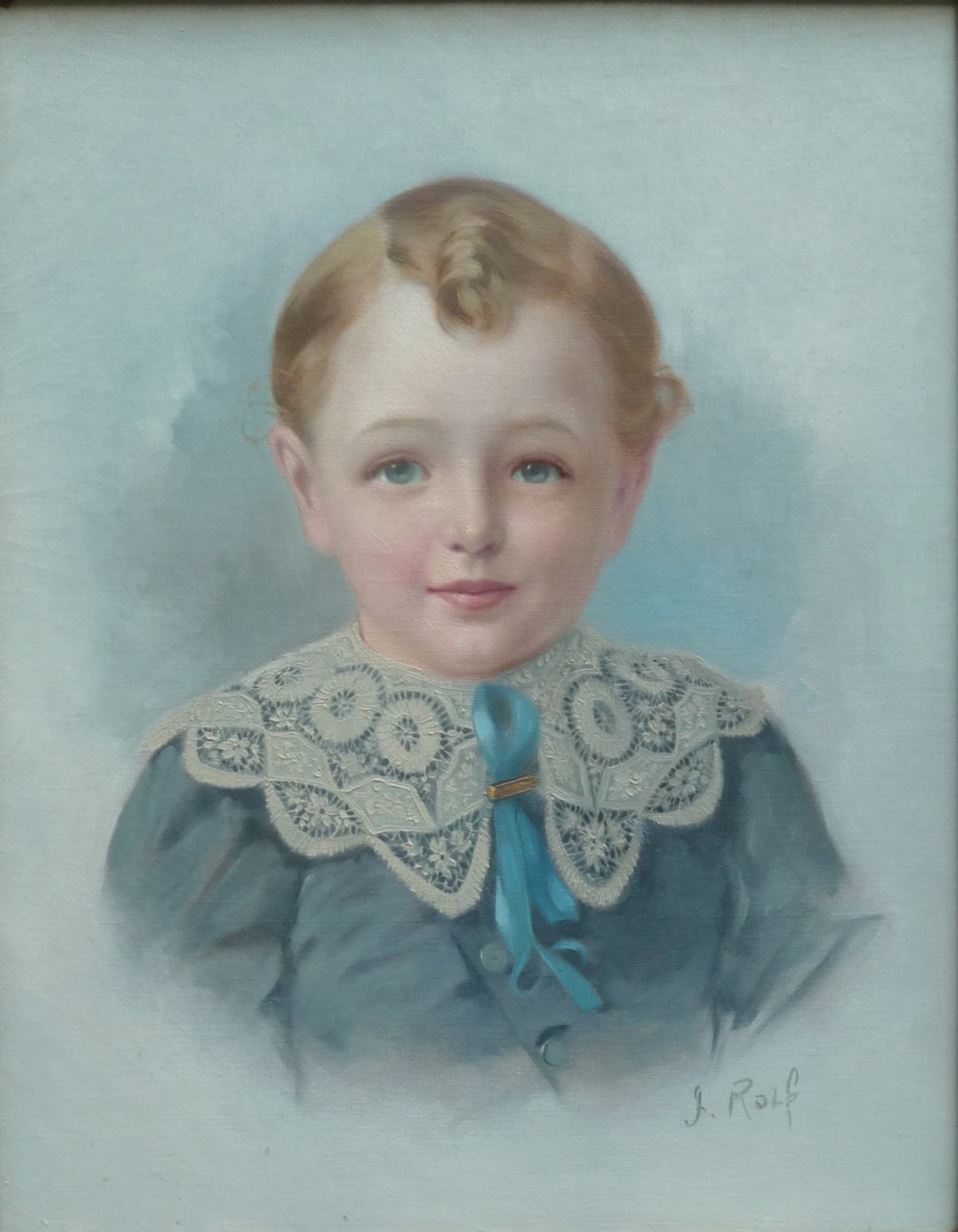
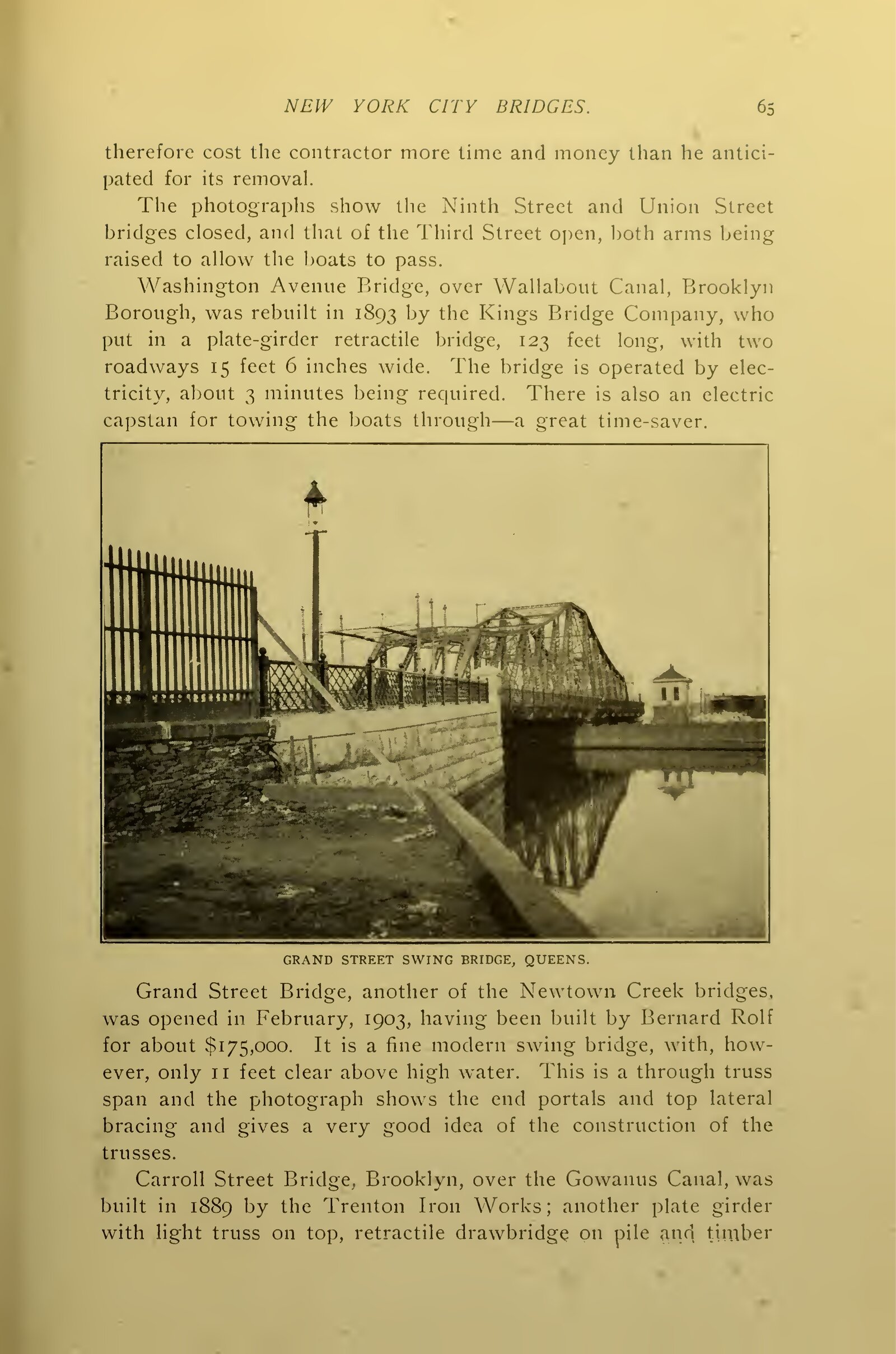
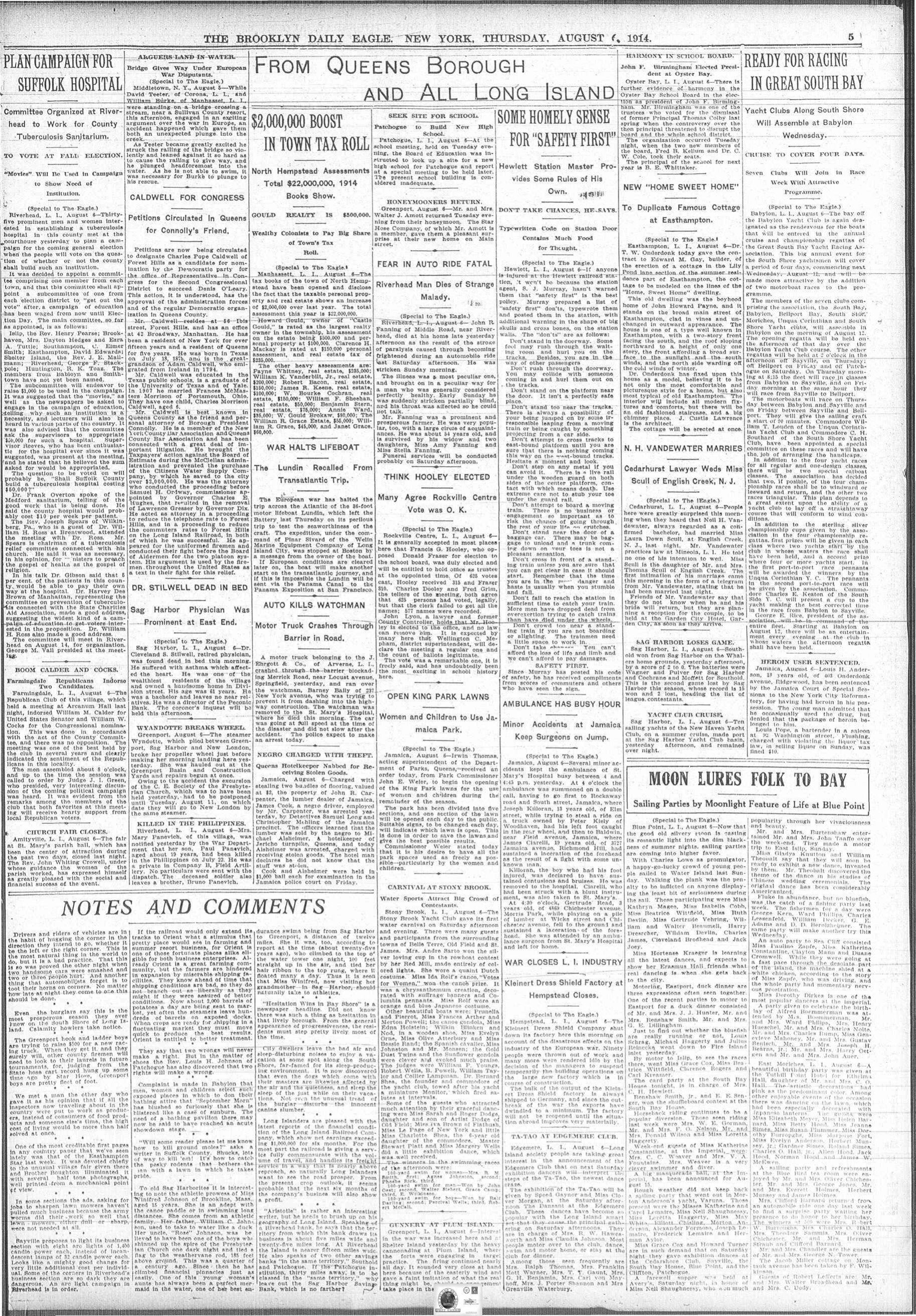
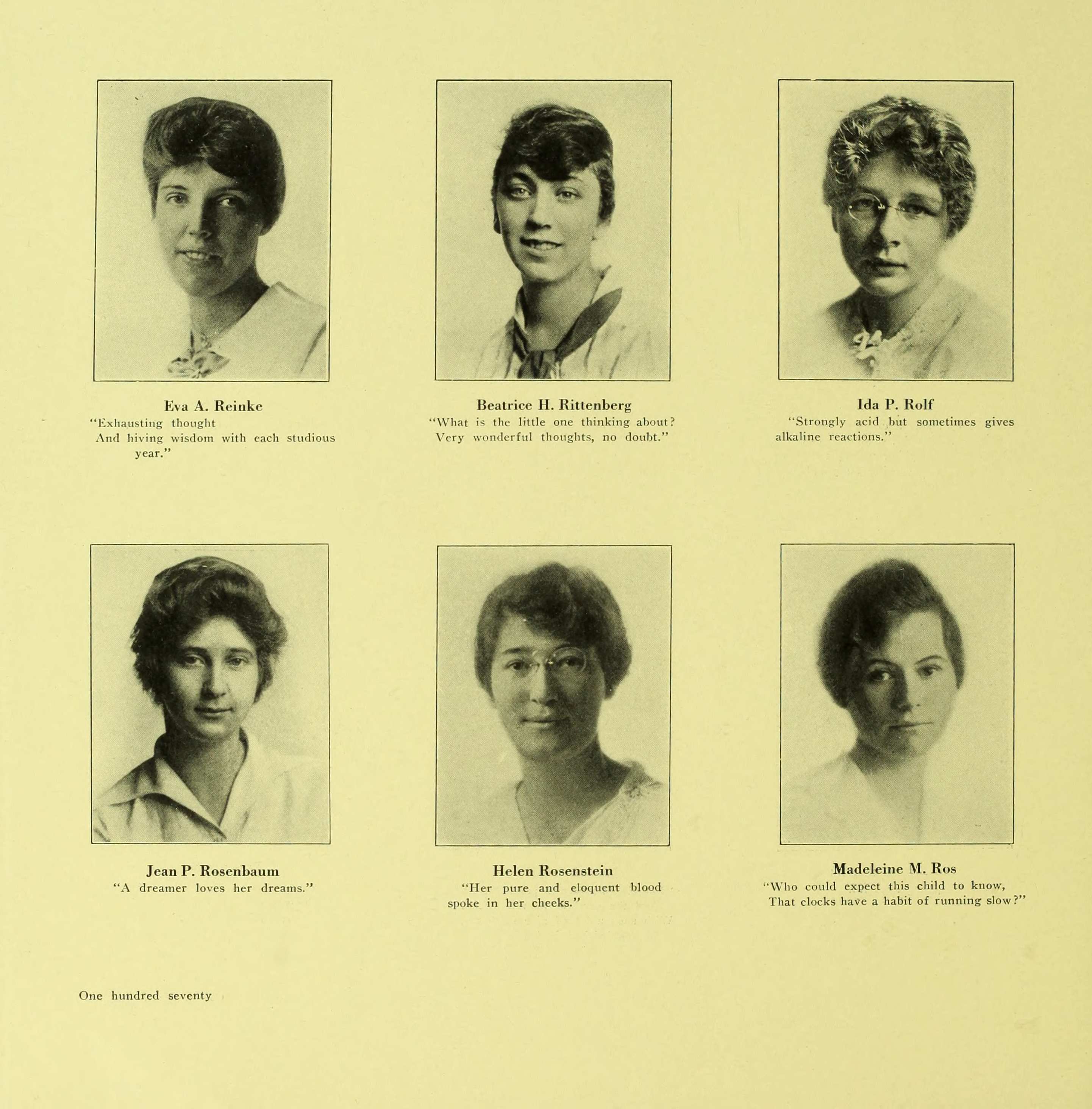
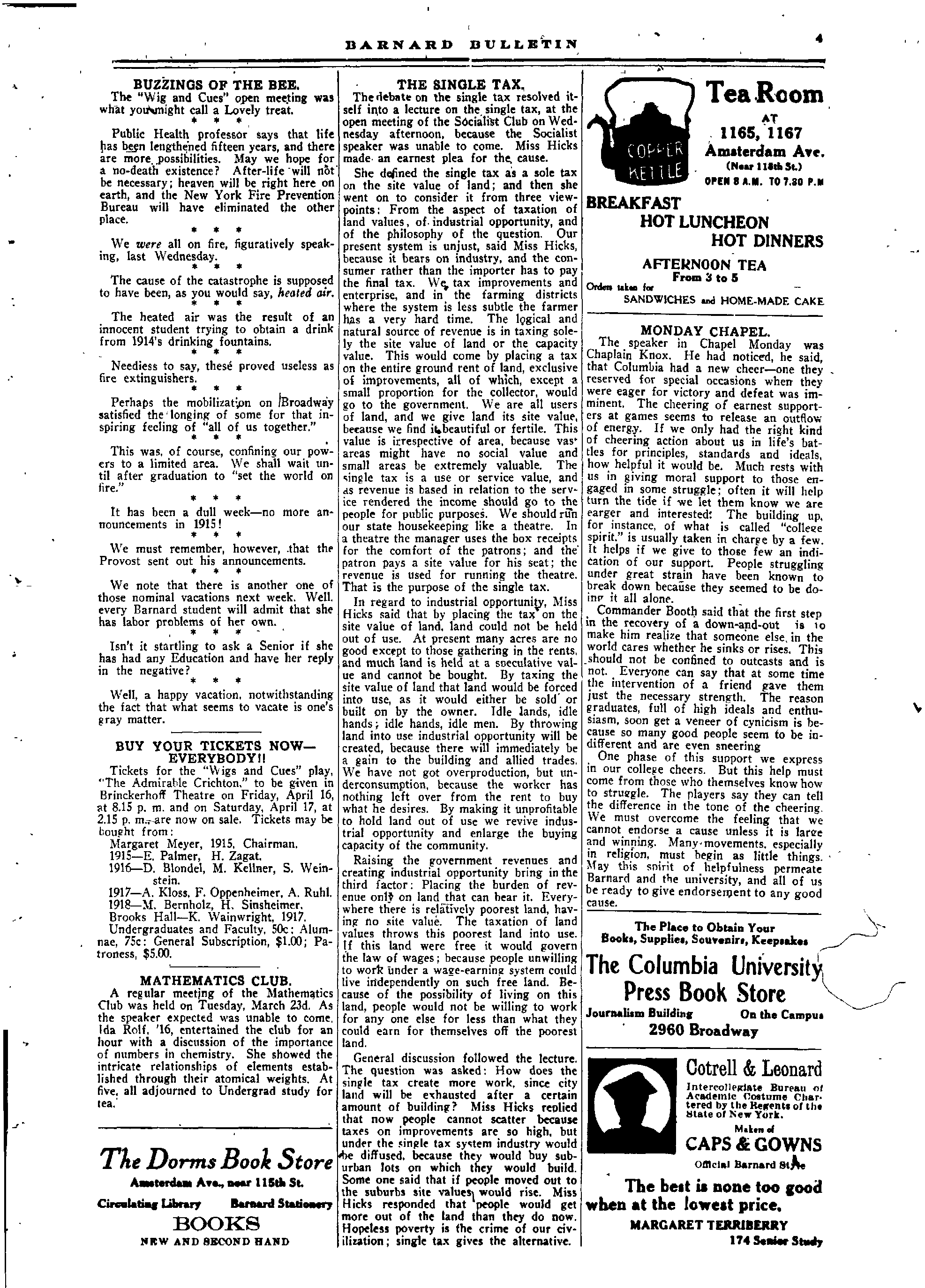
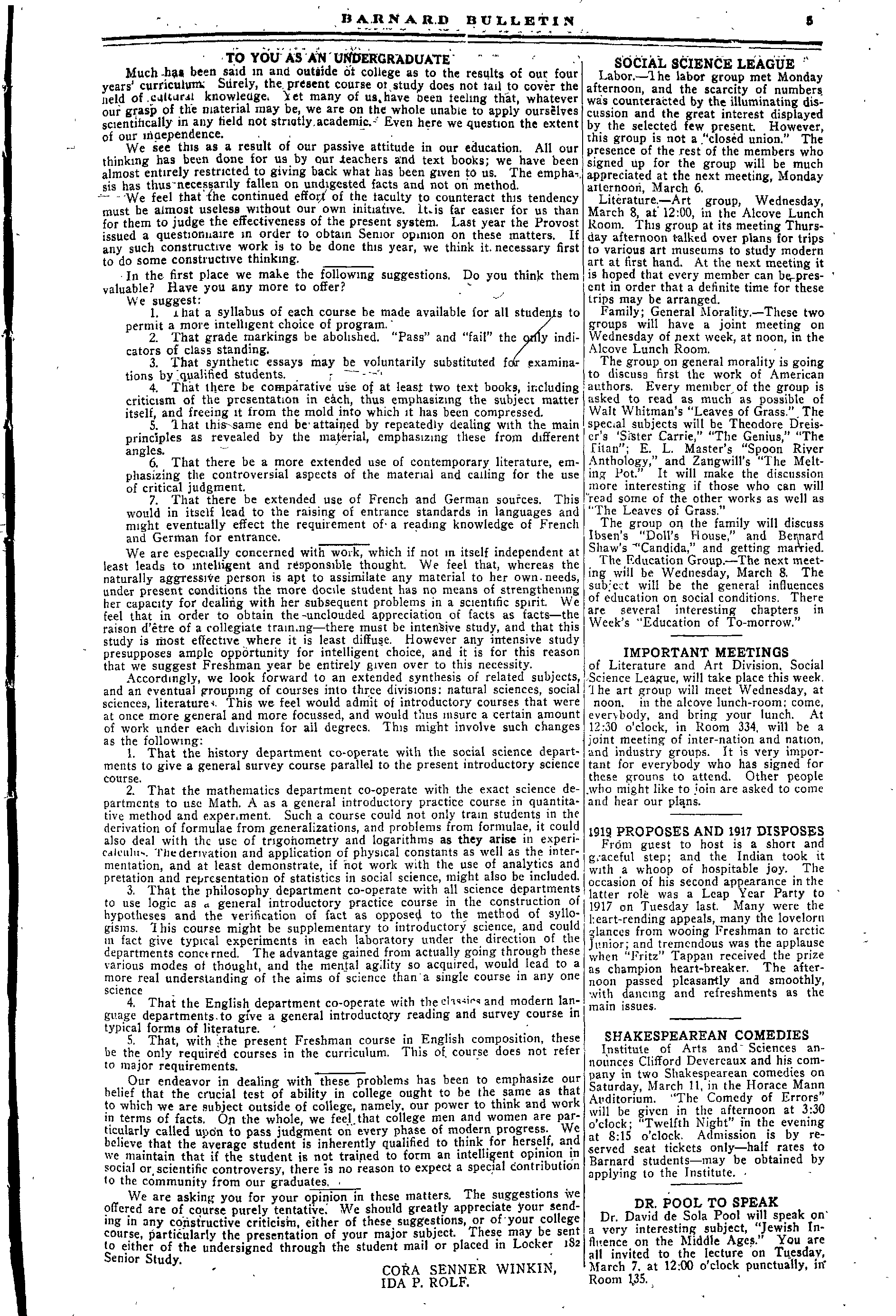
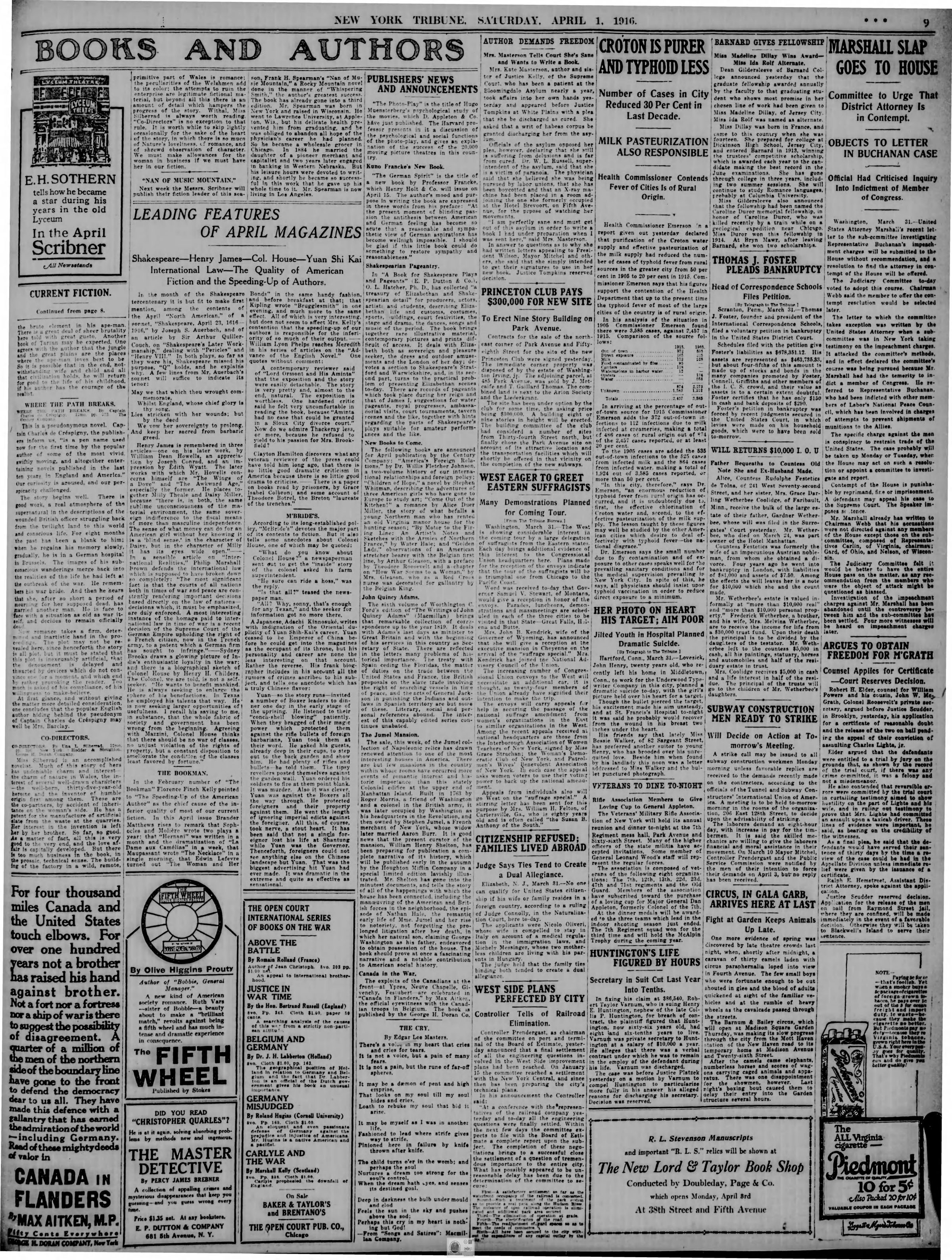
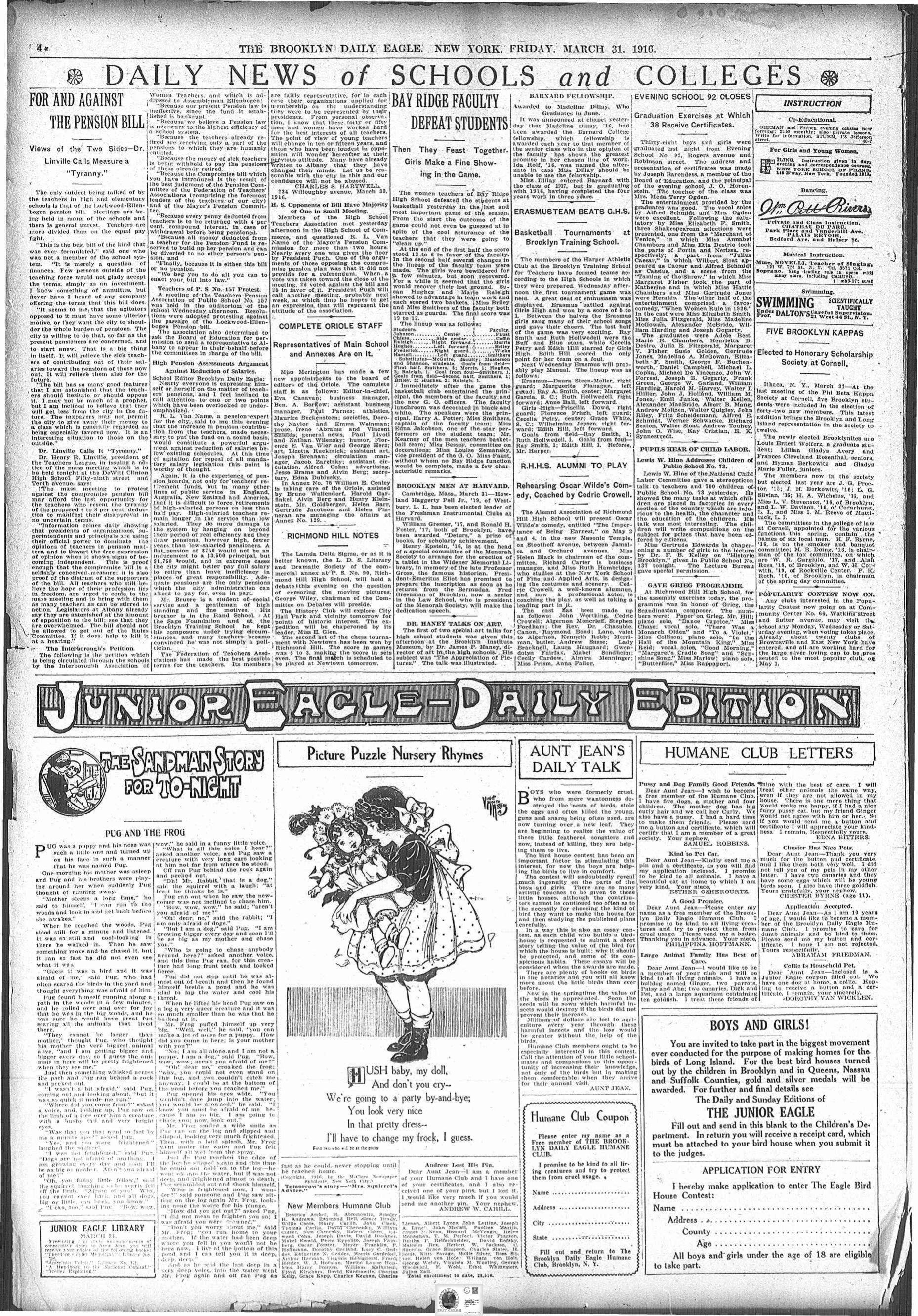
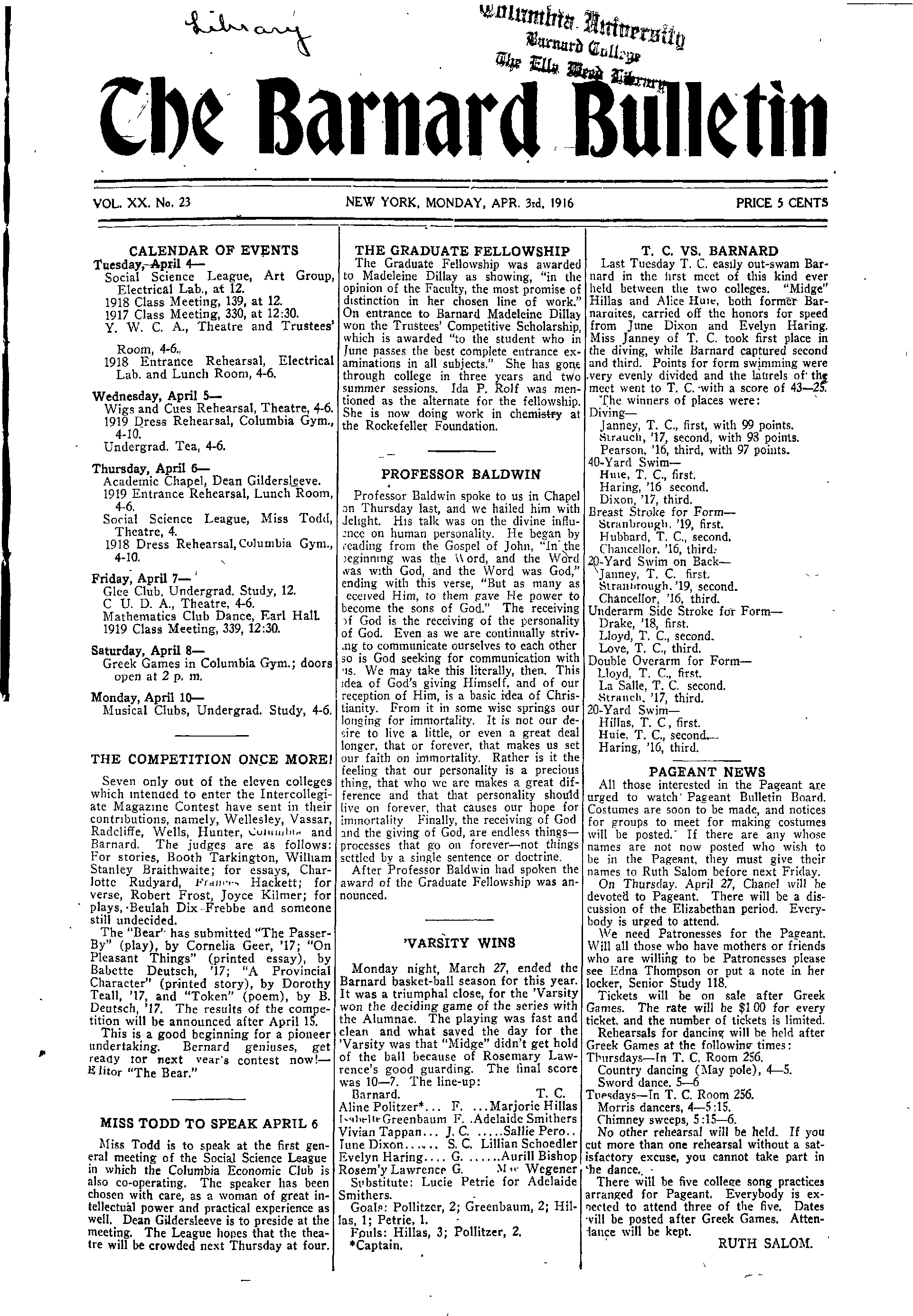
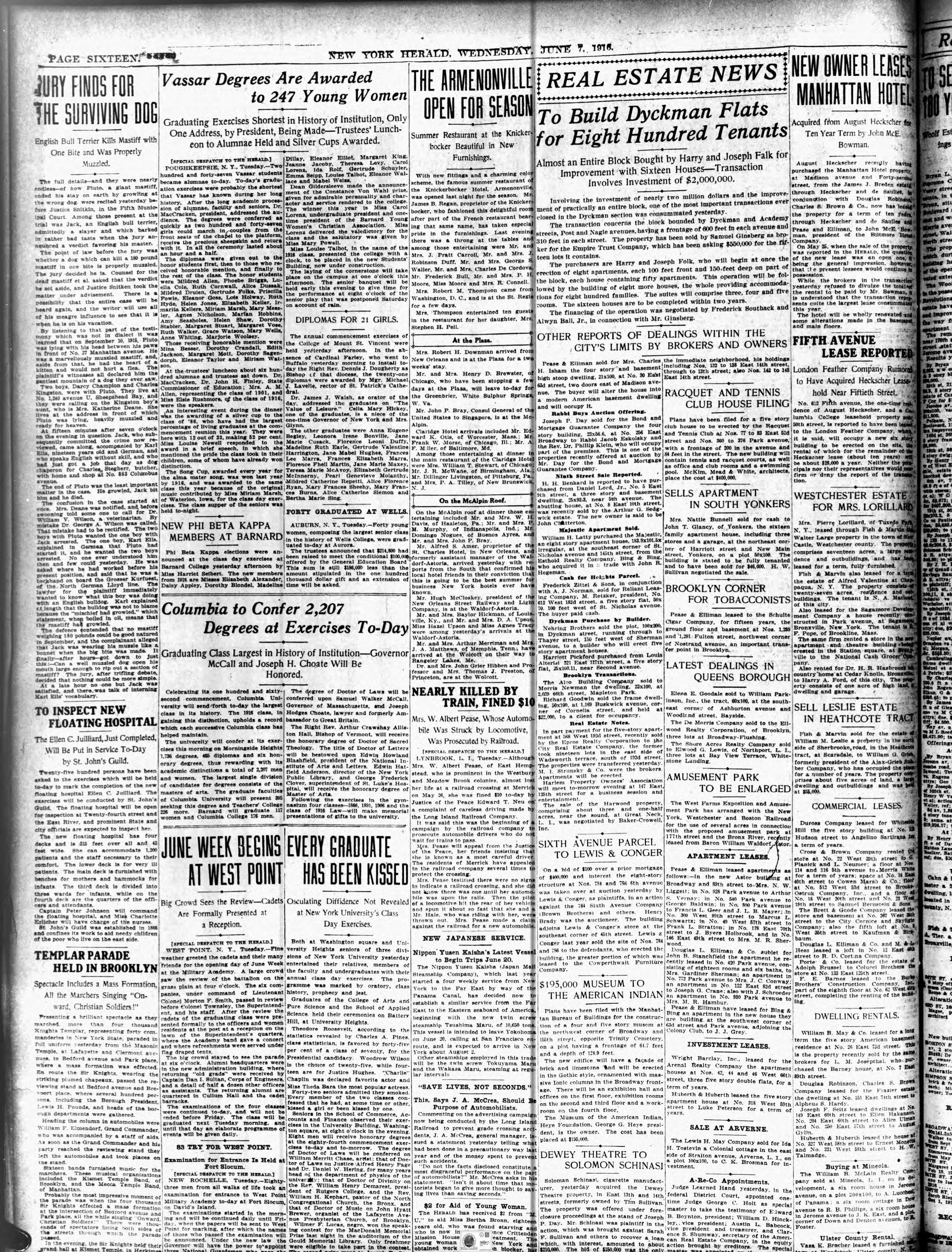
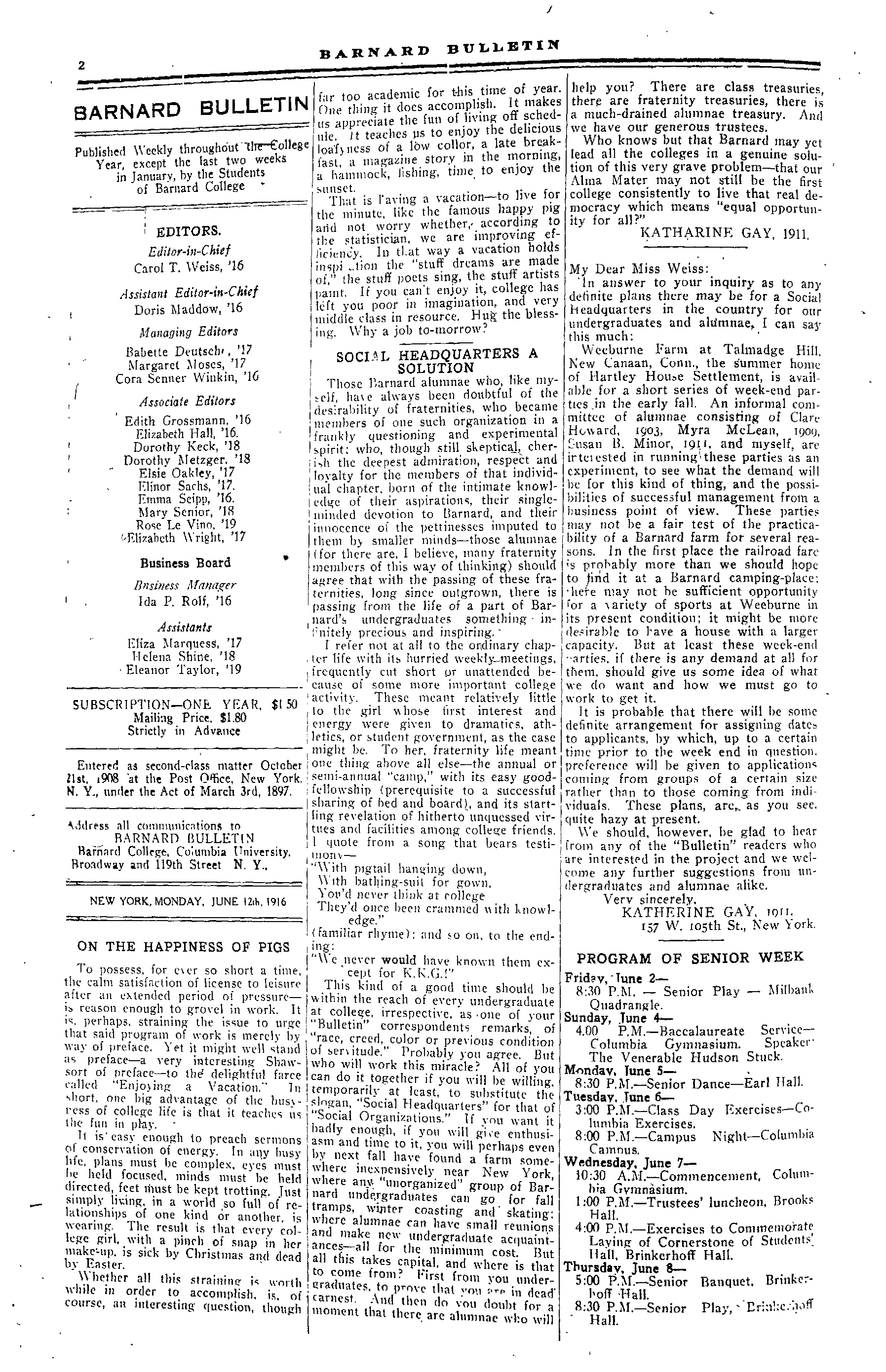
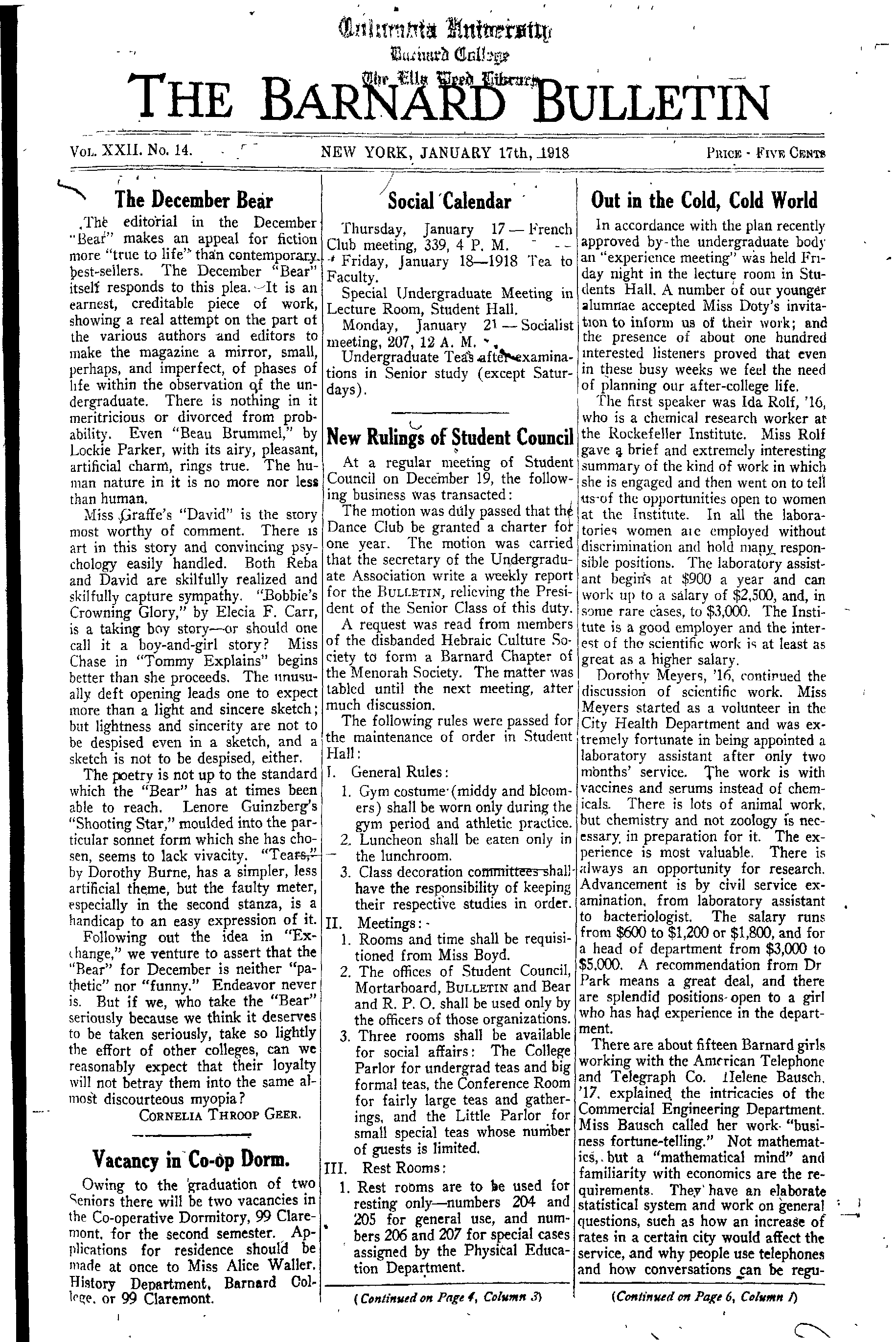
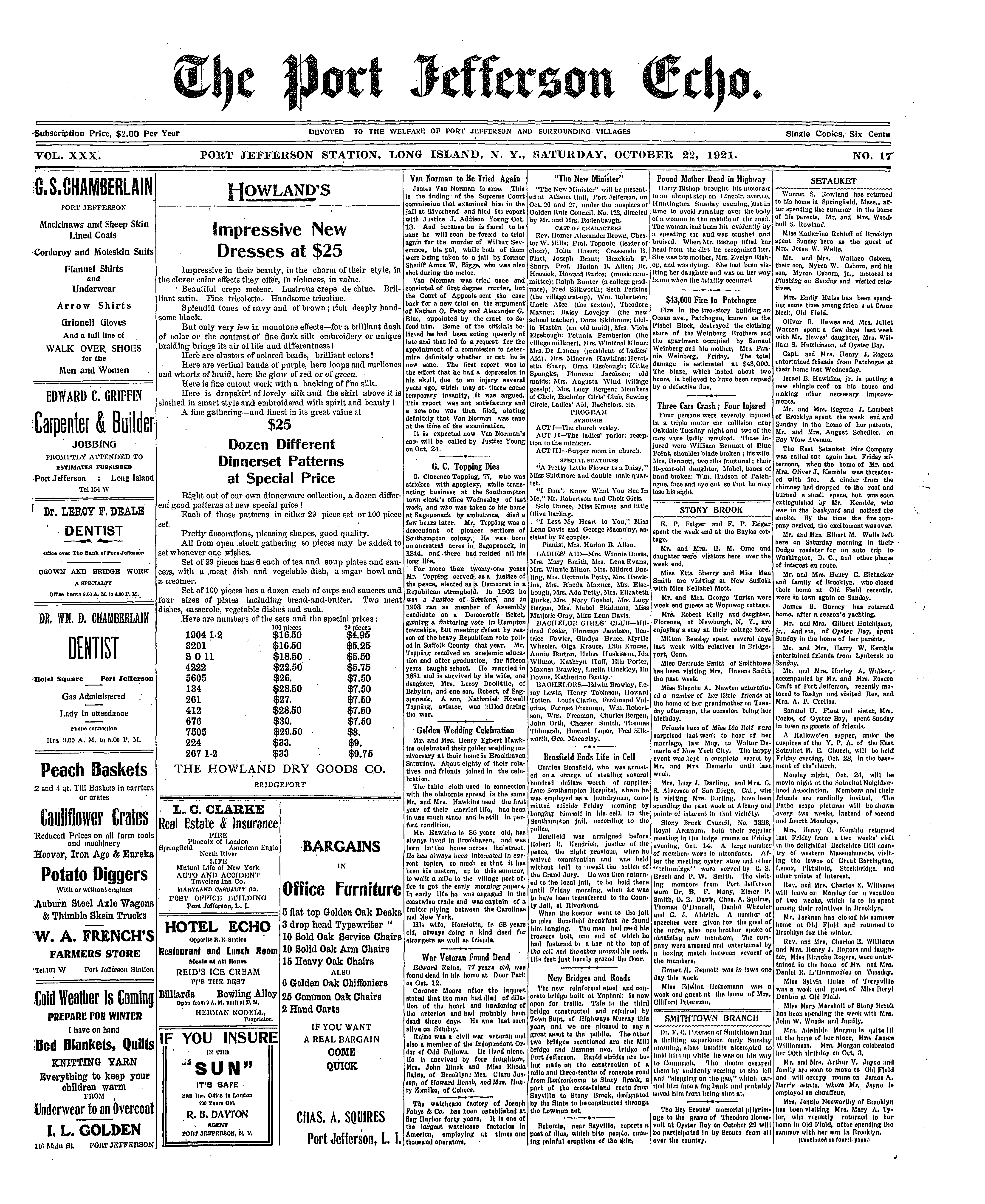
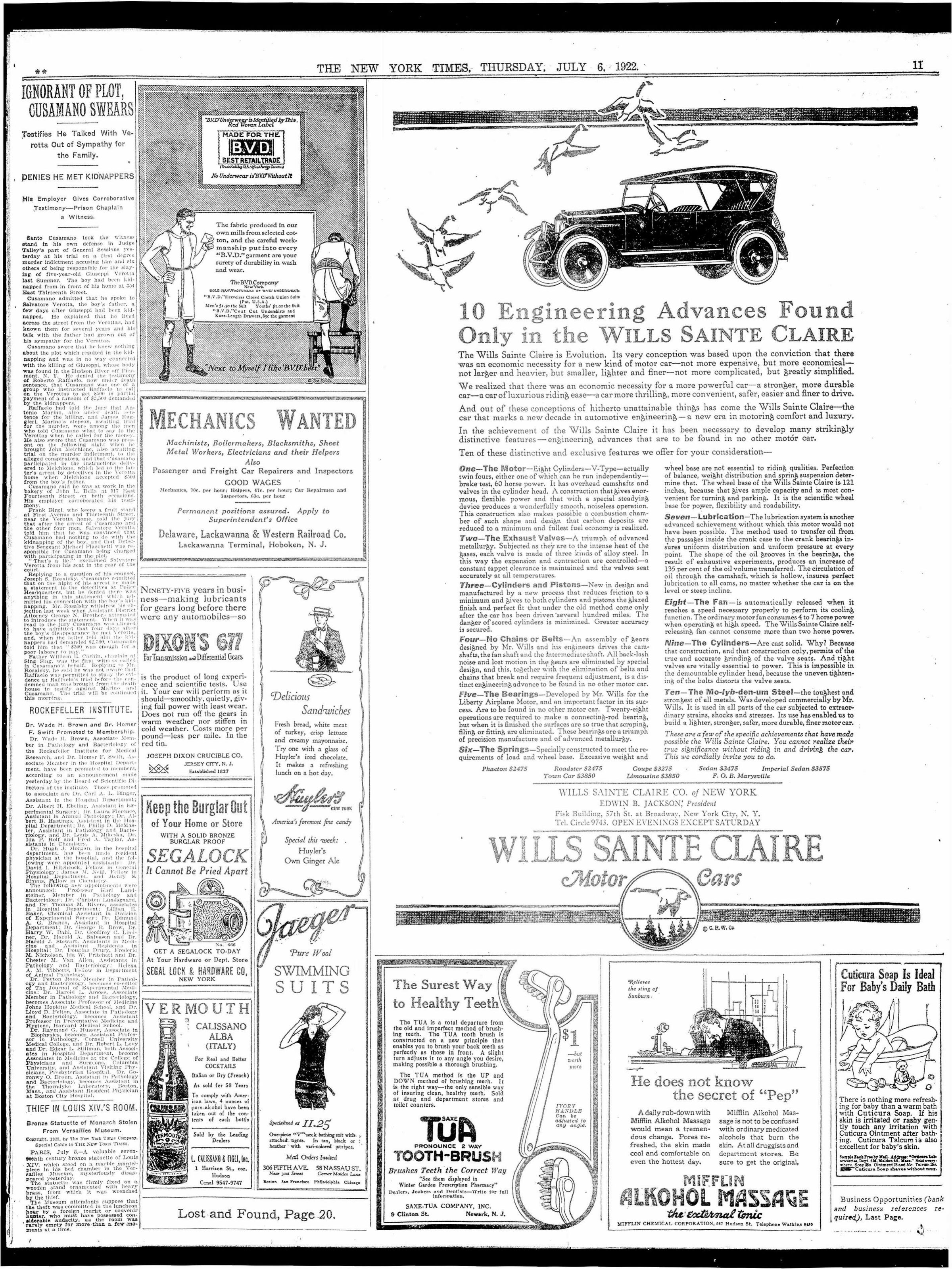
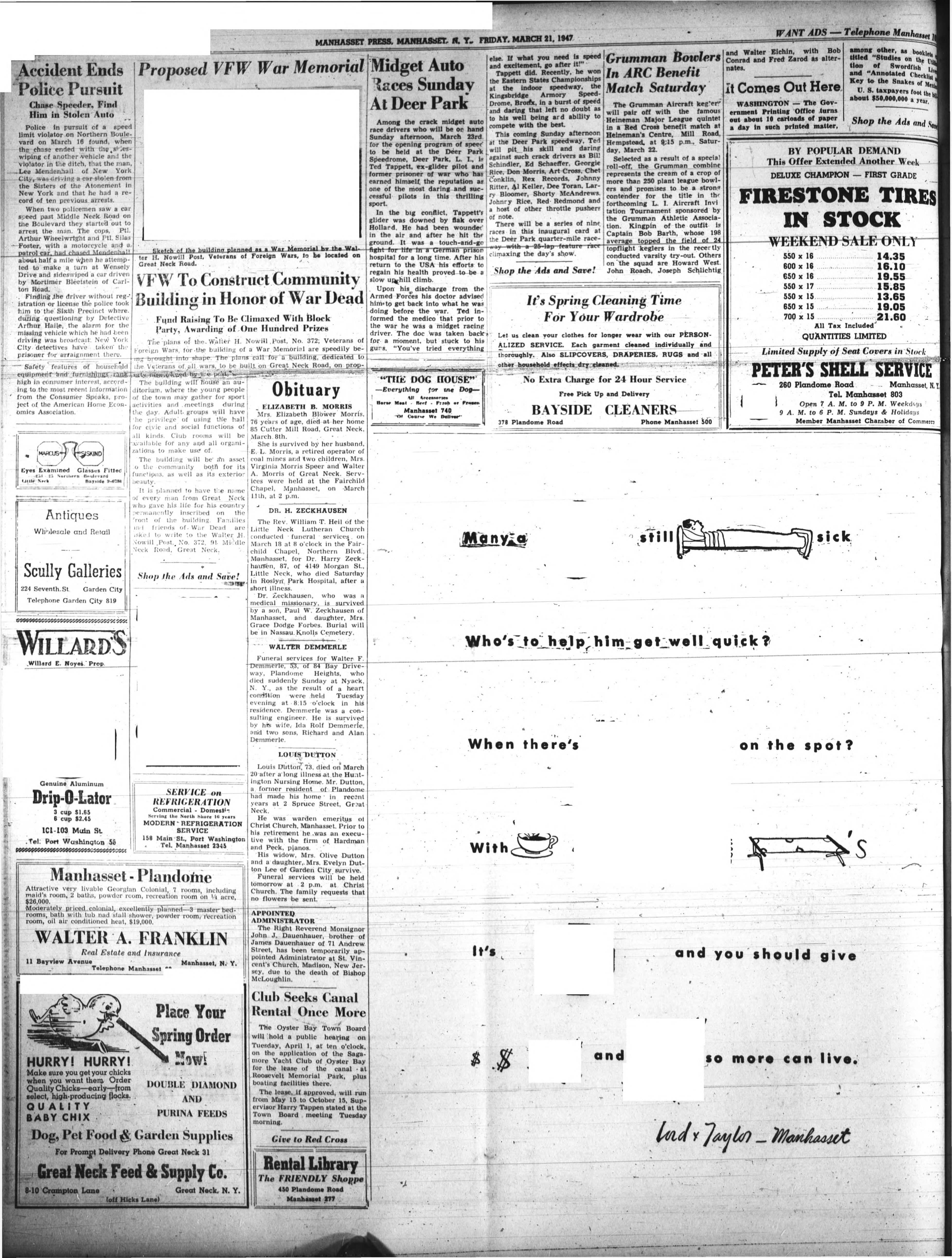
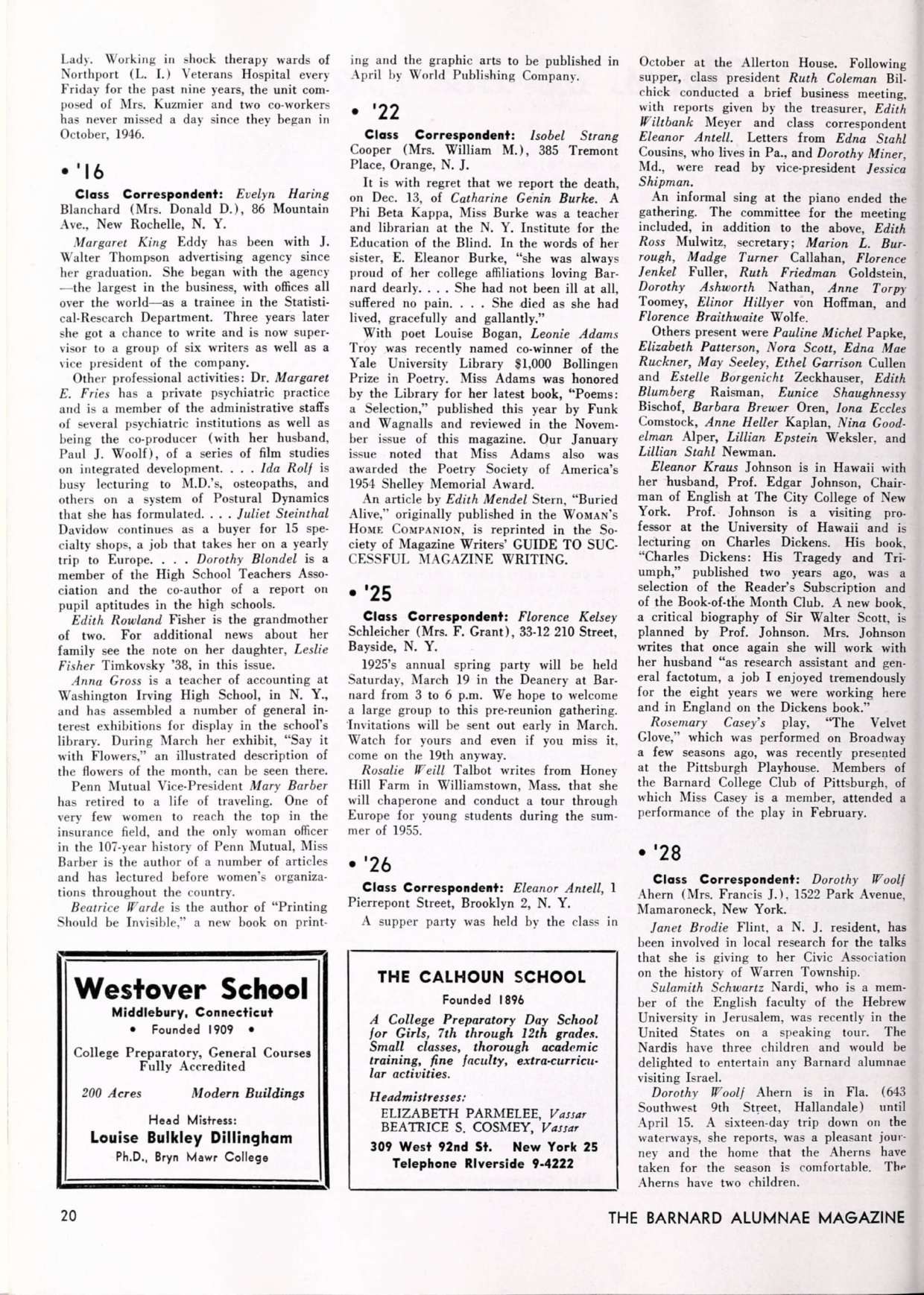
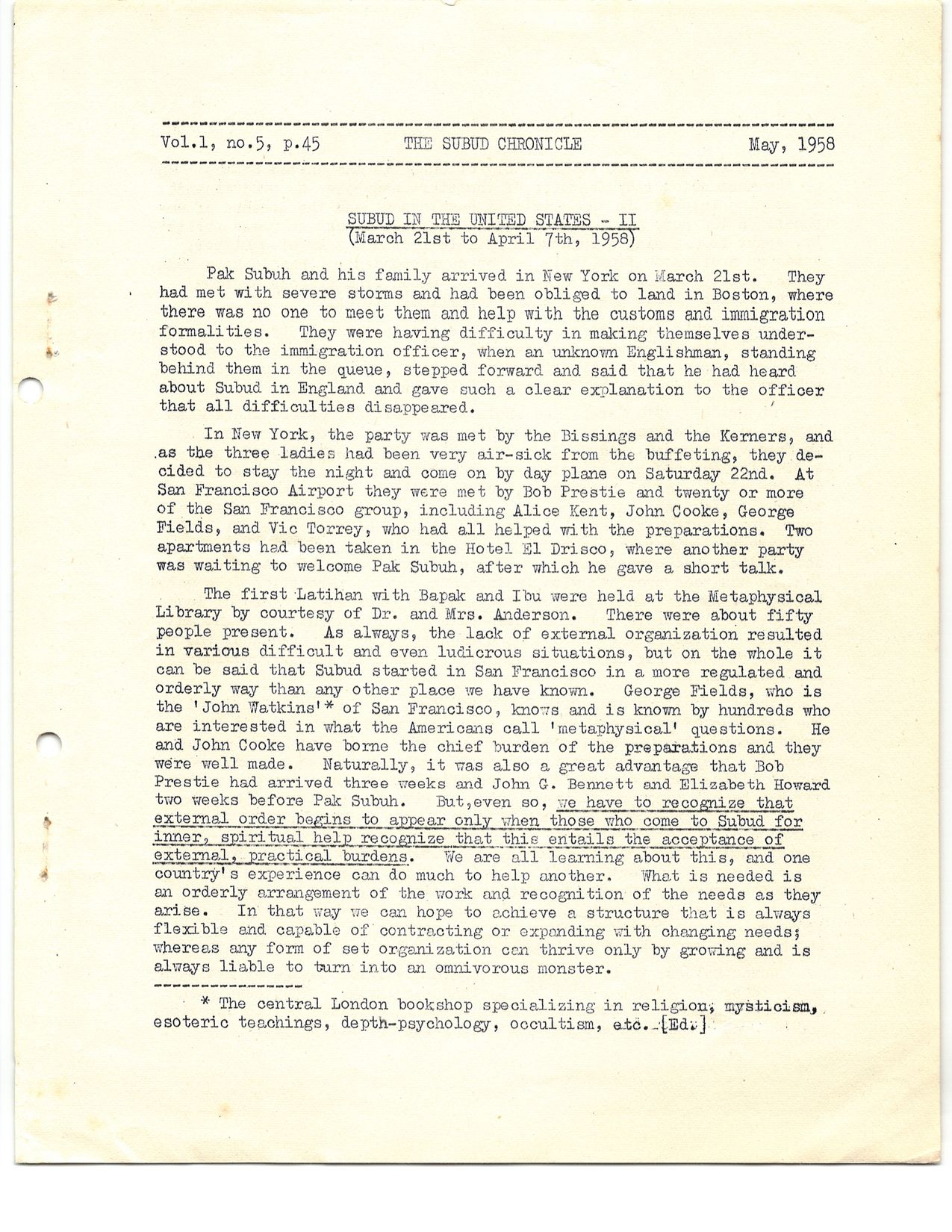
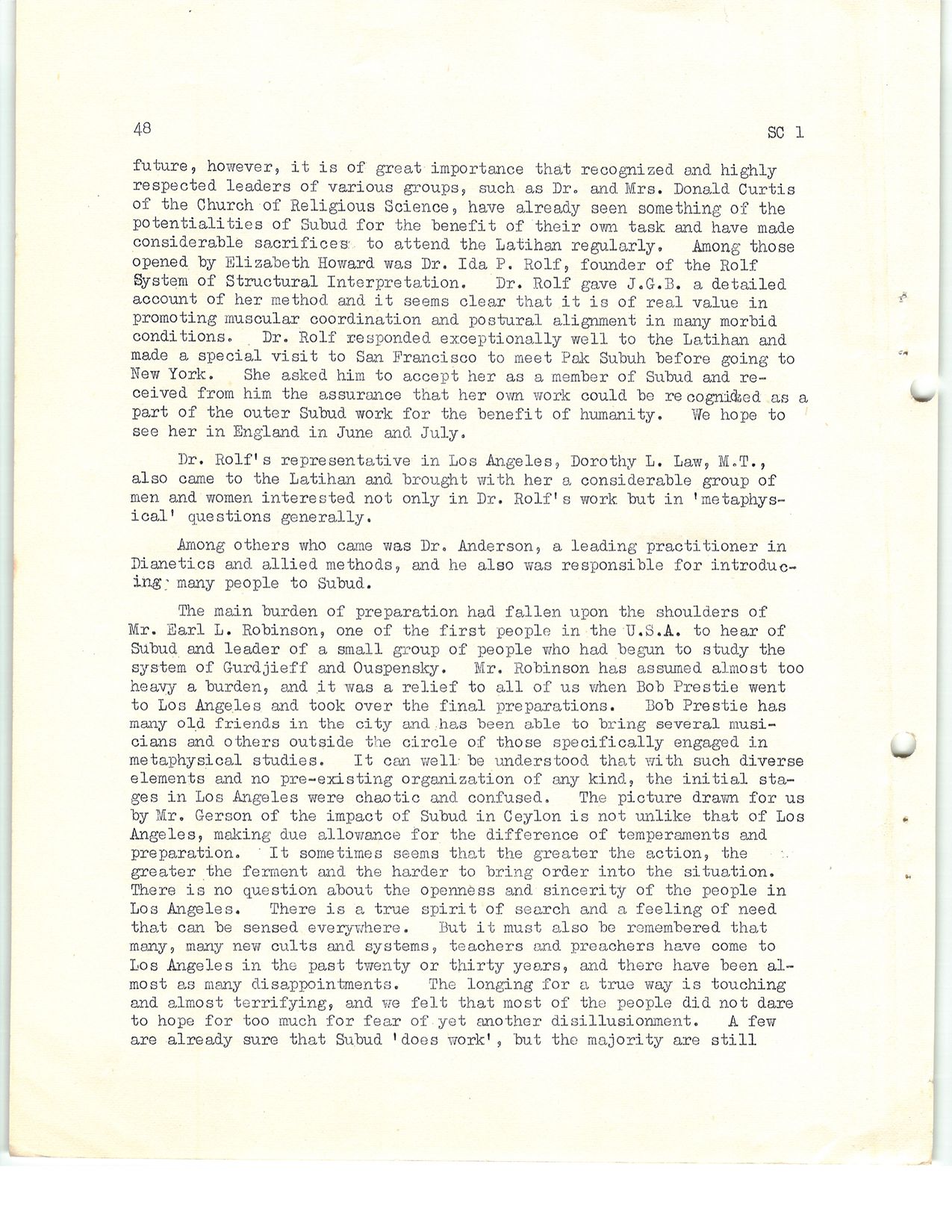
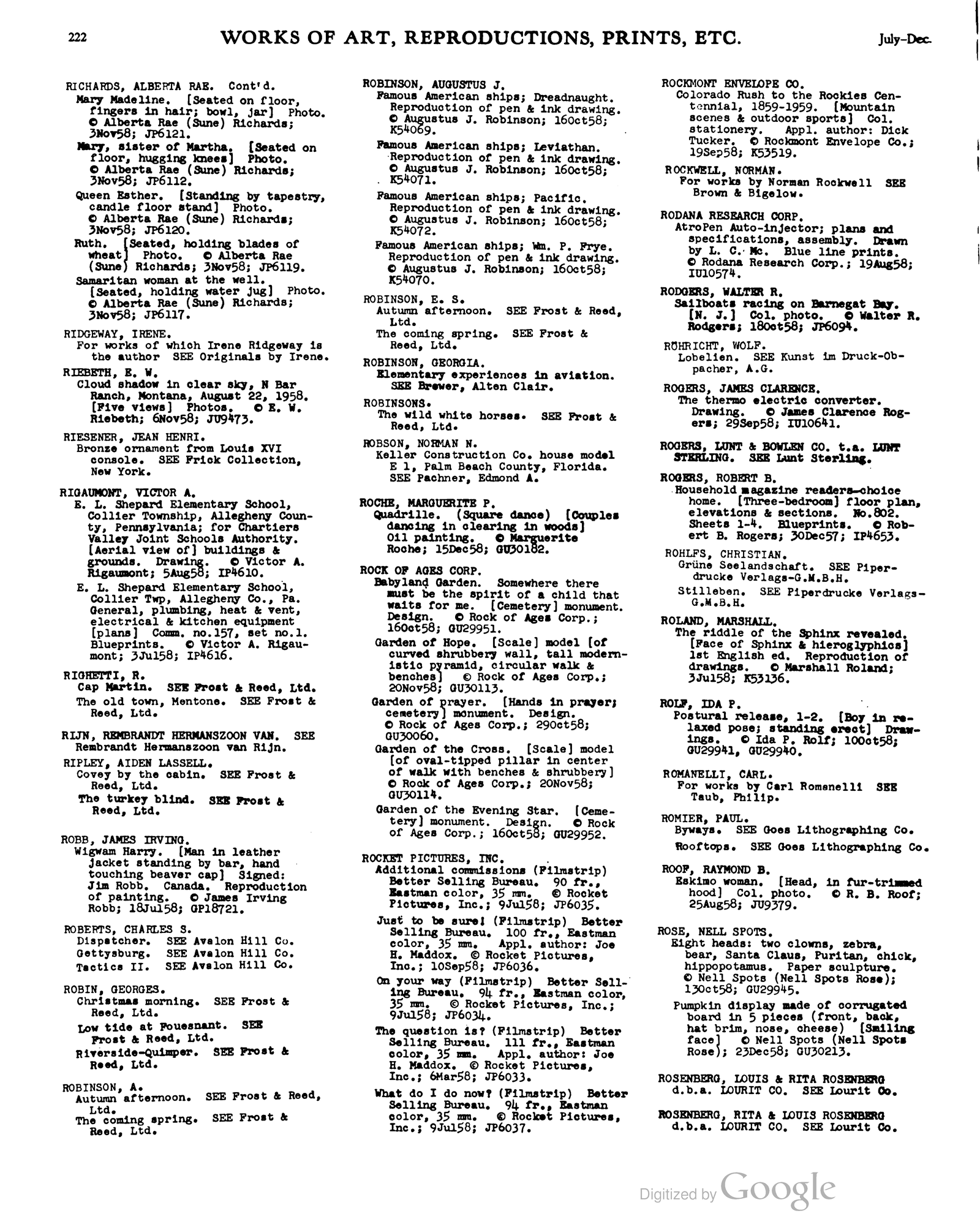
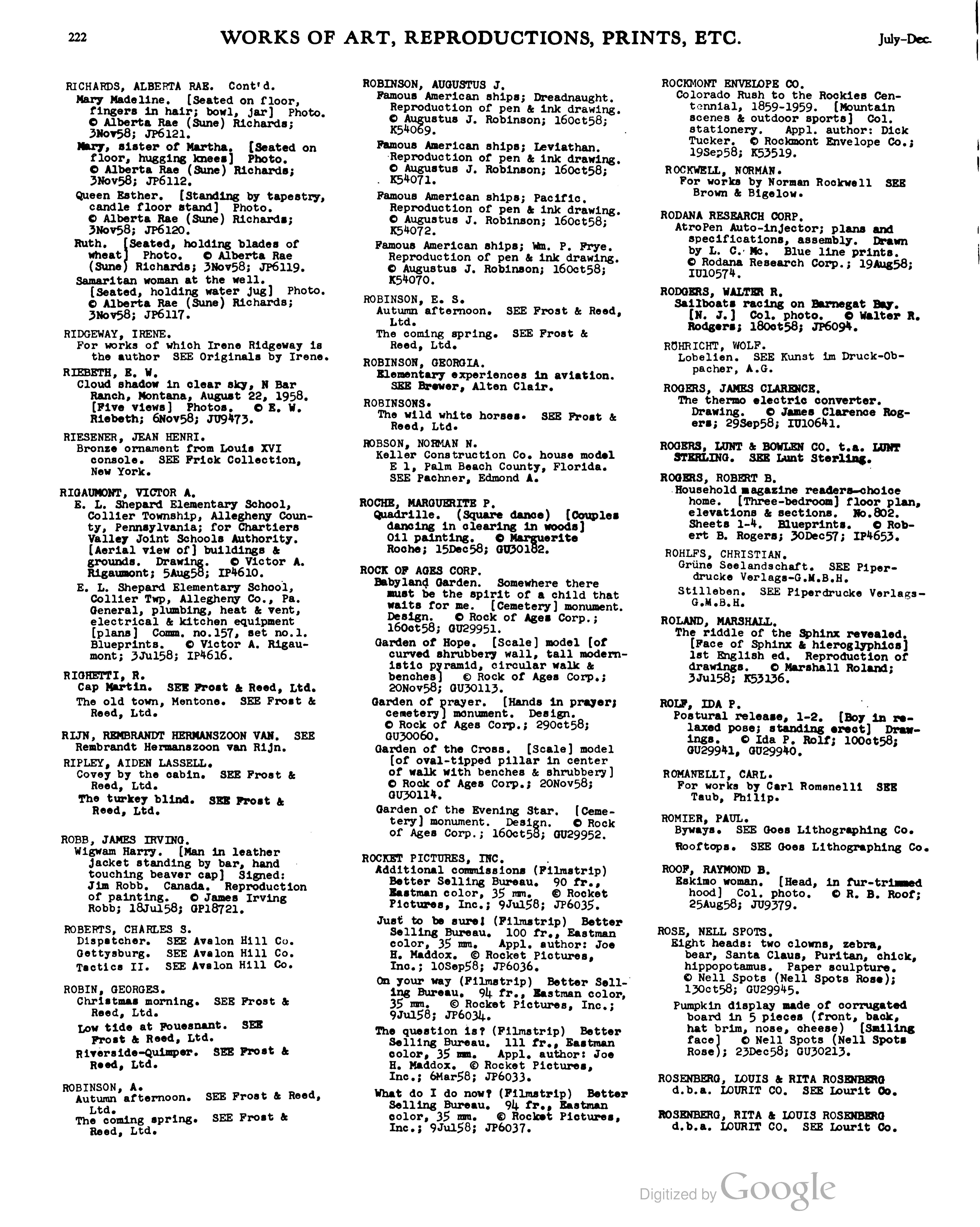
Transcription of her draft
It is obvious that this book is [above:] can merely serve as a sign post directional pointer to a [above, in pencil:] wider realm of fascinating, Exciting Explorations possibilities, physical and [above:] as well as psychological [circled, with a line back to “Explorations”]
At this point final [above:] conclusive answers are not yet available in the f objective field [above:] world of science.
In the intimate, meaningful personal world [above:] realm of feeling, [the rest of the line struck through and rewritten above as “the report … says”; in pencil, in the margin: “The enthusiastic … summarized in”] “It feels so good.” But the admonition of the Buddha [above:] himself Exhorts us admonishes us,
[struck words, then above:] But Believe when the writing, doctrine or saying is corroborated by [a struck word, and above:] your reason & consciousness.
Do not believe any thing [above:] merely because it has is been said; nor in the mere authority of [a struck word, and above:] your teachers or masters
[in pencil: at left, “Himself”, struck through; at the foot, “Even though”; a bracket draws this last sentence up toward the Buddha]
Transcription of the letter, as far as the excerpt runs
Miss Lois Katz
Sackler Collection
Metropolitain [sic] Museum of Art
Fifth Avenue at 82nd Street
New York City
Dear Miss Katz:
I’m traveling, and so don’t always get mail as promptly as I’d like. In reply to your letter of July 8th, the print to be used in Dr. Rolf’s book will be the same as the one sent you in my last letter. That was, of course, a xerox; the book will contain a full-page half-tone reproduction of the same photograph. It is to appear as a frontispiece, with a xxxx saying attributed to the Buddha. I do not have a copy of the manuscript with me, and so cannot give it to you verbatim, but it is about 100-150 words saying that one should believe not in authority but in the evidence of one’s own life and senses.
If that is insufficient, I can request that Viking send you copies of their layout, but I dislike distrubing [sic] them since the editor will be out of town for a month and it isn’t always easy to be sure someone unfamiliar with the book has understood what’s wanted.
- Book
- Ida P. Rolf, Rolfing: The Integration of Human Structures (Santa Monica: Dennis-Landman, 1977), first printing, page 8ISBN 0-930422-10-4. The admonition returns on the last page, 292.
- Photograph
- “Photo by George Connelly”, the stele in black and white, printed as a full-page halftoneFeitis’s letter calls the page a frontispiece
- The stele
- Buddha with two bodhisattvas, China, dated A.D. 516; carved stone with traces of polychrome, 184.8 × 120 × 38.1 cmBought in Paris in 1963 by Arthur M. Sackler; given by the Arthur M. Sackler Foundation to the Museum of Fine Arts, Boston in 2012, accession 2012.630
- Draft
- In Rolf’s hand, blue ink on ruled, punched paper, with pencil notesUndated; among her first notes for the book
- Letter
- Rosemary Feitis to Lois Katz, Sackler Collection, Metropolitan Museum of Art, typed; excerptDate and signature fall outside the excerpt. It answers a letter of 8 July, most likely of 1974: Viking’s layouts went out that week, and its editor planned a month away in California, as the letters of July 1974 show.
- Words
- A free retelling of the Buddha’s advice to the Kalamas, in the wording of H. P. BlavatskyAlice A. Bailey printed it in 1922 as the motto of Initiation, Human and Solar, citing The Secret Doctrine, vol. III, p. 401. Compare the Kalama Sutta, AN 3.65.
- Published
- The documents and the story of the frontispiece appear in The Basic Series in All Its AbundanceA publication of the European Guild for Structural Integration
- Rights
- The photograph on page 8 belongs to George Connelly or his heirs; the draft to the heirs of Ida P. Rolf; the letter to Rosemary Feitis; the colour photograph to the Museum of Fine Arts, BostonShown here for research and documentation. The page will take any of them down at a rights holder’s request. Blavatsky’s wording of 1897 lies in the public domain.
Rolf meant the words as a frame. Her draft sets the book down as no more than “a directional pointer” toward explorations “physical as well as psychological”, since science still lacks “final conclusive answers”. Her clients speak for the realm of feeling: “It feels so good.” Then she hands the last word to the Buddha. In print the admonition opens the book on page 8 and closes it on page 292, and every chapter in between stands inside it.
The draft speaks to the reader directly. It reads “your teachers or masters” and “your reason & consciousness”, where the printed page has “our teachers and masters” and plain “reason and consciousness”. Pencil notes, among them “Even though”, show her still turning the passage over.
Rosemary Feitis, trained by Rolf and later the editor of Ida Rolf Talks about Rolfing and Physical Reality (1978), secured the picture. The stele then belonged to Arthur M. Sackler, whose collection had its home at the Metropolitan Museum of Art, so she wrote to Lois Katz of the Sackler Collection there. It took several letters before the owners gave their approval. In this one she sums up the saying in a single line: one “should believe not in authority but in the evidence of one’s own life and senses.”
The letter also speaks of Viking’s layout and Viking’s editor, so at that stage the book lay with Viking. Two letters of the same July, Grossman’s and another of Feitis’s, tell the story of its title and its postponed date. The first edition came out in 1977 from Dennis-Landman in Santa Monica.
The stone itself comes from China and carries the date A.D. 516. The Buddha sits between two crowned bodhisattvas, his right hand raised, with a lion’s head at either side of the base. Since 2012 it has stood in the Museum of Fine Arts, Boston.
The words travelled far before they reached her. In the Kalama Sutta the Buddha tells the Kalamas not to go by reports, tradition, scripture, logic, inference, analogies or the word of a teacher, and to judge by what they know for themselves. Rolf’s text follows a much freer version almost word for word: the one H. P. Blavatsky gave in The Secret Doctrine, which Alice A. Bailey set as the motto of Initiation, Human and Solar in 1922. The deva and the closing appeal to “reason and consciousness” belong to that retelling, not to the sutta.
Later editions and the translations dropped page 8 and its stele. There the admonition survives only on the last page, as a closing thought rather than a frame.
Cite asIda P. Rolf, Rolfing: The Integration of Human Structures (Santa Monica: Dennis-Landman, 1977), 8 and 292.
Ida P. Rolf, handwritten draft, undated; Rosemary Feitis to Lois Katz, Sackler Collection, Metropolitan Museum of Art, [July 1974?], excerpt. Copies, research files of Ida Rolf – Mother of Fascia.
Interlude · 1940s to 1974
In famous company
Most of the people under her hands left no trace in the records. A few carried names the whole country knew. In the 1940s she worked on the painter Georgia O’Keeffe, and a threatened coal strike gave the two women something to talk about. A decade later O’Keeffe’s own letters find her at Abiquiu in the snow. Fritz Perls sang her praises from Esalen to both coasts, and Moshe Feldenkrais asked her to rolf him after a demonstration in England. There too she treated Lady Cripps, the widow of a Chancellor of the Exchequer. In Boulder in 1974 a young singer, the client of one of her practitioners, came to sing for her school and gave money toward a study of the work.
The 1940s
Georgia O’Keeffe and a labour leader’s neck
Rolf told this story so often that she lost track of which classes had heard it. It starts with a painter and a coal strike and ends with her hope for the work.
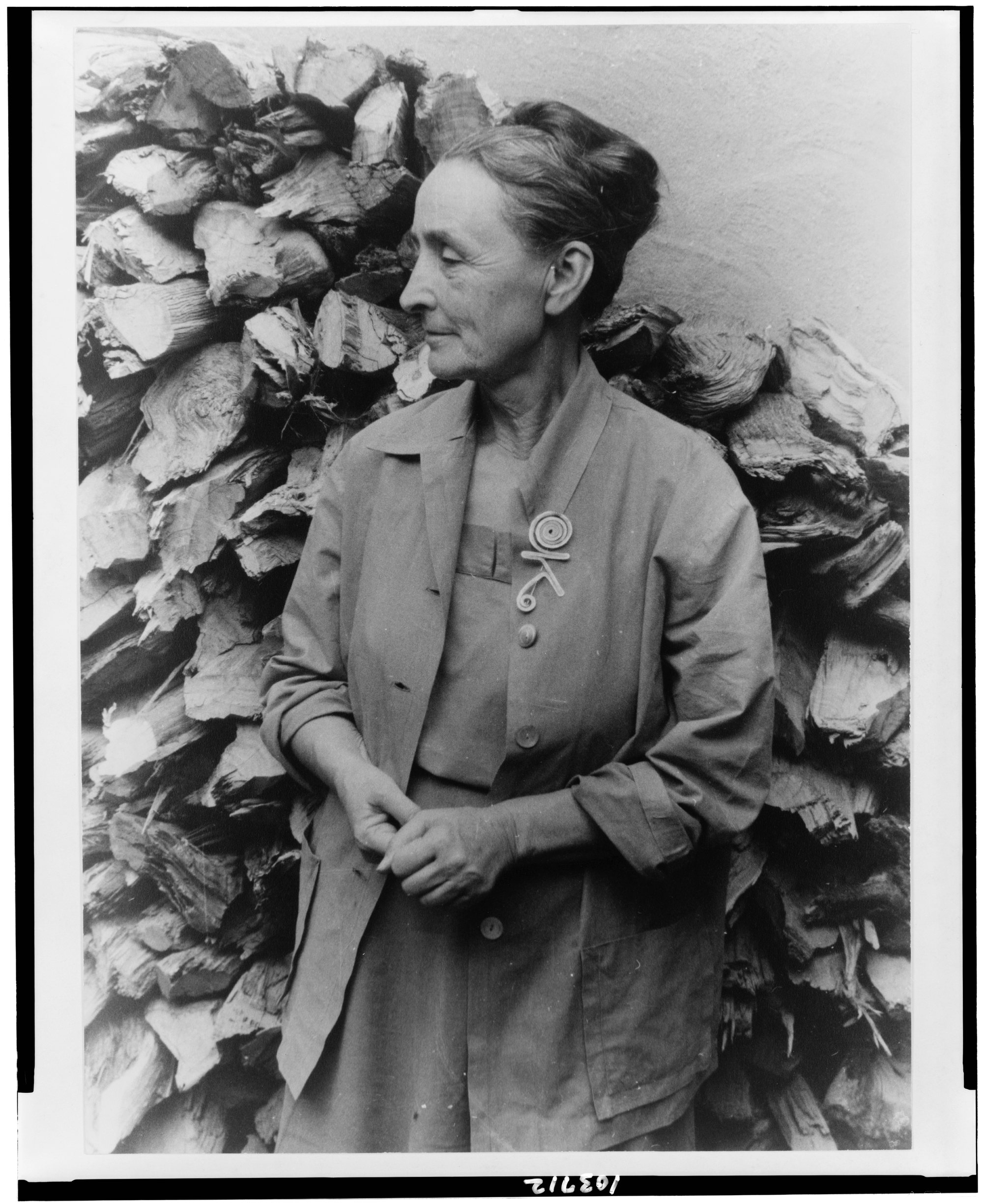
“I’ve often told you the story, or I don’t know that I’ve told this group the story, but I’ve told it so many times, about Georgia O’Keeffe. All of you know who Georgia was? One of the great, the top great American painters and artists. If a person informed in the art world what to name five of the great American artists, Georgia would be among them on every list.
At any rate, I was working on Georgia O’Keeffe, and this is way back in the 40s when John L. Lewis was the figure whose picture was on the front page of the newspapers every night. And John L. Lewis was a man with a… he had been… he started life as a miner and he looked like it. His neck was that wide and there was no neck there anyway.
And we were in the midst of a threatened strike and they were going to tie up the whole of the labour world and so forth, and Louis [Lewis] was the czar, and Georgia and I were commiserating, I was on my way out the door, and we were commiserating on what happens if the strike happens and so forth.
And she said, ‘You know, if you could just get your hands on that man’s neck, the history of the United States would change.’
And she had really said something. The more necks you get your hands on and do a good job on, the more people are going to take to settling differences by talk, by reason, by adjustment.”
- Words
- Ida P. Rolf, speaking to a class, recorded on tapeOne of the tapes of her advanced classes of 1974 to 1976, found in Emmett Hutchins’s garage, transcribed in Ida Rolf Talks in Class (2026), p. 270. The tapes carry no numbers, so the exact class stays unknown.
- The story
- The 1940s, by her own datingLewis called the coal miners out more than once in that decade, in the war year 1943 among others. Which threat she meant, the story leaves open.
- The painter
- Georgia O’Keeffe (1887–1986)Through the 1940s she divided her year between New York and New Mexico, where she settled for good in 1949
- The labour leader
- John L. Lewis (1880–1969)A coal miner in his youth; president of the United Mine Workers of America from 1920 to 1960
- Letters
- A file under Rolf’s name in O’Keeffe’s personal correspondence, 1964–1965 and 1977–1984Georgia O’Keeffe Museum, Santa Fe: Georgia O’Keeffe Foundation Correspondence Photocopies (MS-5), box 18. The originals belong to the Beinecke Rare Book and Manuscript Library, Yale. Not yet seen.
- Her later practitioner
- Jan Henry Sultan, in New Mexico“He became O’Keeffe’s rolfer in New Mexico upon referral by Dr. Ida P. Rolf,” in the museum’s description of his oral history interview with Jane Cook, 11 January 2001 (Georgia O’Keeffe Oral History Project, MS-32)
- Her library
- Rolf’s Rolfing: The Integration of Human Structures, in the Dennis-Landman edition, a signed copyIn the catalogue of O’Keeffe’s books. Among her subject files the museum lists clippings and documents “on topics of interest to O’Keeffe such as William Merritt Chase and rolfing.”
- Portrait
- Carl Van Vechten, photograph of Georgia O’Keeffe, 16 August 1950Library of Congress, Prints and Photographs Division, Van Vechten Collection, LC-USZ62-103712. Taken a year after she settled in New Mexico, close to the decade of Rolf’s story.
- Rights
- Rolf’s words belong to her heirs; the edition to Aleš UrbanczikQuoted here for documentation. The Library of Congress lists no known restrictions on publication of the portrait, and Wikimedia Commons hosts it as public domain; the Van Vechten estate asks for credit and no cropping. The page will take it down at a rights holder’s request.
O’Keeffe’s remark sounds like a joke tossed across a doorway. Rolf took it further. In her telling, the man who could halt the nation’s coal still wore his years in the mines on his neck, and the painter saw at once where history might yield to a pair of hands. Rolf drew the moral herself: every neck well worked on brings people a step closer to settling their quarrels by talking them through.
The tie between the two women outlasted that decade, as O’Keeffe’s own letters to a friend show. The Georgia O’Keeffe Museum in Santa Fe keeps copies of a file under Rolf’s name from 1964 and 1965, with a second run from 1977 to 1984; Yale holds the originals. Those later years reach past Rolf’s death in 1979, so the file may hold letters from her circle too. O’Keeffe kept a signed copy of Rolf’s book of 1977 on her shelves. In New Mexico, as the museum records it, Jan Sultan became O’Keeffe’s Structural Integration practitioner on Rolf’s own referral.
Cite asIda P. Rolf, advanced class, 1974–1976, in Ida Rolf Talks in Class: Advanced Classes 1974–1976, ed. Aleš Urbanczik (2026), 270.
“Rolf, Ida P., 1964–1965, 1977–1984,” Georgia O’Keeffe Foundation Correspondence Photocopies, MS-5, box 18. Georgia O’Keeffe Museum, Santa Fe.
Jan Henry Sultan, interview by Jane Cook, 11 January 2001, Georgia O’Keeffe Oral History Project, MS-32. Georgia O’Keeffe Museum, Santa Fe.
1955 to 1966
A turn with Rolf
For more than a decade Georgia O’Keeffe wrote to a friend about Rolf. Charles Wickham Moore, Wick to her, divided his years between St. Louis and Paris, and she never gave up coaxing him out to New Mexico. Her letters to him, 115 of them, reached the Georgia O’Keeffe Museum in 2006. Rolf’s name comes up twenty-two times between 1955 and 1966. Again and again O’Keeffe hands Wick the same advice: “find out where she is and follow her.”
- Letters
- Georgia O’Keeffe to Charles Wickham Moore, about 1949 to 1982, 115 lettersGeorgia O’Keeffe Museum, Santa Fe: Letters to Charles Wickham Moore (MS-11), given by Frances Moore Gagarin in 2006. Moore’s side of the correspondence belongs to the Beinecke Rare Book and Manuscript Library, Yale.
- 1955
- 21 March, from the Hotel Weylin in New York; 18 NovemberRolf sends her to a teacher of eye exercises; later in the year O’Keeffe rates Rolf above the osteopath who keeps her going at home
- 1956
- 3 February, 6 February, 21 February, 24 February, 7 March, 12 October, 7 November, 6 December, 21 DecemberRolf’s two visits to Abiquiu, then her road through Kansas City and Abilene, Texas
- 1958
- 14 September, 11 November, and a note on the back of her photograph of the patio, most likely written in the last days of DecemberA visit promised for October that fell through
- 1959 and 1960
- 28 November 1959, 27 November 1960She means to write to Rolf; a year later a man in Santa Fe looks after her instead
- 1964 to 1966
- 21 November 1964, 17 July 1965, 7 October 1965, 28 August 1966Two weeks of work in New York in 1964 and a second round in 1965. In 1966 she wonders whether Wick went to London “for Rolf”.
- Dates
- Two of these carry other dates in the museum’s catalogueThe Weylin letter, headed “Monday Mar 21 or 22” and catalogued as 1956, most likely dates from 1955. That year 21 March fell on a Monday, and her letters of February 1955 put her in New York from mid-March, while in March 1956 she meant to leave for Peru on the 20th. The note on the photograph, catalogued with the picture as 1956 or 1957, follows Rolf’s promise to come “at the turn of the year” in the letter of 11 November 1958.
- Read
- All 200 scans of the collection, on 11 November 2026The catalogue gives each scan a date but no transcription, so no word search finds her
- Rights
- O’Keeffe’s letters belong to the holders of her copyrightThe page quotes a few words of them, for documentation, and links each letter to the museum’s own scan. It removes the quotations at a rights holder’s request.
The earliest dated trace comes from a New York hotel in March 1955. O’Keeffe wanted help with her eyes, found no one in town to treat them and wired Rolf, who sent her on to a teacher of eye exercises. She took it for granted that Wick would come to town for a couple of weeks under Rolf’s hands.
Early in February 1956 Rolf arrived at Abiquiu “in most unexpected fashion”. For a few days she worked on O’Keeffe daily, three hours at a stretch, in the painter’s small room, with the world outside white with snow. Then the two women went out to O’Keeffe’s house at the Ghost Ranch and walked in from near the gate through ten inches of it. O’Keeffe felt “all done over” and teased Wick for missing his chance. Rolf came back before the month ran out and stayed from a Wednesday night to a Sunday noon, 29 February to 4 March.
Wick went where O’Keeffe sent him. Late in 1956 he found Rolf in Kansas City, and O’Keeffe tried to lure him on to Abilene, Texas, where she meant to see Rolf herself in January. Early in 1957 Rolf and Wick both stayed in her house at Abiquiu. That summer O’Keeffe guessed her “in England or Scotland”. A visit Rolf promised for October 1958 fell through.
By 1960 O’Keeffe had a man in Santa Fe to keep her in shape, and on a trip to New York that September she made no attempt to see Rolf. She knew the difference all the same: “His working is very mild compared to hers.”
By 1964 she had found her way back to the stronger hands. In November of that year she came home from two weeks in New York and “much work with Rolf”, and told Wick, “I feel like a different person.” Late in the summer of 1965 she spent two months in her garage, from six in the morning into the evening, on one huge canvas, most likely Sky Above Clouds IV. Then she planned “a turn with Rolf” in New York for November, sure it would set her right. She had cause for her faith. Weeks before she started that canvas, on a freighter bound for Houston after a month above 11,000 feet in Peru, she had written that Rolf’s work on her still held, and added: “It always surprises me.”
Cite asGeorgia O’Keeffe to Charles Wickham Moore, 21 March [1955] to 28 August 1966, Letters to Charles Wickham Moore, MS-11. Georgia O’Keeffe Museum, Santa Fe.
The 1950s, in England
A chancellor’s widow
Rolf mentioned her in passing, while telling a class about the Alexander Technique and its friends in high places.
“I knew Lady Cripps, in fact I treated her once or twice, and she left me to go to Africa to visit a daughter once that was married to one of the politicians down in Kenya or something.”
- Words
- Ida P. Rolf to a class, 1970, on audio tapeThrough Emmett Hutchins; also in Joel Gheiler’s Ida Rolf Archive. Quoted from a transcript.
- The client
- Isobel, Lady Cripps (1891–1979)Widow of Sir Stafford Cripps (1889–1952), Chancellor of the Exchequer from 1947 to 1950, whose household backed the Alexander Technique
- The daughter
- Peggy Cripps married the Ghanaian lawyer and politician Joe Appiah in 1953 and settled in KumasiSo “Kenya” in Rolf’s memory most likely stands for Ghana
- Other records
- None found yet
Two lines, told twenty years on, and the geography slipped. Her daughter Peggy had married Joe Appiah in 1953 and made her home in Kumasi, in Ghana, a continent’s width from Kenya. The rest holds together: Rolf taught summer courses in England through the 1950s, and Lady Cripps travelled to Africa to see her daughter. The visit that took her away from Rolf’s table most likely fell after 1953.
Cite asIda P. Rolf, class, 1970, audio tape (via Emmett Hutchins), on F. M. Alexander.
A singer in Boulder
The Rolf Institute held its annual meeting in Boulder in 1974, and one guest brought a guitar. Somebody held up a camera; nobody now remembers who.
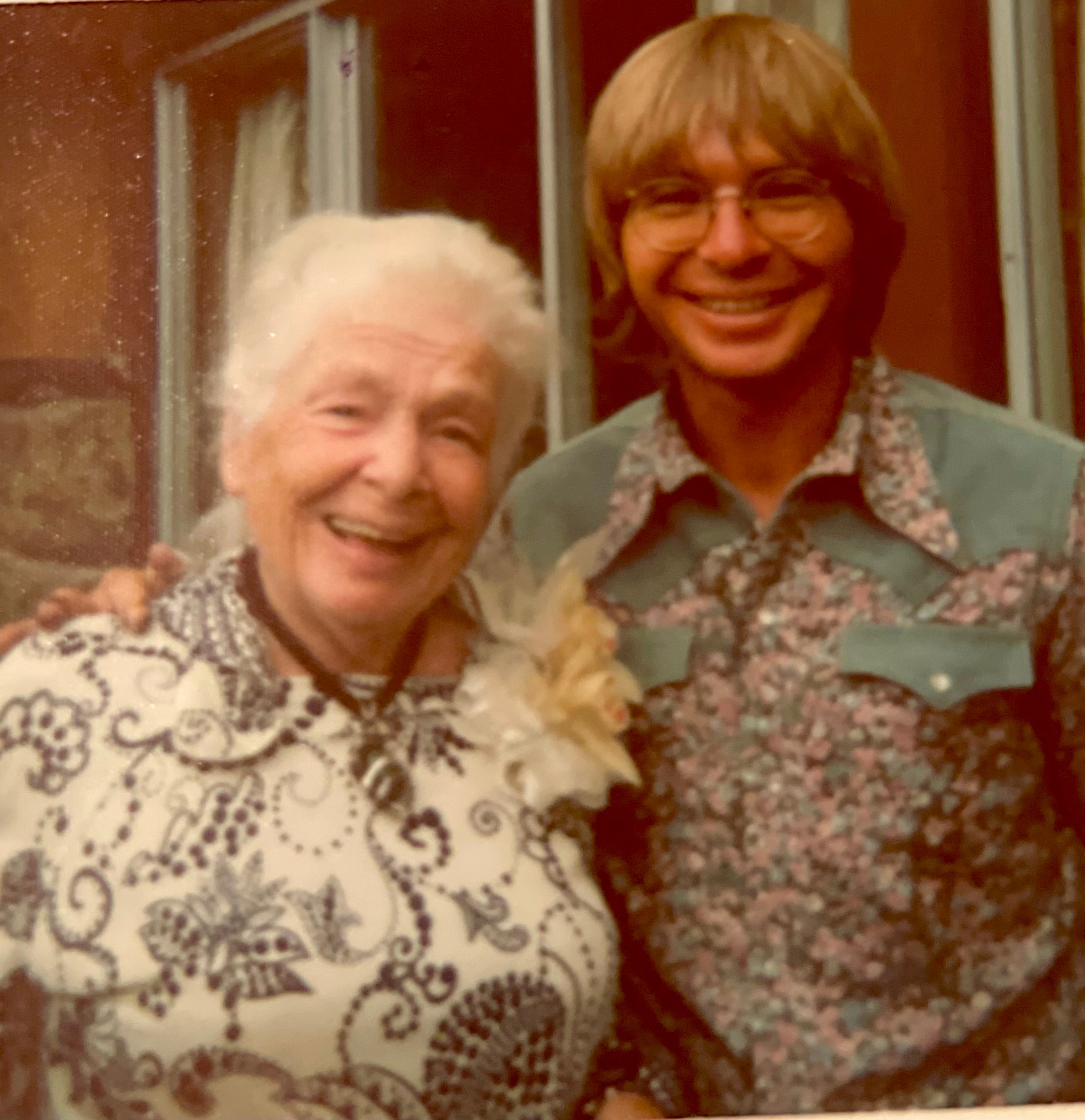
- Photograph
- Ida P. Rolf and John Denver, side by sideA colour print, photographed for this page. Nobody asked so far remembers who held the camera.
- Date and place
- Boulder, Colorado, 1974As the Dr. Ida Rolf Institute’s journal captions a photograph of the two, “courtesy of Joy Belluzzi” (Structure, Function, Integration 52, no. 2, December 2024, p. 9)
- His practitioner
- Patrick Clough, AspenDenver took the ten sessions from him in 1973, Clough’s first year of practice
- Account
- Mandy Cheek and Patrick Clough, “Meet My Rolfer: Patrick Clough”Structure, Function, Integration 52, no. 2, December 2024, pp. 6–12
- The study
- V. V. Hunt and W. Massey, “A Study of Structural Integration from Neuromuscular, Energy Field & Emotional Approaches”Research report submitted to the Rolf Institute, UCLA Department of Kinesiology, 1977
- Rights
- Photographer unknownShown here for documentation, as a record of the meeting, not as an endorsement. The page will take it down at a rights holder’s request.
John Denver lived in Aspen, high in the Colorado Rockies. In 1973 he and most of the people who travelled with him took the ten sessions from Patrick Clough, then new to practice in the town. A year later, during the Rolf Institute’s advanced training in Boulder, Clough asked him to the annual meeting as a guest. Denver said yes and played a house concert for the gathering in a rented fraternity house. In the words of the Institute’s journal, he “became the Rolfing community’s most famous early supporter.”
He also invited Clough and Rolf to his concert at Red Rocks, the open-air theatre in the red sandstone above Morrison, west of Denver. Clough worried about the long climb of steps for a woman close to eighty. She would hear of no help and climbed them herself.
On the drive to the meeting Denver offered to buy Clough a house. Clough asked him to put the money into research instead: “If you contribute to the research project, you might make Rolfing available to thousands more people.” Denver gave fifty thousand dollars to Valerie Hunt’s project at the University of California, Los Angeles, and in 1977 her team handed its report to the Rolf Institute.
As far as the records show, Denver never lay under Rolf’s own hands; his sessions came from a practitioner of her school. The photograph keeps something else. A teacher near the end of a long road laughs beside a young star who had felt her work in his own body and wanted the world to hear of it.
Cite asIda P. Rolf and John Denver, Boulder, Colorado, 1974, photograph, photographer unknown. Research files of Ida Rolf – Mother of Fascia.
Mandy Cheek and Patrick Clough, “Meet My Rolfer: Patrick Clough,” Structure, Function, Integration 52, no. 2 (December 2024): 6–12.
Chapter VIII · 1976 to 1979
Last years and farewell
At eighty she still opened her institute’s annual meeting and closed it too. The year’s plans came from her. A year on she signed her portrait for a long time “rolfer” and friend. When practitioners in New York found her a healer, she said no. She had completed her assignment here. In her last week a visitor from San Francisco sat with her and wrote down what passed between them. Then the Times told her story in print, less than three years after that meeting, and a stone in the Bronx took her name beside Walter’s. When the news reached an old friend, he wrote.
to
The message of August 1976
In August 1976 the Rolf Institute met in Mill Valley, north of San Francisco. Ida Rolf had turned eighty in May, and her book had nearly reached its readers. She spoke first and she spoke last. Both talks went into print as her “Annual Meeting Message”.
“As rolfers we shall not soon outlive our indebtedness to that extraordinary genius Fritz Perls.”
“Rolfing is, after all, the modern successor of the old ideas of Hatha Yoga. We share with them the premise that structure gives rise to behavior and determines its direction.”
“With our present greater understanding (thanks to Lewis Schultz & Company) of the fascial connective tissue web which is the structure of a human, we begin to understand why this is so and how this is so, and more importantly how to release it.”
“However, of all the instruments yet devised or explored for the evaluation of the human body and its components a really competent rolfer is by all odds the most competent, the most accurate, the most useful.”
- Document
- “Dr. Ida P. Rolf’s 1976 Annual Meeting Message”Opening and closing remarks, “Presented at the Annual Meeting of the Rolf Institute August 13-16, 1976 in Mill Valley, California”
- Printed in
- Pages 8 to 16 of a publication not yet identifiedThe scan carries no masthead; Pedro Prado’s online library of Rolf’s texts lists it only under “Other publications and resources”
- On tape
- The opening as she spoke it: Four people in a motel roomTape IPRCON1 at bostonrolf.com; the spoken and printed wording differ in places
- Rights
- Her words belong to her heirsQuoted briefly, for documentation; removed at once should the heirs or the Dr. Ida Rolf Institute object
The opening looks back to the friends who carried the work before it had a school or a market, from Rosemary Feitis and her “endless re-writing” of the book onward: the same people she names in the story of the motel room. Print and tape differ in small ways. In print her son Dick Demmerle takes out licences in “six or seven states” to give demonstrations; on the tape she counts seven or eight. The baths at Esalen keep their place in both versions: when word reached her that rolfing had displaced sex as the talk of the baths, “then I knew we had it made!”
Then she looks ahead, and fascia moves to the centre. Lewis Schultz and Ron Thompson had begun to chart how the large fascial planes interlock, and she wants Structural Integration practitioners to feel those planes with their hands rather than learn their names. The advanced classes teach exactly that. She speaks of the energy studies of Valerie Hunt, of a study of children with cerebral palsy at Rancho Los Amigos, and she asks every Structural Integration practitioner to give some hours a week “pro bono publico”, in detention institutions and in schools.
The line on Hatha Yoga reaches back forty years, to her Saturday nights in Nyack. She keeps the yogis’ premise and parts from their method. Their exercises compressed the joints, she says; rolfing sets out to extend them, so that the extensors lengthen while the flexors work.
Cite asIda P. Rolf, “Dr. Ida P. Rolf’s 1976 Annual Meeting Message,” opening and closing remarks, annual meeting of the Rolf Institute, Mill Valley, California, 13 to 16 August 1976, printed pp. 8–16 (publication not yet identified).
Signed
Inside the little-old-lady suit
A studio portrait from her last years, signed for Emmett Hutchins, a Structural Integration practitioner who taught her work for decades. After Emmett’s death his life partner, Wayne Hackett, gave the framed print to Aleš Urbanczik.
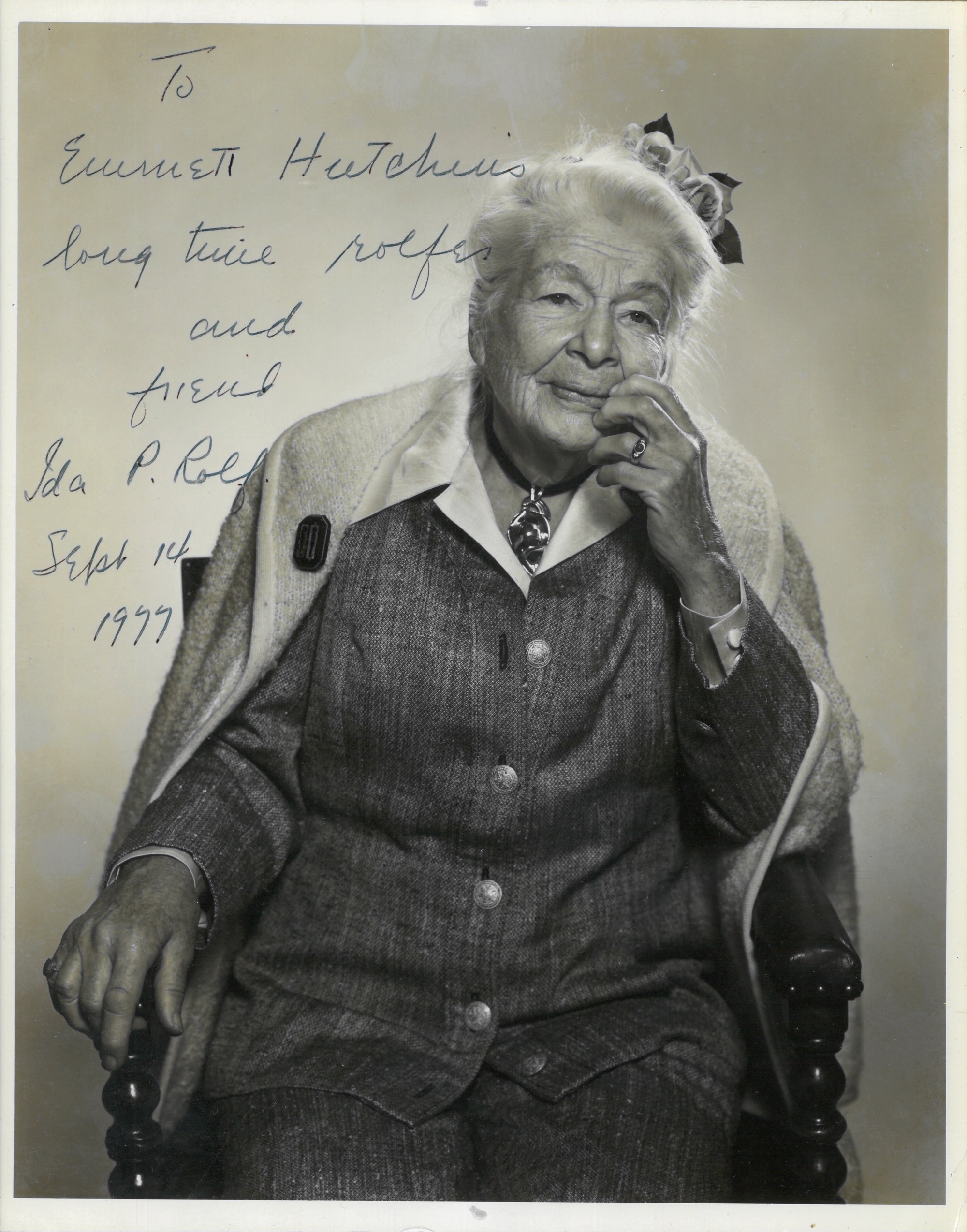
Transcription of the inscription
To
Emmett Hutchins
long time rolfer
and
friend
Ida P. Rolf
Sept 14
1977
“Our joke was that inside her little-old-lady-suit was a Mack truck, but inside the Mack truck was a Bodhisattva, an angel, a realized being.”
- Photograph
- Ida P. Rolf, studio portrait, black and white, dedicated and signed in ink
- Date
- Signed 14 September 1977The sitting itself may have taken place earlier
- Photographer
- Most likely Ron ThompsonNot yet confirmed; no stamp shows on the front. Whether he and the practitioner Ron Thompson of her 1976 message share more than a name still waits for an answer.
- Held by
- Aleš UrbanczikA gift from Wayne Hackett, Emmett Hutchins’s life partner. Shown from a scan of the framed print, cropped to the print.
- Rights
- Photographer’s rights not yet clearedShown here for research and documentation. The page will take the image down at a rights holder’s request.
She sits in a wooden armchair with turned spindles, a cardigan laid loose over her shoulders. Under it she wears a tweed suit buttoned to the waist, and someone has pinned a silk rose into her white hair. One hand rests on the arm of the chair. The other props her chin, and she looks at the lens with the patience of a woman who has heard every question before and still finds a few of them amusing.
Ed Maupin, a psychologist among her students, caught her in one sentence. The little old lady sat in plain view. The Mack truck had pushed a new idea about the body through half a century of indifference, and the students who felt her hands knew its weight. The third layer, the one he could only call a Bodhisattva or an angel, shows best in a picture like this one, in the quiet face above the hand.
She signed it eighteen months before her death, in the year her book Rolfing finally appeared.
Cite asIda P. Rolf, studio portrait, signed “To Emmett Hutchins, long time rolfer and friend”, 14 September 1977; photographer most likely Ron Thompson. Collection of Aleš Urbanczik, gift of Wayne Hackett.
Ed Maupin, in Rosemary Feitis and Louis Schultz, eds., Remembering Ida Rolf (Berkeley: North Atlantic Books, 1997), p. 27.
In her last years; told in
“I’ve completed my assignment here”
Her eyes gave out before her wit did. In November 1977 she called herself “a legally blind citizen of the state of New Jersey”, and Jason Mixter read to her. One day the reading gave way to talk, and he set the conversation down for Remembering Ida Rolf, the book of memories that Rosemary Feitis and Louis Schultz gathered in 1997. She named her illness to him without ceremony. He answered awkwardly, as people do, and hoped it gave her little pain.
“You know, Jason, I have colon cancer.”
“It’s not too bad,” she said, “but, you know, these New York Rolfers have a healer they want me to see. They think he can help me.”
“No, no, no,” she said, “I know healers that are much better than these boys.”
“No, no, no” (three of her most favorite words, by the way), “I’ve completed my assignment here. I just want to know what my next assignment is.”
- Memoir
- Jason Mixter, in Rosemary Feitis and Louis Schultz, eds., Remembering Ida Rolf (Berkeley: North Atlantic Books, 1997)Page not yet noted
- Date
- UndatedHe gives no year. She knew of her illness by then and could no longer read for herself. She died on 19 March 1979.
- Her eyes
- “A legally blind citizen of the state of New Jersey”Her words, in an interview by Sydney Claire Vilen, 26 November 1977, typed transcript, Rolf Institute historical files
- Rights
- Copyright in the memoir rests with its author or his heirs, and with the publisherQuoted briefly, for research and documentation. The page will take the quotation down at a rights holder’s request.
Between her first “No, no, no” and her second, he made an offer. Her talk of better healers had hooked him. He looked across at the silver-haired woman he had at times hated and had come at last to love, and he said he would take her to them that day, or any day she named.
A scientist to the end, she did not ask whether another assignment would follow. She asked what.
Cite asJason Mixter, in Rosemary Feitis and Louis Schultz, eds., Remembering Ida Rolf (Berkeley: North Atlantic Books, 1997).
Ida P. Rolf, interview by Sydney Claire Vilen, 26 November 1977, typed transcript, Rolf Institute historical files.
to
“More of you than there is in the bed”
In her last week a psychologist from San Francisco came to the nursing home in Bryn Mawr to interview her for a biography. He found her near the end and still in charge, and he wrote down what passed between them.
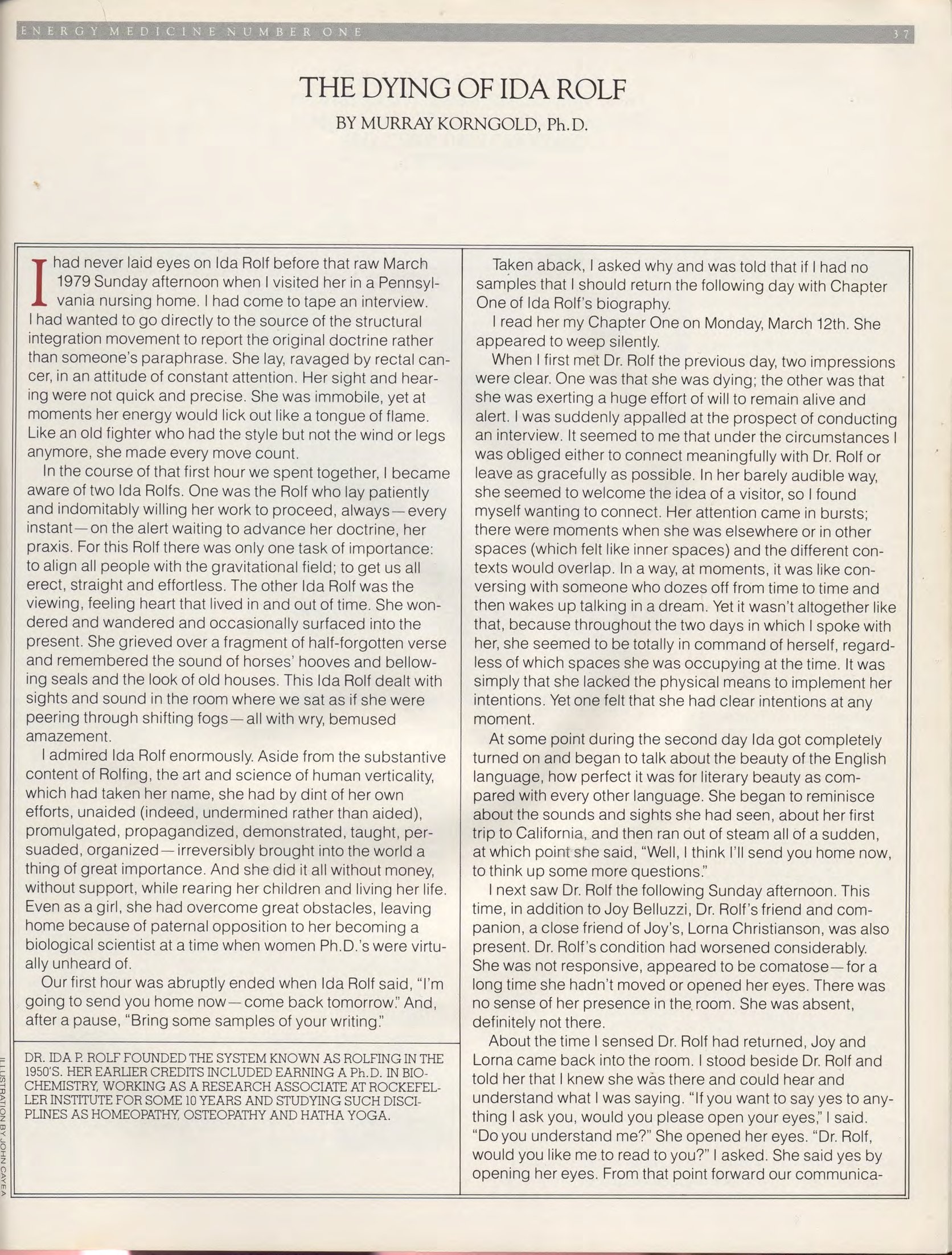
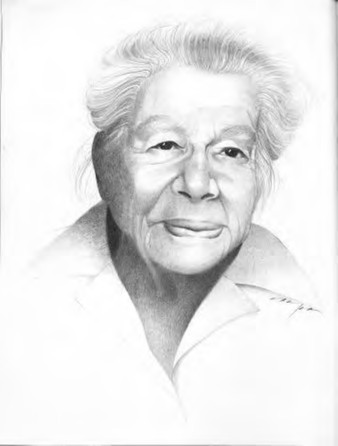
“Like an old fighter who had the style but not the wind or legs anymore, she made every move count.”
“For this Rolf there was only one task of importance: to align all people with the gravitational field; to get us all erect, straight and effortless.”
“Well, I think I’ll send you home now, to think up some more questions.”
“Are you aware that there is more of you than there is in the bed?” She said yes.
Transcription, in part
ENERGY MEDICINE NUMBER ONE 37
THE DYING OF IDA ROLF
BY MURRAY KORNGOLD, Ph.D.
[note at the foot of the left column:] DR. IDA P. ROLF FOUNDED THE SYSTEM KNOWN AS ROLFING IN THE 1950’S. HER EARLIER CREDITS INCLUDED EARNING A Ph.D. IN BIOCHEMISTRY, WORKING AS A RESEARCH ASSOCIATE AT ROCKEFELLER INSTITUTE FOR SOME 10 YEARS AND STUDYING SUCH DISCIPLINES AS HOMEOPATHY, OSTEOPATHY AND HATHA YOGA.
[up the left margin:] ILLUSTRATION BY JOHN CAYEA
[page 38, beneath a photograph of Rolf in bed, not shown here:] AUTHOR KORNGOLD TOOK THIS PHOTOGRAPH OF DR. ROLF DURING HIS INTERVIEW WITH HER IN A BRYN MAWR, PENNSYLVANIA NURSING HOME.
[page 38, beside his portrait:] MURRAY KORNGOLD, A SAN FRANCISCO PSYCHOLOGIST, EXTRAORDINARY RACONTEUR AND, UNTIL 1948, A SUCCESSFUL HOLLYWOOD FILM WRITER, HAS PURSUED STUDIES IN MIND CONTROL, ACUPUNCTURE AND PARAPSYCHOLOGY. […]
- Article
- Murray Korngold, Ph.D., “The Dying of Ida Rolf”, Energy Medicine, Number One, pp. 37–38Illustration by John Cayea. The year of the issue, 1979 or later, still eludes us.
- Reprint
- “The Passing of Ida Rolf”, Structural Integration (Dr. Ida Rolf Institute) 37, no. 1 (March 2009): 22–23After the issue’s contents as listed by Pedro Prado. The same issue carries Dan Gentry’s memories of his father, pp. 15–17 (see the portrait of the two).
- Dates
- Sunday 11 March, Monday 12 March and Sunday 18 March 1979He names Monday, 12 March; the other days follow from it. She died “the next day”, Monday 19 March, the day the New York Times gives.
- Place
- A nursing home in Bryn Mawr, PennsylvaniaAs his photograph’s caption and the obituary both give it
- Not shown
- His photograph of Rolf in bed, page 38Left off this page out of respect for her; the transcription gives its caption.
- Copy
- Scan of the magazine pages, research files of Ida Rolf – Mother of FasciaDownloaded by Aleš Urbanczik years ago; the file dates from April 2008.
- Rights
- Copyright in the article and the drawing rests with their authors or their heirsQuoted briefly, and page 37 shown, for research and documentation. The page will take them down at a rights holder’s request.
Murray Korngold came “to tape an interview” and to go “directly to the source”. After an hour she sent him home with homework: “Bring some samples of your writing.” He had none with him, so the next day he read her the first chapter of the biography he had begun. “She appeared to weep silently.”
He met two Ida Rolfs in that room. One still worked, every instant on the alert to advance her teaching, and for her only one task counted: to bring people into line with gravity. The other drifted through memory, among horses’ hooves and bellowing seals, among old houses and her first trip to California. On the second day she came fully alive and spoke of the beauty of the English language, until her strength ran out and she dismissed him, as a teacher dismisses a class.
A week later she could answer only by opening her eyes. Joy Belluzzi, whom he calls her friend and companion, sat with them, together with Joy’s friend Lorna Christianson. Korngold read aloud from Itzhak Bentov’s Stalking the Wild Pendulum, then found himself simply talking to her. When he asked whether more of her lived than lay in the bed, she opened her eyes. Afterwards the room felt to him “peacefully empty”. She died the next day.
The magazine’s note and a few of his lines rest on what he had heard rather than on records. No document so far shows her leaving home against her father’s wishes, and her years at the Rockefeller Institute, 1917 to 1926, come to about nine. What his pages give instead, no record could: the last days of a woman who set homework to the end.
Cite asMurray Korngold, “The Dying of Ida Rolf,” Energy Medicine, Number One, pp. 37–38; reprinted as “The Passing of Ida Rolf,” Structural Integration 37, no. 1 (March 2009): 22–23.
Headstone at Woodlawn Cemetery
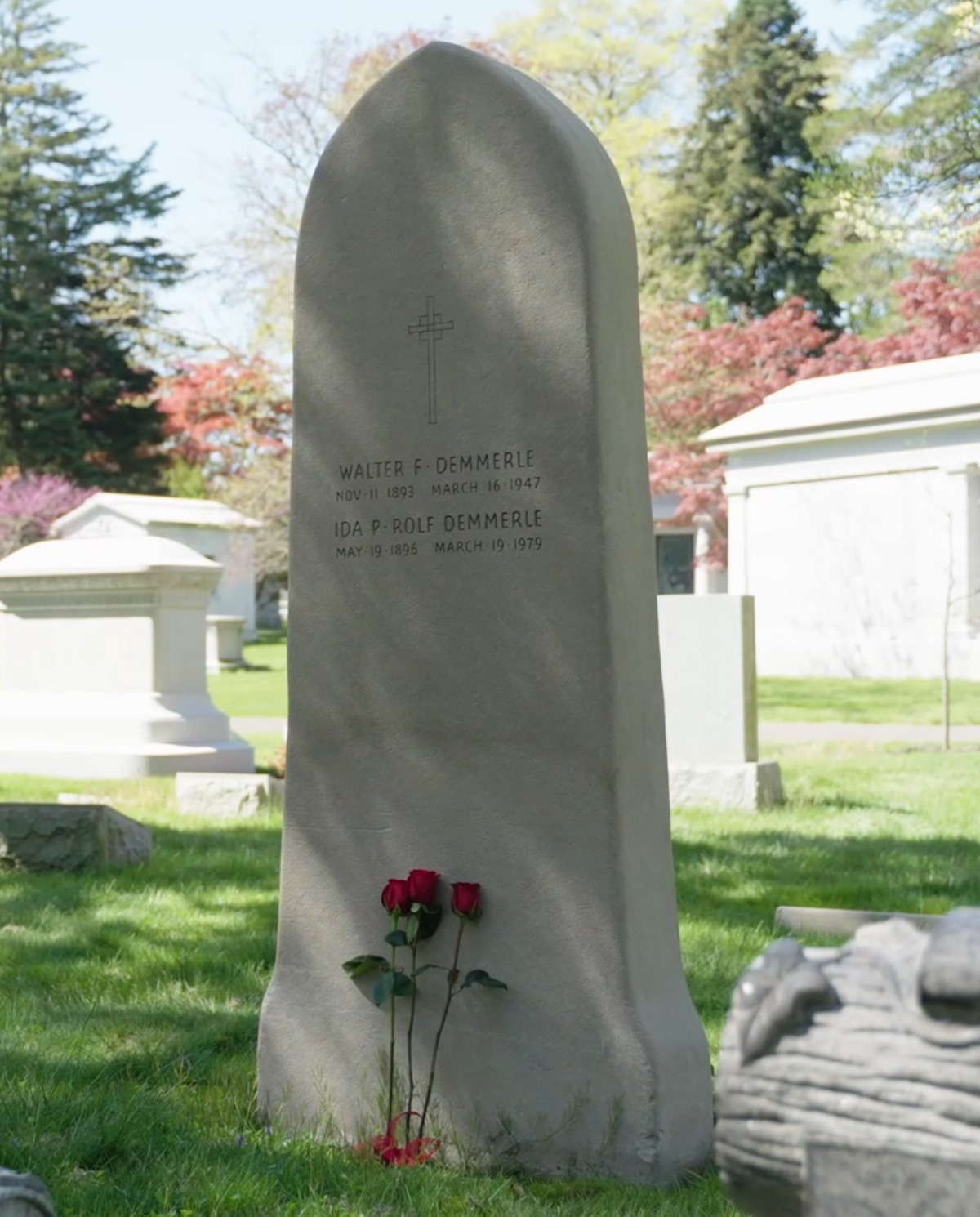
Inscription
[carved cross]
WALTER F · DEMMERLE
NOV · 11 · 1893 MARCH · 16 · 1947
IDA P · ROLF DEMMERLE
MAY · 19 · 1896 MARCH · 19 · 1979
[cut in capitals, with dots between the words]
- Object
- Headstone shared by Ida P. Rolf and her husband, Walter F. Demmerle
- Place
- Woodlawn Cemetery, Bronx, New YorkSection 113, Holly plot, lot 10831, the lot of her parents’ graves; the cards locate the stone “2 fr Park Ave. 5 S fr. 6′ space”
- Finding it
- Section 113, on the south side of Park AvenueOn Woodlawn’s map the Holly plot lies between Park, Larch and Elder Avenues, near the grave of the Civil War general Franz Sigel. The cemetery office hands out the map
- Burial
- Both cremations in the foundation of the monument, 20 April 1979Woodlawn Cemetery, interment cards no. 260744 (Walter F. Demmerle, died at South Nyack on 16 March 1947, aged 53 years, 4 months and 5 days) and no. 260745 (Ida P. Rolf, died at Bryn Mawr on 19 March 1979, aged 82), and the lot card
- Rights
- The inscription records names and dates, which copyright does not coverPhotograph by Aleš Urbanczik and Grzegorz Oleksa, 2024. Free to use, provided the credit names both and links to motheroffascia.com: “Photo: Aleš Urbanczik and Grzegorz Oleksa, motheroffascia.com”. On Wikimedia Commons under the CC BY-SA 4.0 licence.
She outlived her husband by thirty-two years, and only then did his ashes come to Woodlawn. On 20 April 1979, a month after her death, the cemetery set his ashes and hers together into the foundation of this stone, in the lot where her parents lie. The stone calls her Ida P. Rolf Demmerle, close to the name she gave in Zurich in 1926, and spans her life from 19 May 1896 to 19 March 1979: eighty-two years.
Cite asHeadstone of Walter F. Demmerle and Ida P. Rolf Demmerle, Woodlawn Cemetery, Bronx, New York. Photograph by Aleš Urbanczik and Grzegorz Oleksa, 2024, motheroffascia.com.
The Times takes leave
Two days after her death, the obituary page of the Times gave her a column by Thomas W. Ennis, with a quotation from Rosemary Feitis, one of the people she had trained.
Passages, quoted
Ida P. Rolf, Developer of ‘Rolfing’ [headline]
Dr. Ida P. Rolf, a biochemist who developed a technique known as “Rolfing,” which involved the manipulation of soft tissues of the body, died Monday at a nursing home in Bryn Mawr, Pa. She was 82 years old and had lived most of her life in New York.
[…]
Dr. Rolf was born in New York and grew up in the Bronx, where her father was a construction contractor. […] She received a doctor of philosophy degree in biological chemistry from the College of Physicians and Surgeons of Columbia University. Eventually, she attained the rank of associate at the Rockefeller Institute.
Husband Was a Contractor [subheading]
Dr. Rolf remained with Rockefeller Institute until the mid-1930’s when she began to raise a family. Her husband was Walter Demmerle, a building contractor.
[…]
Dr. Rolf is survived by two sons, Richard and Alan Demmerle, and five grandchildren.
- Document
- Obituary in The New York Times, by Thomas W. Ennis
- Date
- Wednesday, 21 March 1979She died on Monday, 19 March
- Reference
- The New York Times, 21 March 1979, page D21
- Digital copy
- ProQuest Historical Newspapers: The New York Times
- Rights
- Under copyright, held by The New York TimesThis page quotes passages for documentation and shows no scan
Her sons appear by name, Richard and Alan, as they did in the notice of their father’s death thirty-two years before; Alan keeps his single l, as on the family’s photographs in chapter V. The obituary also bears out the place of her death, Bryn Mawr in Pennsylvania, and her age of eighty-two.
Some of its lines part ways with the records on this page. Her degree came from Columbia’s Faculty of Pure Science, as the title page of 1922 states; the obituary names the College of Physicians and Surgeons, home of the department of biological chemistry, and many later biographies follow it. Simon Flexner’s letter of January 1926 already asked her to look for another post after her return, a decade before the “mid-1930’s” given here; when her post actually ended, the Rockefeller records still have to tell.
The subheading hands her father’s trade to her husband; his patent of 1922 and the notices of 1947 tell otherwise.
Cite asThomas W. Ennis, “Ida P. Rolf, Developer of ‘Rolfing’,” The New York Times, 21 March 1979, p. D21.
Feldenkrais on her death
Within weeks of her death, Feldenkrais wrote to a friend. The friend cut out the passage about Rolf and passed it on under a short note.
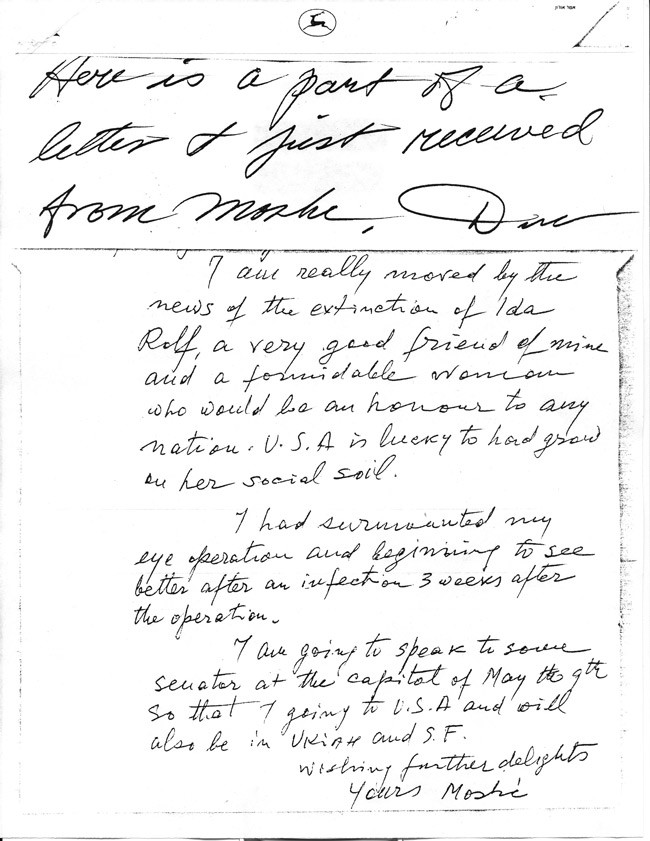
Transcription, in part
[forwarding note, in another hand] Here is a part of a letter I just received from Moshe. D[on?]
[pasted passage, in Feldenkrais’s hand] I am really moved by the news of the extinction of Ida Rolf, a very good friend of mine and a formidable woman who would be an honour to any nation. U.S.A is lucky to had [sic] grow on her social soil.
[two short paragraphs follow, on his recovery from an eye operation and on a journey to the United States in May, then:]
Wishing further delights
Yours Moshé
- Document
- Passage cut from a handwritten letter by Moshe Feldenkrais, pasted below a forwarding note and photocopiedThe note sits on paper headed by a small emblem of a leaping deer, with a line of Hebrew at top right
- Date
- Spring 1979After her death on 19 March 1979 and before 9 May, the day he planned to meet “some senator at the capitol”
- Copy
- A photocopy reached the production through a friendIts origin has not come to light. Part of the passage also appears on feldenkraismethod.com.
- Rights
- Copyright in the letter rests with the heirs of Moshe FeldenkraisThe forwarding note belongs to its unidentified writer. Shown here for research and documentation; the page will take the scan down at a rights holder’s request.
“Extinction” stands where a native speaker would write “death”: Feldenkrais learned English as an adult. With his birthday letter of 1976, these lines close a friendship that began at Coombe Springs more than twenty years before. The warmth needs no translation.
Cite asMoshe Feldenkrais, letter, spring 1979, passage on the death of Ida P. Rolf, forwarded with a note signed “D[on?]”. Photocopy, research files of Ida Rolf – Mother of Fascia.
About these records
The research team of Ida Rolf – Mother of Fascia, a documentary directed by Aleš Urbanczik, compiled this page. His ties to Structural Integration appear in the disclosure on the director’s statement.
Our warm thanks go to Sam Johnson for all the Rockefeller documents, which brought the letters of 1926 between Rolf and Simon Flexner to this page.
Three items come from the Simon Flexner Papers at the American Philosophical Society in Philadelphia: Flexner’s note of 1923, Rolf’s acceptance of tea with the Flexners and a second carbon of his letter of January 1926. This page transcribes them and links to the Society’s own scans, which stay in its keeping.
Public-domain scans may travel freely; a credit to the holding archive helps the next researcher find the original. Wikimedia Commons keeps copies of several in Category:Ida Rolf. The childhood portrait, by an unidentified painter, and the family photographs appear by leave of her grandson Jean-Pierre Demmerle. Dan Gentry gave the archive the portrait of his father, Byron Gentry, with Rolf. Wayne Hackett, Emmett Hutchins’s life partner, gave Aleš the portrait she signed for Emmett in 1977. The family tree comes from the film’s own research. The page quotes briefly, for documentation, from The New Yorker of 1938, 1972 and 1976, from Alan Watts’s autobiography of 1972, from her interview in Somatics of 1979, from the memories of Ed Maupin and Jason Mixter in Remembering Ida Rolf of 1997 and from an interview of 1977 kept in the Rolf Institute’s historical files. Ida Rolf’s words on her father, her mother and her school come also from audio tapes she recorded for Robert Toporek; he allowed their use in the film, and the page quotes them on that leave, ready to remove them should he or his family object. Copyright still protects Moshe Feldenkrais’s letters, like the 1926 correspondence between Rolf and Simon Flexner, her article of 1963, her farewell to Isabell Biddle and her letters to Byron Gentry; they appear here for documentation, and the page removes them at a rights holder’s request. Her letters to Gentry appear in excerpt only, because they speak mostly of patients whose privacy deserves keeping. The twelve seconds with Robert Schleip at the head of the page come from the film’s own interview with him. He and the film’s makers released that part of the interview under the CC BY-SA 4.0 licence, and forty seconds of it sit on Wikimedia Commons. The thirty-six seconds at Esalen come from the film’s own footage, with its main theme by Mirjam Skal. The postcard of Reid Hall appears by courtesy of Columbia Global Centers | Paris. The postcard of Morris High School, published in New York before 1915, lies in the public domain in the United States; the card itself belongs to the production, as does the postcard of the De Grasse, printed in the United States without a copyright notice. The Catalog of Copyright Entries of 1958, a publication of the United States government, lies in the public domain; the figure it describes serves the Rolf Institute as a trademark. Copyright still protects the page from The Subud Chronicle of 1958, which appears for documentation. The photograph and the film from Coombe Springs come from the Subud Archives, which allowed their use in the film; the page removes them at the archive’s request. Aleš Urbanczik and Grzegorz Oleksa took the photographs of the headstone and of the Demmerle monuments in 2024, while filming. Both photographs may travel freely, provided the credit names both photographers and links to motheroffascia.com, for instance “Photo: Aleš Urbanczik and Grzegorz Oleksa, motheroffascia.com”. On Wikimedia Commons both carry the CC BY-SA 4.0 licence. The stones of her parents appear in two frames from the same footage; please ask before reusing those. Page 65 of The Engineering Magazine of 1909, with its photograph of the Grand Street Bridge, lies in the public domain, as do the minutes and reports quoted from The City Record. The report of 1905 from The New York Times lies in the public domain, as does Dr. Morrison’s card in The Port Jefferson Echo of 1915. The cover of the 2023 reprint belongs to its publisher and appears here to identify the edition. The Times still holds the copyright in its obituary of 1979, so the page quotes it without a scan. The Miami Herald still holds the copyright in its page of 1971, which appears for documentation; the clipping lay among John Lodge’s original drawings, a gift to the European Guild for Structural Integration. Page 8 of her book of 1977, her draft for it and Rosemary Feitis’s letter to the Sackler Collection appear for documentation, and the colour photograph of the stele comes from the Museum of Fine Arts, Boston. Richard L. Grossman’s letter of July 1974 and Rolf’s copy of Feitis’s reply also lay among John Lodge’s papers. Copyright still protects both, and they appear for documentation; the page removes them at a rights holder’s request. Her story of Georgia O’Keeffe comes from tapes of her advanced classes of 1974 to 1976, as transcribed in Ida Rolf Talks in Class (2026), an edition by Aleš Urbanczik; the records of the Georgia O’Keeffe Museum appear as its online catalogue describes them. Copyright still protects O’Keeffe’s letters to Charles Wickham Moore: the page quotes a few words of them, for documentation, and links each one to the museum’s own scan. Her account of the wartime laboratory comes from the recording of her Explorers of Humankind interview of 1978, her look back at the first class from her address to the Rolf Institute’s annual meeting of 1976, both in the Ida Rolf Archive at bostonrolf.com and quoted briefly, for documentation. Carl Van Vechten’s portrait of O’Keeffe of 1950 comes from the Library of Congress, which lists no known restrictions on its publication; it appears uncropped and credited, as his estate asks, and the page removes it at a rights holder’s request. Her accounts of Fritz Perls, Moshe Feldenkrais and Lady Cripps come also from tapes of a class of 1970, which reached the production through Emmett Hutchins and also belong to Joel Gheiler’s Ida Rolf Archive at bostonrolf.com; the page quotes them briefly, for documentation. The six photographs of Amy Cochran, by an unknown photographer, appear by courtesy of Cathlyne Talevich, from her mother’s keeping. The photograph of Rolf with John Denver in Boulder, 1974, by an unknown photographer, appears for documentation, and the page removes it at a rights holder’s request. The notice of Walter Demmerle’s death in the Manhasset Press of 1947 comes from the Manhasset Public Library’s digitised run and probably lies in the public domain, pending a search of the renewal records; Jean-Pierre Demmerle’s memory of that morning comes from the film’s own interview with him. Her memory of the seed of her work, a thought on a train in Europe, comes from the same Explorers of Humankind interview of 1978 and its print in Somatics, spring 1979. The small map of her week draws its outline of Switzerland from Natural Earth, in the public domain, and its lakes from OpenStreetMap (© OpenStreetMap contributors, ODbL). Erwin Schrödinger’s portrait of 1933 comes from the Nobel Foundation and lies in the public domain. Peter Debye’s portrait, a print from the Science Service Records at the Smithsonian Institution Archives (Accession 90-105), belongs to Museum Boerhaave in Leiden, which leaves it free for publication. The portrait of Pierre Schmidt, by an unknown photographer, appears for documentation, and the page removes it at a rights holder’s request. Her words on her weekends in Geneva come from her interview of July 1976 with Rosemary Feitis, as printed in Ida Rolf Talks about Rolfing and Physical Reality (1978), and appear briefly, for documentation. Please send corrections and additions to info@
Last updated